
Table of Contents
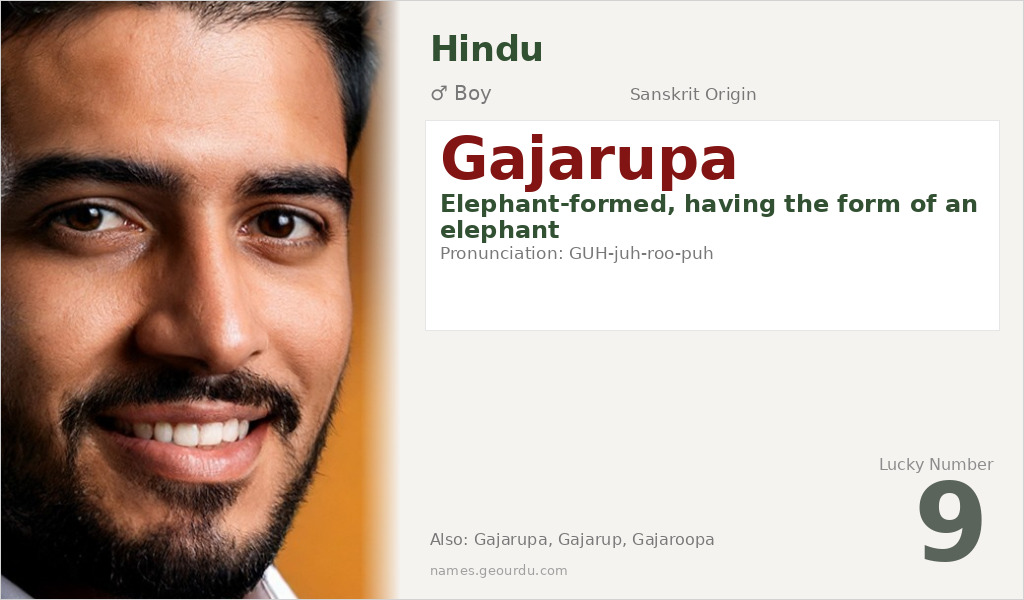
Gajarupa is a distinctive Sanskrit name with deep roots in Hindu tradition and mythology. Meaning ‘elephant-formed’ or ‘having the appearance of an elephant’, this name carries significant cultural and religious symbolism. Primarily used as a boy’s name, Gajarupa directly references the iconic form of Lord Ganesha, the beloved elephant-headed deity. Exploring this name reveals fascinating connections to Sanskrit linguistics and Hindu devotional practices.
Meaning of Gajarupa
Gajarupa is a compound Sanskrit name with precise linguistic components. The first element ‘gaja’ (गज) means ‘elephant’, derived from the Sanskrit root √gaj which conveys the sound or roar of an elephant. The second element ‘rūpa’ (रूप) means ‘form, shape, or appearance’, originating from √rūp meaning ‘to form or appear’. When combined, Gajarupa literally translates to ‘elephant-formed’ or ‘having the form of an elephant’. This name is not merely descriptive but carries devotional significance in Hinduism as it directly references Lord Ganesha’s distinctive elephant-headed form. The name appears in various Hindu texts and prayers as an epithet for Ganesha, emphasizing his unique divine appearance.
| 📛 Name | Gajarupa |
| 💎 Meaning | Elephant-formed, having the form of an elephant |
| 👤 Gender | Boy |
| 🕌 Religion | Hindu |
| 🌍 Origin | Sanskrit |
| 🗣 Pronunciation | GUH-juh-roo-puh |
| ✍️ Urdu | گیج روپ |
| ✍️ Arabic | غاجاروبا |
| 🔢 Numerology | 9 |
| ✨ Spellings | Gajarupa, Gajarup, Gajaroopa |
Origin & Cultural Significance
Gajarupa originates from classical Sanskrit, the ancient liturgical language of Hinduism. As a compound name, it follows standard Sanskrit morphological rules where two meaningful elements combine to create a new word with specific significance. The name emerged from Hindu religious and literary traditions, particularly those centered on Lord Ganesha worship. In cultural context, elephants in Hinduism symbolize wisdom, strength, royalty, and removal of obstacles—qualities embodied by Ganesha. The name Gajarupa reflects the practice of naming children after divine attributes or forms, a common tradition in Hindu families seeking to invoke auspicious qualities and divine protection for their children.
Personality Traits
Those named Gajarupa are often associated with qualities symbolized by elephants in Hindu culture: strength, wisdom, memory, and protective instincts. They may exhibit calm determination, leadership capabilities, and a grounded personality. The connection to Lord Ganesha suggests potential traits of intelligence, problem-solving ability, and success in overcoming obstacles. Family and tradition likely hold significant importance for individuals carrying this name with such deep cultural roots.
Similar Names
If you like Gajarupa, consider: Gajanan, Gajendra, Gajadhar, Gajananam, Gajavaktra
Famous People Named Gajarupa
- No widely known contemporary figures with this name found in records
- The name appears in Hindu scriptures as an epithet for Lord Ganesha
Frequently Asked Questions About Gajarupa
What does Gajarupa mean?
Gajarupa means 'elephant-formed' or 'having the form of an elephant' in Sanskrit. It is a compound name combining 'gaja' (elephant) and 'rūpa' (form).
Is Gajarupa a boy or girl name?
Gajarupa is traditionally a boy's name in Hindu naming conventions, though names are becoming more flexible in modern usage. Its association with the male deity Lord Ganesha reinforces its masculine identity.
What is the origin of Gajarupa?
Gajarupa originates from Sanskrit, the classical language of Hinduism. It specifically comes from Hindu religious tradition as a name describing Lord Ganesha's elephant-headed form.





