
Table of Contents
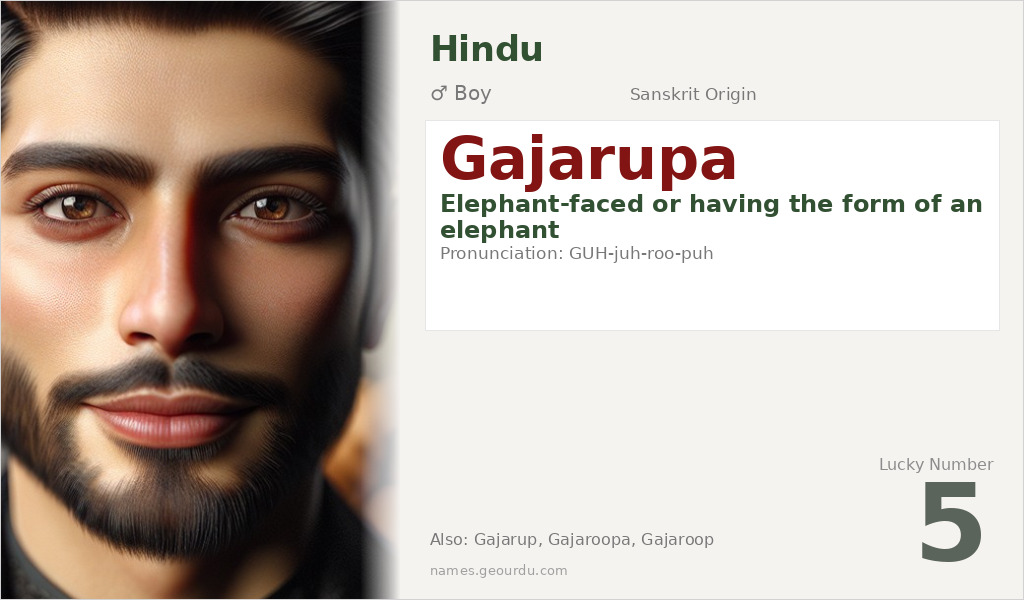
Gajarupa is a distinctive Sanskrit name with deep roots in Hindu tradition and mythology. Meaning ‘elephant-faced’ or ‘having the form of an elephant’, this name carries profound symbolic weight in Indian culture. Primarily used for boys, it directly references the beloved deity Lord Ganesha, who is revered as the remover of obstacles. Exploring this name reveals fascinating linguistic connections and cultural significance.
Meaning of Gajarupa
Gajarupa derives from classical Sanskrit, combining ‘Gaja’ (elephant) and ‘Rupa’ (form or appearance). The word ‘Gaja’ originates from the Sanskrit root ‘gaj’ meaning ‘to sound’ or ‘to roar’, perfectly capturing the elephant’s distinctive trumpet. ‘Rupa’ comes from the root ‘rup’ meaning ‘to form’ or ‘to appear’, indicating shape or manifestation. Together, they create a compound that literally means ‘elephant-formed’. This name serves as a direct descriptive epithet for Lord Ganesha, whose elephant head represents wisdom, strength, and the ability to overcome obstacles. In Sanskrit literature, such compound names often describe divine attributes through physical characteristics.
| 📛 Name | Gajarupa |
| 💎 Meaning | Elephant-faced or having the form of an elephant |
| 👤 Gender | Boy |
| 🕌 Religion | Hindu |
| 🌍 Origin | Sanskrit |
| 🗣 Pronunciation | GUH-juh-roo-puh |
| ✍️ Urdu | گجرپ |
| ✍️ Arabic | غاجاروبا |
| 🔢 Numerology | 5 |
| ✨ Spellings | Gajarup, Gajaroopa, Gajaroop |
Origin & Cultural Significance
Gajarupa originates from ancient Sanskrit, the classical language of Hindu scriptures, philosophy, and literature. It appears primarily in religious and mythological contexts as one of the many names and epithets for Lord Ganesha, the elephant-headed deity worshipped at the beginning of ventures and as the patron of arts and sciences. The name reflects the rich tradition of descriptive theophoric names in Hindu culture, where divine attributes are encoded in personal names. While not among the most common contemporary given names, it maintains cultural significance within Hindu communities, particularly those with strong Sanskrit naming traditions. The name’s usage preserves ancient linguistic elements while connecting bearers to important cultural and religious symbolism.
Personality Traits
Those named Gajarupa are often associated with qualities symbolized by elephants in Hindu tradition: wisdom, memory, strength, and dignity. They may demonstrate intellectual curiosity, practical problem-solving abilities, and a calm, steady demeanor even in challenging situations. The name suggests someone who approaches obstacles with thoughtful persistence and maintains strong family and community bonds, much like elephants’ social nature in the wild.
Similar Names
If you like Gajarupa, consider: Gajanan, Gajendra, Gajadhar, Gajavaktra, Gajamukha
Famous People Named Gajarupa
- No widely known contemporary figures with this name found in records
- Primarily appears in religious contexts as an epithet for Lord Ganesha in Hindu scriptures
Frequently Asked Questions About Gajarupa
What does Gajarupa mean?
Gajarupa means 'elephant-faced' or 'having the form of an elephant' in Sanskrit. It is a compound of 'Gaja' (elephant) and 'Rupa' (form/appearance).
Is Gajarupa a boy or girl name?
Gajarupa is traditionally a masculine name given to boys in Hindu culture, as it references the male deity Lord Ganesha who has an elephant head.
What is the origin of Gajarupa?
Gajarupa originates from Sanskrit, the ancient classical language of India. It is primarily found in Hindu religious contexts as an epithet for Lord Ganesha.





