
Table of Contents
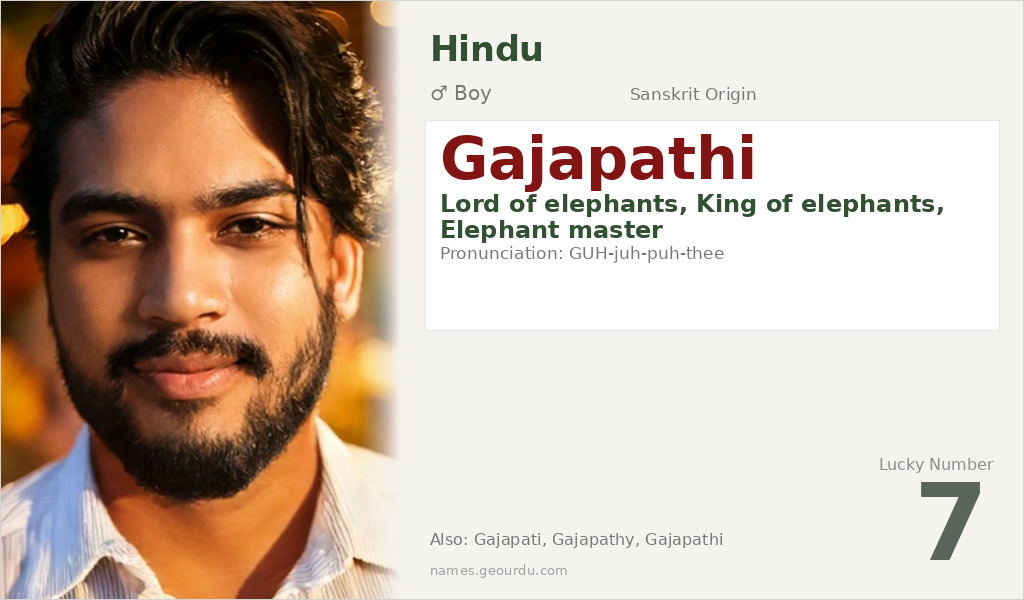
Gajapathi is a powerful Sanskrit name with deep roots in Indian history and Hindu tradition. Meaning ‘Lord of elephants’ or ‘King of elephants’, this name carries connotations of strength, royalty, and commanding presence. Historically used as a royal title for rulers who commanded elephant forces, Gajapathi symbolizes authority and majestic power. Today, it remains a distinctive choice for parents seeking a name with historical significance and noble meaning.
Meaning of Gajapathi
Gajapathi is a compound Sanskrit name formed from two elements: ‘gaja’ (गज) meaning ‘elephant’ and ‘pati’ (पति) meaning ‘lord, master, or ruler’. The complete meaning is therefore ‘lord of elephants’ or ‘master of elephants’. In ancient Indian context, elephants were symbols of royal power, military strength, and prosperity, making this name particularly significant. The term appears in various Hindu texts and historical records as both a personal name and a royal title. Unlike some interpretations suggesting ‘elephant face’, the correct etymology clearly indicates rulership over elephants rather than physical resemblance.
| 📛 Name | Gajapathi |
| 💎 Meaning | Lord of elephants, King of elephants, Elephant master |
| 👤 Gender | Boy |
| 🕌 Religion | Hindu |
| 🌍 Origin | Sanskrit |
| 🗣 Pronunciation | GUH-juh-puh-thee |
| ✍️ Urdu | گجپتی |
| ✍️ Arabic | غاجاباتي |
| 🔢 Numerology | 7 |
| ✨ Spellings | Gajapati, Gajapathy, Gajapathi |
Origin & Cultural Significance
Gajapathi originates from Sanskrit, the classical language of ancient India, and has been used for centuries in Hindu culture. Historically, ‘Gajapati’ was an important royal title in medieval India, particularly in the Odisha region where the Gajapati Empire flourished from the 15th century. The title was borne by several powerful kings who maintained large elephant corps as part of their military. In Hindu tradition, the name connects to Lord Ganesha (the elephant-headed god) indirectly through the elephant symbolism, though Gajapathi specifically refers to human rulers of elephants rather than divine beings. The name continues to be used primarily in India and among Hindu communities worldwide.
Personality Traits
Those named Gajapathi are often associated with leadership qualities, strength, and protective instincts. Like the elephant—revered in Indian culture for its intelligence, memory, and power—individuals with this name may exhibit wisdom combined with formidable presence. They tend to be traditional yet commanding, with a natural authority that others respect. The name suggests someone who carries responsibilities well and protects those in their care, much like how elephant herds protect their young.
Similar Names
If you like Gajapathi, consider: Gajendra, Gajanan, Gajadhar, Hastipati, Gajakumar
Famous People Named Gajapathi
- Gajapati Kapilendra Deva — 15th century founder of the Suryavamsa Gajapati Empire in Odisha, India
- Gajapati Purushottama Deva — 15th century ruler of the Gajapati Empire known for military campaigns
Frequently Asked Questions About Gajapathi
What does Gajapathi mean?
Gajapathi means 'Lord of elephants' or 'King of elephants' in Sanskrit. It comes from 'gaja' (elephant) and 'pati' (lord/master).
Is Gajapathi a boy or girl name?
Gajapathi is exclusively a boy's name in Hindu naming tradition. The '-pati' suffix specifically denotes masculine rulership in Sanskrit.
What is the origin of Gajapathi?
Gajapathi originates from Sanskrit and Hindu culture. It was historically used as a royal title in medieval India, particularly by the Gajapati Empire rulers in Odisha.





