
Table of Contents
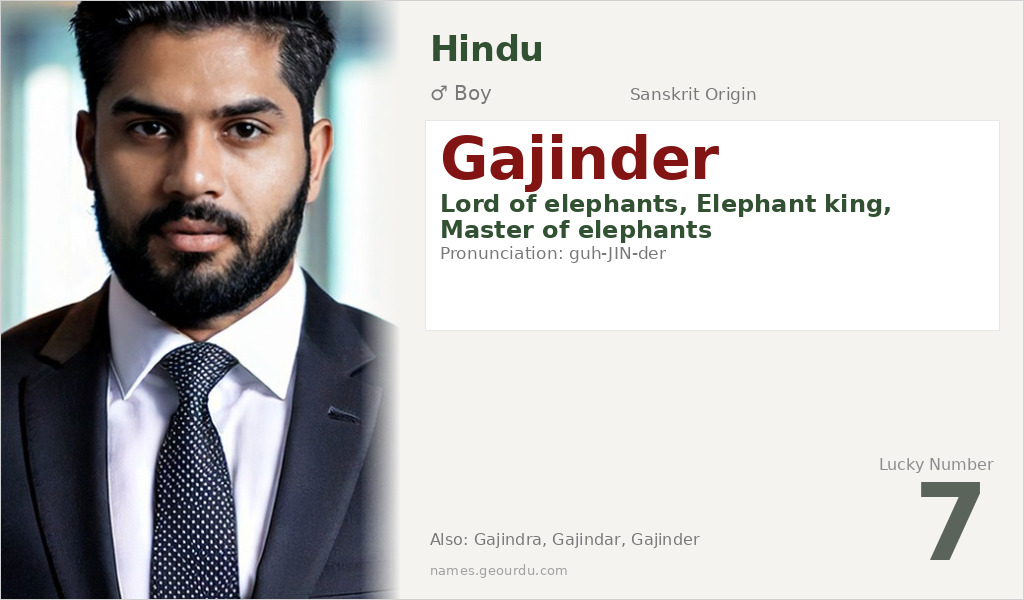
Gajinder is a powerful and regal name of Sanskrit origin that literally means ‘Lord of Elephants’ or ‘King of Elephants’. Primarily used in Hindu communities, this masculine name carries deep cultural and mythological significance. With roots in ancient Indian traditions, Gajinder evokes images of strength, wisdom, and majestic presence. The name combines two meaningful Sanskrit elements to create a distinctive identity for boys.
Meaning of Gajinder
The name Gajinder is a compound Sanskrit name formed from ‘gaja’ (elephant) and ‘indra’ (lord or king). In Hindu mythology and Sanskrit literature, elephants symbolize strength, wisdom, royalty, and prosperity. Indra, as the king of the gods in Vedic tradition, represents leadership and power. Thus, Gajinder literally translates to ‘elephant lord’ or ‘master of elephants’. This name appears in various Hindu texts and traditions, often as an epithet for deities or powerful figures associated with elephants. The linguistic construction follows classical Sanskrit compounding rules, creating a name that’s both phonetically strong and semantically rich. In contemporary usage, it maintains these traditional meanings while serving as a distinctive personal name.
| 📛 Name | Gajinder |
| 💎 Meaning | Lord of elephants, Elephant king, Master of elephants |
| 👤 Gender | Boy |
| 🕌 Religion | Hindu |
| 🌍 Origin | Sanskrit |
| 🗣 Pronunciation | guh-JIN-der |
| ✍️ Urdu | گجندر |
| ✍️ Arabic | غاجيندر |
| 🔢 Numerology | 7 |
| ✨ Spellings | Gajindra, Gajindar, Gajinder, Gajindr |
Origin & Cultural Significance
Gajinder originates from classical Sanskrit, the ancient liturgical language of Hinduism. The name has been used for centuries in Indian subcontinent cultures, particularly within Hindu communities. Its components draw from Hindu mythology where elephants hold sacred status—the white elephant Airavata serves as Indra’s vahana (vehicle), and Lord Ganesha has an elephant head. The name reflects the cultural reverence for elephants as symbols of royal power, wisdom, and good fortune. While primarily used in India and among Hindu diaspora communities, the name’s Sanskrit roots connect it to broader Indo-European linguistic traditions. Historical records show variations of this name appearing in classical texts and regional naming practices across South Asia.
Personality Traits
Those named Gajinder are often associated with qualities of strength, stability, and protective nature. Like the elephant they’re named after, they may exhibit great memory, loyalty, and calm authority in challenging situations. Their personality often combines wisdom with power, making them natural leaders who approach problems with thoughtful consideration. The name suggests someone who is reliable, dignified, and commands respect through their presence rather than aggression.
Similar Names
If you like Gajinder, consider: Gajanan, Gajadhar, Gajendra, Indrajit, Ganesh, Hastin, Kunjara, Nagaraj, Varaha, Airavata
Famous People Named Gajinder
- Gajinder Singh — Indian politician and former Member of Parliament from Punjab
- Gajinder Pal Singh — Indian cricketer who played for Punjab in domestic cricket
Frequently Asked Questions About Gajinder
What does Gajinder mean?
Gajinder means 'Lord of Elephants' or 'King of Elephants'. It's a compound Sanskrit name combining 'gaja' (elephant) and 'indra' (lord/king).
Is Gajinder a boy or girl name?
Gajinder is exclusively a masculine name used for boys in Hindu naming traditions. There are no common feminine variants of this name.
What is the origin of Gajinder?
Gajinder originates from Sanskrit, the classical language of ancient India. It has Hindu religious and cultural roots, with connections to Hindu mythology where elephants symbolize strength and wisdom.





