
Table of Contents
Kapilanjan is a distinctive Sanskrit name with rich mythological connections in Hindu culture. Unlike many modern names, it carries a vivid descriptive meaning rooted in ancient Indian traditions. This name evokes imagery of devotion and strength through its association with revered figures. Parents choosing Kapilanjan often seek a name with deep cultural resonance and unique phonetic qualities.
Meaning of Kapilanjan
Kapilanjan derives from two Sanskrit components: ‘Kapila’ (कपिल) and ‘Anjana’ (अञ्जन). Kapila refers to monkeys, particularly the Indian langur or Hanuman, the beloved monkey god in Hinduism. Anjana means coloring, pigment, or ointment. Combined, they create the meaning ‘one who has the color of a monkey’ or ‘monkey-colored’. This isn’t merely descriptive but carries mythological weight—Hanuman is often described with a dark or tawny complexion in texts like the Ramayana. The name appears in classical Sanskrit literature as both a proper name and descriptive epithet, maintaining its linguistic purity through centuries of usage.
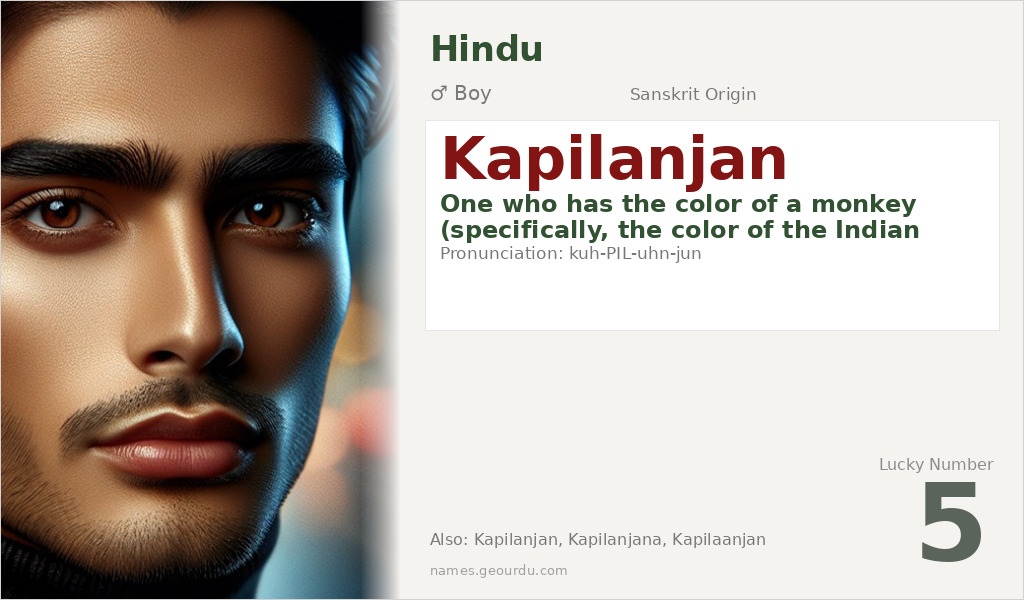
| 📛 Name | Kapilanjan |
| 💎 Meaning | One who has the color of a monkey (specifically, the color of the Indian langur or Hanuman) |
| 👤 Gender | Boy |
| 🕌 Religion | Hindu |
| 🌍 Origin | Sanskrit |
| 🗣 Pronunciation | kuh-PIL-uhn-jun |
| ✍️ Urdu | کیپلانجن |
| ✍️ Arabic | كابيلانجان |
| 🔢 Numerology | 5 |
| ✨ Spellings | Kapilanjan, Kapilanjana, Kapilaanjan |
Origin & Cultural Significance
Kapilanjan originates from classical Sanskrit, the ancient liturgical language of Hinduism. It emerges from India’s rich tradition of descriptive and compound names that often reference natural elements or mythological attributes. The name is particularly significant in Vaishnavism and Ramayana traditions due to its connection with Hanuman, though it can be used more broadly. Unlike some Sanskrit names that have spread to other religions, Kapilanjan remains primarily within Hindu naming conventions, especially among communities with strong Sanskrit preservation. Its usage reflects the enduring influence of epic literature on Indian onomastics.
Personality Traits
In Hindu naming traditions, names often carry implied characteristics. Kapilanjan, with its monkey association, suggests traits like agility, cleverness, and unwavering loyalty—qualities epitomized by Hanuman. Those named Kapilanjan might be expected to demonstrate quick thinking, physical vitality, and protective devotion to family and principles. The name’s unique sound and meaning often indicate parents value cultural heritage and distinctive identity.
Similar Names
If you like Kapilanjan, consider: Kapil, Anjan, Hanuman, Kesari, Maruti
Famous People Named Kapilanjan
- No widely known contemporary figures with this name found in verified sources
- The name appears in Hindu mythological contexts and classical literature as a descriptive term
Frequently Asked Questions About Kapilanjan
What does Kapilanjan mean?
Kapilanjan means 'one who has the color of a monkey' or 'monkey-colored' in Sanskrit, derived from 'Kapila' (monkey) and 'Anjana' (coloring).
Is Kapilanjan a boy or girl name?
Kapilanjan is exclusively a boy's name in Hindu naming traditions, with masculine grammatical endings in Sanskrit and association with male mythological figures.
What is the origin of Kapilanjan?
Kapilanjan originates from classical Sanskrit, the ancient Indian language, and is rooted in Hindu mythology, particularly associated with Hanuman or monkey-like attributes.





