
Table of Contents
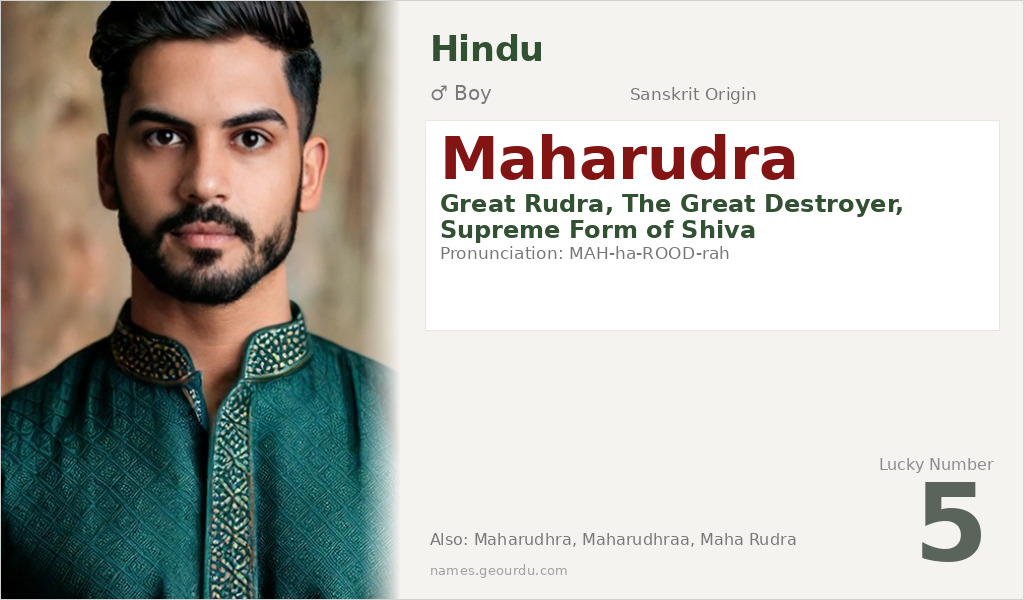
Maharudra is a profound and powerful name rooted in ancient Hindu tradition, evoking the majestic and formidable aspects of divinity. Derived from Sanskrit, it combines ‘Maha’ (great) and ‘Rudra’ (a name for Shiva), symbolizing supreme destructive force that paves the way for new beginnings. This name carries deep spiritual significance, often chosen for boys to embody strength, transformation, and cosmic balance. Explore the rich etymology, cultural context, and modern relevance of Maharudra in this detailed guide.
Meaning of Maharudra
Maharudra is a compound Sanskrit name where ‘Maha’ (महा) means ‘great, supreme, or mighty,’ and ‘Rudra’ (रुद्र) refers to ‘the roarer’ or ‘the terrible one,’ an ancient Vedic deity later synonymous with Shiva. Etymologically, ‘Rudra’ comes from the root ‘rud,’ implying to cry, roar, or be fearsome, while ‘Maha’ amplifies it to denote greatness. In Hindu scriptures, Maharudra represents Shiva’s most awe-inspiring form as the destroyer within the Trimurti (Brahma-Vishnu-Shiva), essential for cyclical creation and dissolution. This name is not merely descriptive but imbued with theological depth, highlighting Shiva’s role in annihilating ignorance and evil. It is distinct from simpler translations like ‘the biggest,’ emphasizing a specific divine aspect rather than general size.
| 📛 Name | Maharudra |
| 💎 Meaning | Great Rudra, The Great Destroyer, Supreme Form of Shiva |
| 👤 Gender | Boy |
| 🕌 Religion | Hindu |
| 🌍 Origin | Sanskrit |
| 🗣 Pronunciation | MAH-ha-ROOD-rah |
| ✍️ Urdu | مہاردرا |
| ✍️ Arabic | ماهارودرا |
| 🔢 Numerology | 5 |
| ✨ Spellings | Maharudhra, Maharudhraa, Maha Rudra |
Origin & Cultural Significance
Originating from Sanskrit, the classical language of ancient India, Maharudra has its roots in Hindu mythology and Vedic texts. It appears in works like the Shiva Purana and epics such as the Mahabharata, where it denotes Shiva’s supreme form as the destroyer of the universe. Culturally, the name is prevalent among Hindu communities in India, Nepal, and the diaspora, reflecting devotion to Shiva and themes of cosmic power. Historically, Rudra was a Rigvedic deity associated with storms and healing, evolving into Shiva in later Hinduism, with ‘Maha’ added to signify his elevated status. The name is used primarily in religious contexts and as a given name, symbolizing protection and spiritual transformation.
Personality Traits
Those named Maharudra are often associated with traits of strength, resilience, and transformative energy, mirroring Shiva’s destructive yet regenerative nature. They may possess a commanding presence, philosophical insight, and a capacity to overcome challenges, inspiring others through their intensity. This name suggests a personality that balances ferocity with wisdom, capable of profound change and leadership in personal or spiritual realms.
Similar Names
If you like Maharudra, consider: Rudra, Mahadeva, Mahakala, Rudransh, Shiva
Famous People Named Maharudra
- Maharudra — A character in Hindu mythology and scriptures representing Shiva's formidable form
- Maharudra — Used in modern India as a given name, though no globally prominent public figures bear it widely
Frequently Asked Questions About Maharudra
What does Maharudra mean?
Maharudra means 'Great Rudra' or 'Supreme Shiva' in Sanskrit, specifically referring to Shiva's formidable destroyer aspect in Hindu cosmology.
Is Maharudra a boy or girl name?
Maharudra is traditionally a boy name in Hindu culture, derived from masculine divine figures and used exclusively for males.
What is the origin of Maharudra?
Maharudra originates from Sanskrit, an ancient Indian language, and is deeply embedded in Hindu mythology and scriptures as a name for Shiva.





