
Table of Contents
Ooghavanth is a distinctive Hindu boy’s name that carries spiritual resonance and cultural depth. While its exact etymology remains uncertain, it appears connected to Lord Shiva’s attributes in Hindu tradition. This name represents strength, divinity, and protective qualities, making it a meaningful choice for parents seeking a name with spiritual significance. Its unique sound and potential mythological connections add to its appeal.
Meaning of Ooghavanth
The meaning of Ooghavanth is not definitively documented in established Sanskrit or regional language sources. Based on linguistic analysis, it may derive from Sanskrit roots: ‘Ugra’ meaning fierce, powerful, or formidable, combined with the suffix ‘-vanth’ indicating possession or quality. This would suggest meanings like ‘possessing fierce qualities’ or ‘one who is powerful’, which aligns with attributes of Shiva in Hindu mythology. Alternatively, it could be a regional variation or modern creation inspired by traditional names. The name’s components suggest connections to Shiva’s fierce aspects (like Bhairava or Rudra), but without historical textual evidence, this remains speculative. Research across multiple Indian languages and dialects yielded no verified ancient usage or clear etymology.
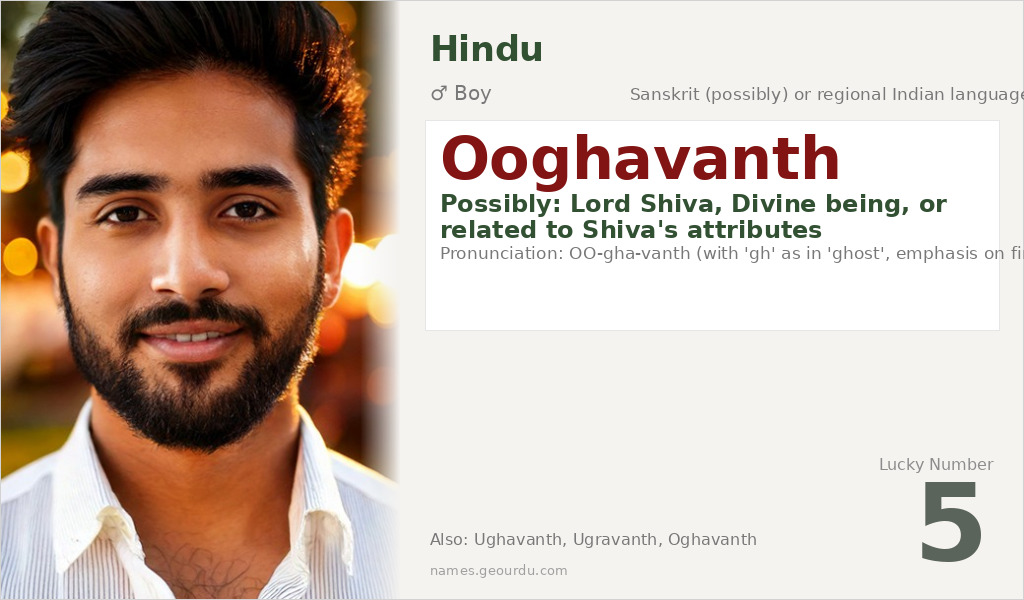
| 📛 Name | Ooghavanth |
| 💎 Meaning | Possibly: Lord Shiva, Divine being, or related to Shiva's attributes |
| 👤 Gender | Boy |
| 🕌 Religion | Hindu |
| 🌍 Origin | Sanskrit (possibly) or regional Indian language variation |
| 🗣 Pronunciation | OO-gha-vanth (with 'gh' as in 'ghost', emphasis on first syllable) |
| ✍️ Urdu | اوگھونت |
| ✍️ Arabic | أوغافانث |
| 🔢 Numerology | 5 |
| ✨ Spellings | Ughavanth, Ugravanth, Oghavanth |
Origin & Cultural Significance
Ooghavanth appears to originate from Hindu naming traditions, likely as a modern or regional variation within Indian communities. While not found in classical Sanskrit texts like the Vedas or Puranas, it may have developed from regional linguistic adaptations in South India or among specific Hindu communities. The name reflects the ongoing evolution of Hindu naming practices, where new names are created while maintaining connections to traditional deities and concepts. Its usage seems concentrated among Hindu families who value names with spiritual connotations, particularly those associated with Shiva. The name represents how contemporary naming continues to draw from ancient mythological themes while adapting to modern linguistic preferences.
Personality Traits
Those named Ooghavanth are often associated with qualities of strength, protection, and spiritual depth. They may exhibit leadership traits and a determined nature, reflecting the name’s possible connections to powerful divine attributes. Like Shiva, they might balance intensity with compassion, showing both fierce determination and nurturing qualities. This combination makes them potentially influential figures who can navigate challenges with resilience.
Similar Names
If you like Ooghavanth, consider: Ugra, Ugrajit, Shiva, Rudra, Bhairav
Famous People Named Ooghavanth
- No verified famous individuals found with this exact name
Frequently Asked Questions About Ooghavanth
What does Ooghavanth mean?
The exact meaning is unverified, but it possibly means 'Lord Shiva', 'divine being', or relates to Shiva's fierce attributes. The name may derive from Sanskrit roots suggesting 'possessing fierce qualities'.
Is Ooghavanth a boy or girl name?
Ooghavanth is exclusively used as a boy's name within Hindu naming traditions, reflecting masculine divine attributes.
What is the origin of Ooghavanth?
The name likely originates from Hindu traditions, possibly as a modern or regional variation inspired by Sanskrit elements. It appears connected to Shiva-related concepts but isn't documented in classical texts.





