
Table of Contents
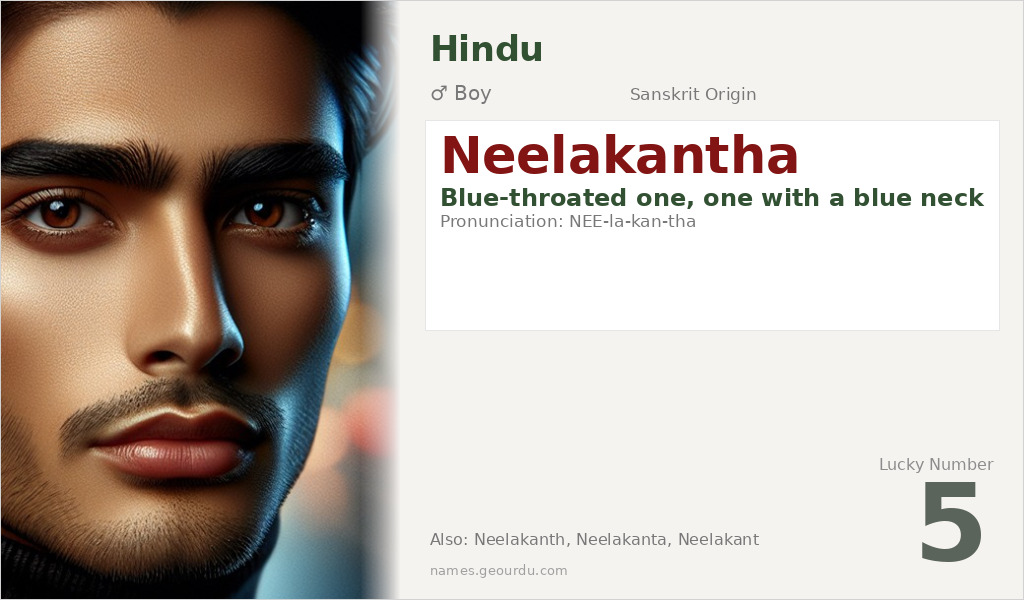
Neelakantha is a profound Sanskrit name steeped in Hindu mythology, carrying the powerful meaning ‘blue-throated one.’ This name directly references Lord Shiva’s heroic act during the churning of the cosmic ocean, where he consumed deadly poison to save creation. As a given name, Neelakantha symbolizes protection, sacrifice, and divine resilience. It remains a culturally significant choice within Hindu communities, connecting the bearer to ancient spiritual narratives.
Meaning of Neelakantha
Neelakantha derives from the Sanskrit words ‘Neela’ (नील), meaning ‘blue’ or ‘dark blue,’ and ‘Kantha’ (कण्ठ), meaning ‘throat’ or ‘neck.’ Together, they form ‘blue-throated,’ a direct mythological reference to Lord Shiva after he drank the poison Halahala during the Samudra Manthan (churning of the ocean). This event is described in ancient Hindu texts like the Puranas, where Shiva’s throat turned blue from holding the poison, earning him the epithet Neelakantha. The name is not merely descriptive but embodies themes of sacrifice, protection, and transformative power. In linguistic context, it’s a classical Sanskrit tatpurusha compound, commonly used in Indian naming traditions to honor divine attributes.
| 📛 Name | Neelakantha |
| 💎 Meaning | Blue-throated one, one with a blue neck |
| 👤 Gender | Boy |
| 🕌 Religion | Hindu |
| 🌍 Origin | Sanskrit |
| 🗣 Pronunciation | NEE-la-kan-tha |
| ✍️ Urdu | نیل کنٹھ |
| ✍️ Arabic | نيلاكانثا |
| 🔢 Numerology | 5 |
| ✨ Spellings | Neelakanth, Neelakanta, Neelakant, Nilkanth |
Origin & Cultural Significance
Neelakantha originates from Sanskrit, the ancient liturgical language of Hinduism, and is deeply rooted in Hindu mythology from India. The name first appears in texts like the Vishnu Purana and Shiva Purana, dating back over a millennium, as a title for Shiva. It has been used historically as both a religious epithet and a personal name, particularly among Hindu communities in India, Nepal, and the diaspora. Culturally, the name is associated with Shaivism (worship of Shiva) and is often chosen to invoke Shiva’s qualities of benevolence and strength. Unlike some names that have cross-cultural adaptations, Neelakantha remains primarily within Hindu and Sanskrit linguistic traditions without significant variation in other language families like Arabic, Persian, or European languages.
Personality Traits
Those named Neelakantha are often thought to embody traits inspired by Shiva’s mythological role: calmness in crisis, protective instincts, and inner strength. The story of consuming poison reflects an ability to transform challenges into opportunities for growth. This name may inspire a philosophical or spiritual outlook, with a tendency toward wisdom and resilience in personal and professional life.
Similar Names
If you like Neelakantha, consider: Shiva, Nilkanth, Neel, Kanth, Neeladri, Neelambar, Neelam, Shankara, Mahadeva, Rudra
Famous People Named Neelakantha
- Neelakantha Chaturdhara — 17th century Sanskrit scholar and commentator on the Mahabharata
- Neelakantha — A name used by several Indian classical musicians and artists in reference to Shiva
Frequently Asked Questions About Neelakantha
What does Neelakantha mean?
Neelakantha means 'blue-throated one' in Sanskrit, specifically referring to Lord Shiva who drank poison during the churning of the ocean, turning his throat blue.
Is Neelakantha a boy or girl name?
Neelakantha is traditionally a boy's name in Hindu culture, as it is an epithet of the male deity Shiva, though naming conventions can vary regionally.
What is the origin of Neelakantha?
Neelakantha originates from Sanskrit and Hindu mythology in India, with its first documented use in ancient texts like the Puranas as a name for Shiva.





