
Table of Contents
Nityanand is a profound Sanskrit name that carries centuries of spiritual wisdom within its syllables. Meaning ‘eternal bliss’ or ‘perpetual happiness’, this name represents one of the highest ideals in Hindu philosophy. Given primarily to boys, it connects the bearer to concepts of divine consciousness and enlightened awareness. The name has been borne by saints, mystics, and spiritual leaders throughout Indian history.
Meaning of Nityanand
Nityanand derives from classical Sanskrit, combining ‘Nitya’ (नित्य), meaning eternal, constant, or perpetual, with ‘Anand’ (आनन्द), meaning bliss, happiness, or joy. This compound formation creates a philosophical concept rather than just a descriptive term. In Hindu scriptures, particularly Vedanta and Yoga traditions, Nityanand describes the nature of Brahman (ultimate reality) or the state of self-realization. The name appears in texts discussing the attributes of divine consciousness that remains unchanging amidst worldly fluctuations. Unlike temporary happiness (sukha), Anand represents spiritual bliss, making Nityanand a deeply meaningful name choice.
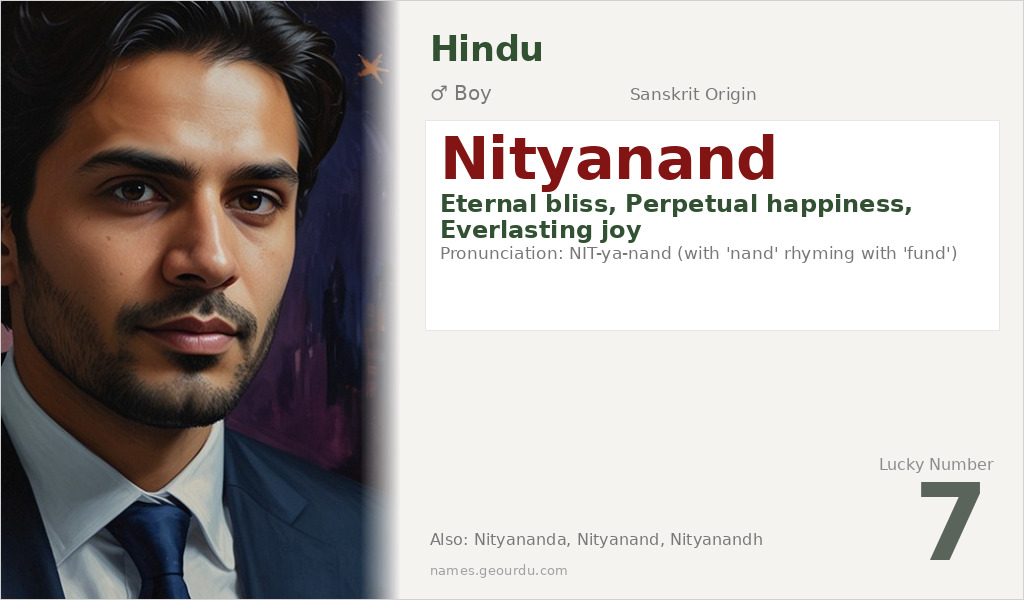
| 📛 Name | Nityanand |
| 💎 Meaning | Eternal bliss, Perpetual happiness, Everlasting joy |
| 👤 Gender | Boy |
| 🕌 Religion | Hindu |
| 🌍 Origin | Sanskrit |
| 🗣 Pronunciation | NIT-ya-nand (with 'nand' rhyming with 'fund') |
| ✍️ Urdu | نتیانند |
| ✍️ Arabic | نيتياناند |
| 🔢 Numerology | 7 |
| ✨ Spellings | Nityananda, Nityanand, Nityanandh |
Origin & Cultural Significance
Nityanand originates from ancient Sanskrit, the liturgical language of Hinduism, Buddhism, and Jainism. The name has been used for centuries in Indian spiritual traditions, particularly within Vaishnavism and Vedanta philosophy. It gained prominence through historical figures like the 16th-century saint Nityananda, who was a principal associate of Chaitanya Mahaprabhu and instrumental in spreading Gaudiya Vaishnavism in Bengal. The name reflects core Hindu concepts of seeking eternal happiness through spiritual realization rather than material attainment. While primarily used in Hindu communities, the philosophical concept transcends religious boundaries in its appeal.
Personality Traits
Those named Nityanand are often associated with qualities of inner peace, spiritual depth, and philosophical contemplation. The name suggests someone who values lasting happiness over temporary pleasures and seeks meaning beyond superficial concerns. They may exhibit calmness in adversity and a naturally joyful disposition that others find uplifting. The name carries expectations of wisdom and emotional stability rooted in spiritual understanding.
Similar Names
If you like Nityanand, consider: Anand, Nandan, Sadanand, Chidanand, Satchidanand
Famous People Named Nityanand
- Nityananda (c. 1474–1533) — Bengali Hindu saint and mystic, considered an avatar of Krishna and founder of Gaudiya Vaishnavism
- Nityanand Swami (1927–2010) — Indian politician and former Chief Minister of Uttarakhand
Frequently Asked Questions About Nityanand
What does Nityanand mean?
Nityanand means 'eternal bliss' or 'perpetual happiness' in Sanskrit. It combines 'Nitya' (eternal) and 'Anand' (bliss) to form a philosophical concept of unchanging spiritual joy.
Is Nityanand a boy or girl name?
Nityanand is traditionally a masculine name in Hindu naming conventions. While Sanskrit names can sometimes be adapted, historical and contemporary usage overwhelmingly favors it as a boy's name.
What is the origin of Nityanand?
Nityanand originates from classical Sanskrit, the ancient liturgical language of India. It has deep roots in Hindu philosophy, particularly Vedanta traditions that discuss the nature of eternal consciousness and bliss.





