
Table of Contents
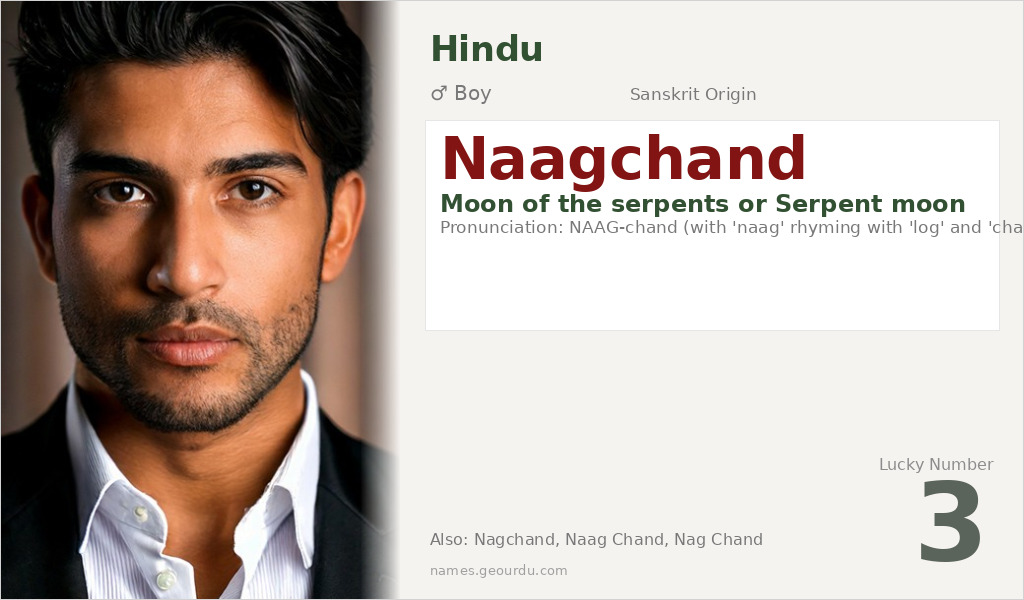
Naagchand is a distinctive Sanskrit name that beautifully blends celestial and mythological elements. Meaning ‘Moon of the serpents’ or ‘Serpent moon’, this name carries deep symbolic weight in Hindu tradition. With roots in ancient Indian culture, Naagchand represents the harmonious union of divine serpent symbolism and lunar radiance. This name continues to be chosen by parents seeking a name with both poetic beauty and spiritual resonance.
Meaning of Naagchand
Naagchand derives from classical Sanskrit, combining ‘Naag’ (नाग) meaning ‘serpent’ or ‘divine snake’ with ‘Chand’ (चंद) meaning ‘moon’ or ‘shining one’. In Hindu mythology, Nagas are semi-divine serpent beings associated with water, fertility, and protection, often serving as guardians of treasures and sacred knowledge. The ‘chand’ element connects to lunar deities and the concept of illumination. Together, these elements create a name that suggests the luminous quality of serpents in Hindu cosmology or the moon’s association with serpent deities. This compound construction follows traditional Sanskrit naming conventions where celestial bodies are paired with mythological beings.
| 📛 Name | Naagchand |
| 💎 Meaning | Moon of the serpents or Serpent moon |
| 👤 Gender | Boy |
| 🕌 Religion | Hindu |
| 🌍 Origin | Sanskrit |
| 🗣 Pronunciation | NAAG-chand (with 'naag' rhyming with 'log' and 'chand' as in 'chandelier') |
| ✍️ Urdu | ناگ چند |
| ✍️ Arabic | ناج تشاند |
| 🔢 Numerology | 3 |
| ✨ Spellings | Nagchand, Naag Chand, Nag Chand |
Origin & Cultural Significance
Naagchand originates from Sanskrit, the classical language of ancient India, and is deeply embedded in Hindu cultural and religious traditions. The name reflects the significant role of Nagas (serpent deities) in Hindu mythology, where they appear in texts like the Mahabharata and Puranas as both protectors and powerful beings. Historically, names combining ‘Naag’ with other elements have been used in various Indian communities, particularly in regions with strong Naga worship traditions. The name continues to be used primarily in Hindu families, especially those with connections to regions where serpent worship has historical significance, such as parts of North India and Nepal.
Personality Traits
Those named Naagchand are often perceived as having a dual nature—calm and reflective like the moon, yet possessing the protective wisdom associated with serpents. They may exhibit intuitive understanding, creative problem-solving abilities, and a natural inclination toward spiritual or philosophical pursuits. The name suggests someone who can navigate both practical and mystical realms with equal grace, embodying the balance between earthly knowledge and celestial insight.
Similar Names
If you like Naagchand, consider: Nagendra, Chandrashekhar, Sheshnag, Chandramohan, Nagabhushan
Famous People Named Naagchand
- Naagchand Sharma — Indian classical musician and vocalist
- Naagchand Jain — Historical figure in Jain community records
Frequently Asked Questions About Naagchand
What does Naagchand mean?
Naagchand means 'Moon of the serpents' or 'Serpent moon' in Sanskrit. It combines 'Naag' (serpent) with 'Chand' (moon) to create a poetic compound name with mythological significance.
Is Naagchand a boy or girl name?
Naagchand is exclusively a boy's name in Hindu naming tradition. Sanskrit compound names ending in 'chand' are typically masculine, following grammatical gender rules in Sanskrit-derived names.
What is the origin of Naagchand?
Naagchand originates from Sanskrit, the classical language of ancient India. It has roots in Hindu mythology where Nagas (serpent deities) play significant roles, and reflects traditional Indian naming patterns combining celestial and mythological elements.





