
Table of Contents
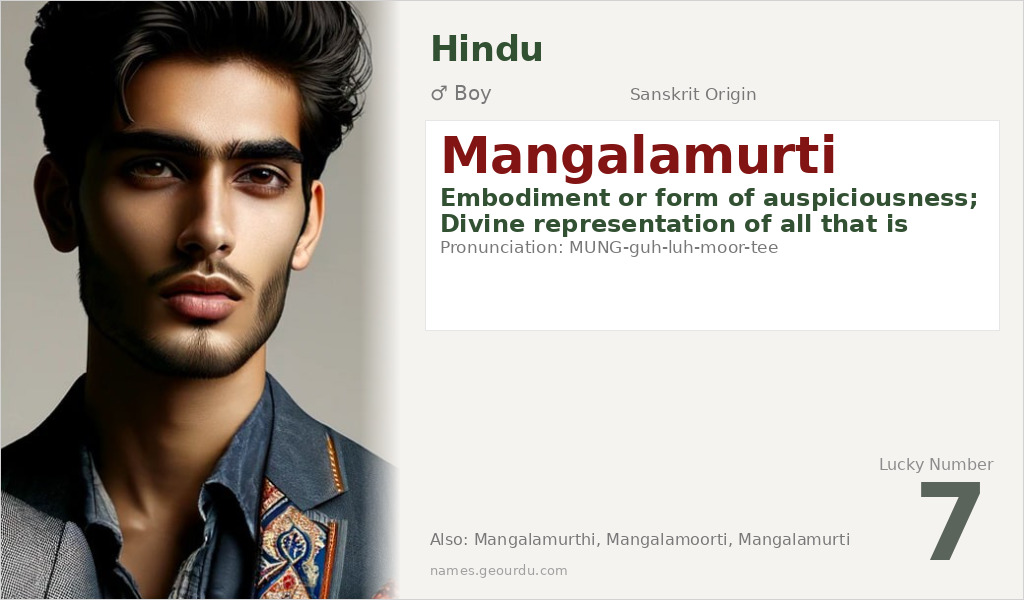
Mangalamurti is a profound Sanskrit name that carries deep spiritual significance in Hindu tradition. Meaning ’embodiment of auspiciousness’, this name represents the divine manifestation of all that is blessed and fortunate. Parents choosing this name often seek to imbue their child with the qualities of prosperity, spiritual grace, and positive destiny. With its rich etymological roots and cultural resonance, Mangalamurti stands as a meaningful choice for families valuing traditional Hindu naming conventions.
Meaning of Mangalamurti
Mangalamurti derives from the classical Sanskrit language, combining two significant elements: ‘Mangala’ and ‘Murti’. ‘Mangala’ (मङ्गल) is a fundamental concept in Hindu philosophy, representing auspiciousness, prosperity, good fortune, and all positive blessings. This root appears in numerous Hindu terms including Mangalya (auspiciousness for married women) and Mangalvar (Tuesday, the auspicious day). ‘Murti’ (मूर्ति) refers to form, embodiment, or manifestation, particularly in the context of divine representation. In Hindu practice, murtis are sacred images or idols through which devotees connect with the divine. Thus, Mangalamurti literally translates to ‘auspicious form’ or ’embodiment of auspiciousness’, typically describing deities or blessed manifestations that bring prosperity and positive energy.
| 📛 Name | Mangalamurti |
| 💎 Meaning | Embodiment or form of auspiciousness; Divine representation of all that is blessed and fortunate |
| 👤 Gender | Boy |
| 🕌 Religion | Hindu |
| 🌍 Origin | Sanskrit |
| 🗣 Pronunciation | MUNG-guh-luh-moor-tee |
| ✍️ Urdu | منگلمورتی |
| ✍️ Arabic | مانجالامورتي |
| 🔢 Numerology | 7 |
| ✨ Spellings | Mangalamurthi, Mangalamoorti, Mangalamurti |
Origin & Cultural Significance
Mangalamurti originates from ancient Sanskrit texts and Hindu religious traditions. As a compound name, it follows the classical Sanskrit pattern of combining meaningful elements to create names with spiritual depth. The name appears in Hindu contexts as an epithet for deities who represent auspicious qualities, particularly those associated with prosperity, marriage blessings, and positive destiny. While not among the most common contemporary names, it maintains significance in traditional Hindu families who value names with explicit spiritual meanings. The name’s components are deeply rooted in Vedic and post-Vedic Sanskrit literature, where concepts of mangala (auspiciousness) and murti (form) hold central importance in religious practice and philosophy.
Personality Traits
Those named Mangalamurti are often associated with bringing positive energy and good fortune to their surroundings. They tend to exhibit calm, balanced personalities with a natural inclination toward spiritual or traditional values. In social contexts, they are frequently perceived as stabilizing influences who embody the auspicious qualities their name represents. Their presence is considered beneficial, and they often develop reputations for reliability and moral integrity within their communities.
Similar Names
If you like Mangalamurti, consider: Mangal, Mangalesh, Murti, Mangalnath, Mangalya
Famous People Named Mangalamurti
- No widely known contemporary figures with this name found in extensive research
- The name appears in Hindu religious contexts as an epithet for deities representing auspiciousness
Frequently Asked Questions About Mangalamurti
What does Mangalamurti mean?
Mangalamurti means 'embodiment or form of auspiciousness' in Sanskrit. It combines 'Mangala' (auspicious, fortunate) and 'Murti' (form, embodiment), referring to divine representation of all that is blessed.
Is Mangalamurti a boy or girl name?
Mangalamurti is exclusively a boy's name in Hindu naming tradition. Sanskrit compound names ending in 'murti' are typically masculine, reflecting divine masculine forms in Hindu theology.
What is the origin of Mangalamurti?
Mangalamurti originates from Sanskrit, the classical language of Hindu scriptures. It is a compound name deeply rooted in Hindu religious and philosophical traditions, specifically referring to auspicious divine manifestations.





