
Table of Contents
Nagabhooshanam is a powerful Sanskrit name with deep roots in Hindu mythology and tradition. Unlike common modern names, it carries specific symbolic meaning directly connected to divine iconography. This name represents more than just identification—it embodies a spiritual concept that has been revered for centuries in Indian culture. Understanding its true meaning reveals layers of cultural and religious significance.
Meaning of Nagabhooshanam
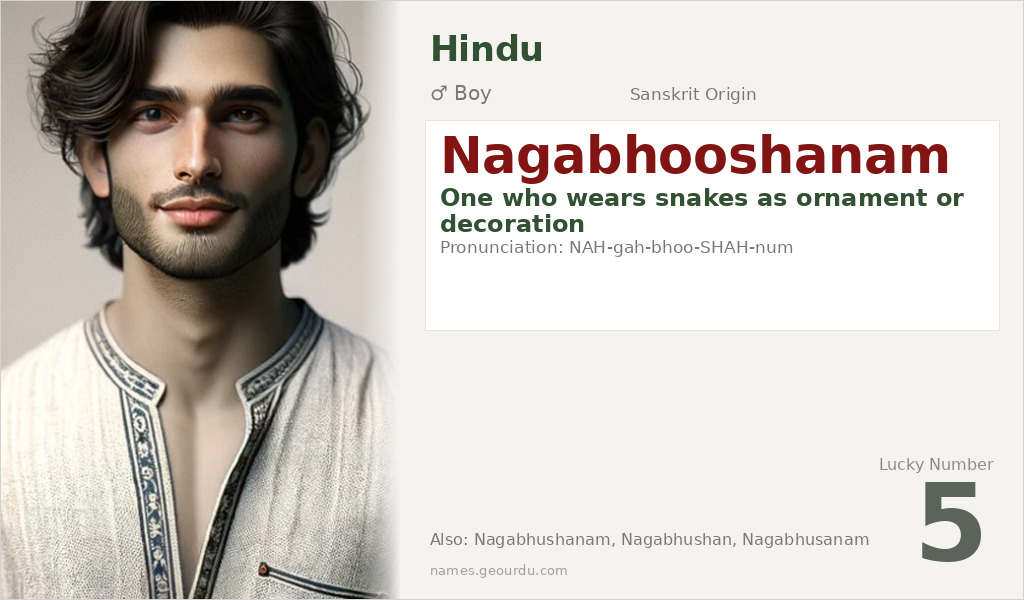
Nagabhooshanam derives from classical Sanskrit, combining ‘Naga’ (snake/serpent) and ‘Bhooshanam’ (ornament/adornment). The complete meaning is ‘one who wears snakes as decoration’ or ‘snake as ornament’. This is not a metaphorical expression but a direct reference to iconographic depictions in Hinduism, particularly associated with Lord Shiva who is often shown with snakes coiled around his neck, arms, or matted hair. In this context, snakes symbolize conquered dangerous energies, transformed into protective adornments. The name thus represents mastery over primal forces and the transformation of potential threats into symbols of power and protection.
| 📛 Name | Nagabhooshanam |
| 💎 Meaning | One who wears snakes as ornament or decoration |
| 👤 Gender | Boy |
| 🕌 Religion | Hindu |
| 🌍 Origin | Sanskrit |
| 🗣 Pronunciation | NAH-gah-bhoo-SHAH-num |
| ✍️ Urdu | ناگابھوشن |
| ✍️ Arabic | ناغابوشانام |
| 🔢 Numerology | 5 |
| ✨ Spellings | Nagabhushanam, Nagabhushan, Nagabhusanam |
Origin & Cultural Significance
Nagabhooshanam originates from Sanskrit, the ancient liturgical language of Hinduism, and specifically from Hindu mythological traditions. The name emerges from descriptive epithets used in Puranic literature and temple iconography to describe deities, particularly Shiva in his ascetic form. Unlike many names that evolved through regional linguistic variations, Nagabhooshanam maintains its classical Sanskrit structure intact. It represents a category of names that describe divine attributes rather than personal qualities, serving as both identifier and theological statement. The name’s usage reflects the practice of bestowing children with names that carry specific religious symbolism and connect them to mythological narratives.
Personality Traits
Those named Nagabhooshanam are often associated with characteristics of resilience, spiritual depth, and transformative power. The snake symbolism suggests an ability to navigate dangerous or challenging situations with grace and mastery. Such individuals may exhibit a combination of intensity and creativity, with the serpent’s shedding skin representing renewal and transformation. The ornamental aspect implies a sense of dignity and purposeful self-presentation, turning potential vulnerabilities into strengths.
Similar Names
If you like Nagabhooshanam, consider: Nagendra, Nagaditya, Nagapriya, Bhooshan, Bhooshana
Famous People Named Nagabhooshanam
- No widely known contemporary figures with this exact name found in records
- The name appears in historical and mythological contexts referencing Shiva's attributes
Frequently Asked Questions About Nagabhooshanam
What does Nagabhooshanam mean?
Nagabhooshanam means 'one who wears snakes as ornament' or 'snake as decoration' in Sanskrit. It's a compound name combining 'Naga' (snake) and 'Bhooshanam' (ornament).
Is Nagabhooshanam a boy or girl name?
Nagabhooshanam is exclusively a boy's name in Hindu naming tradition. The masculine ending '-am' and its association with Lord Shiva's masculine iconography confirm this gender assignment.
What is the origin of Nagabhooshanam?
Nagabhooshanam originates from Sanskrit, the classical language of Hinduism. It specifically comes from Hindu mythological descriptions of deities, particularly associated with Lord Shiva's iconography where snakes are worn as ornaments.





