
Table of Contents
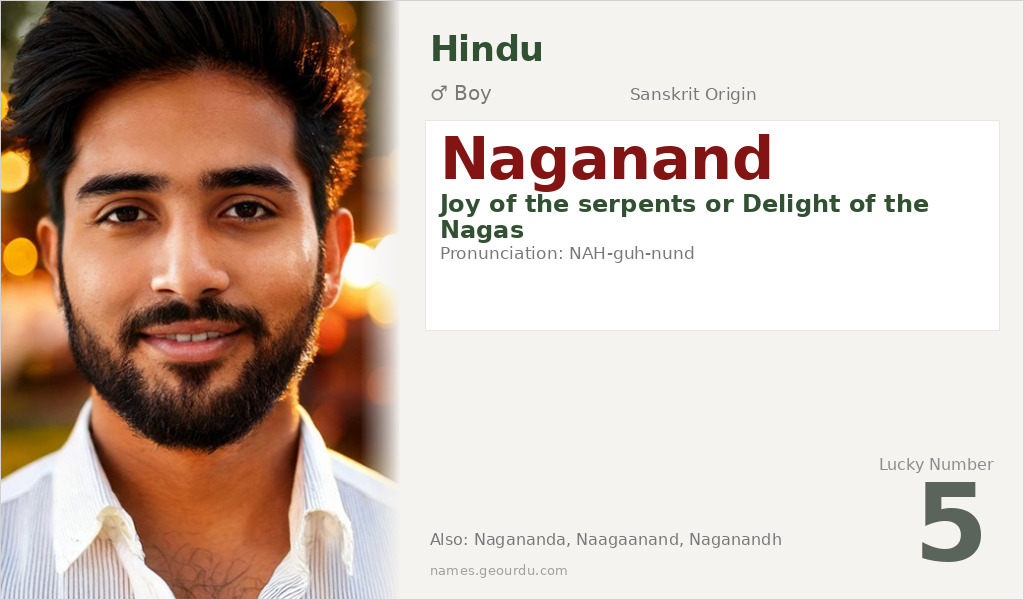
Naganand is a distinctive Sanskrit name with deep roots in Hindu mythology and culture. Meaning ‘Joy of the serpents’ or ‘Delight of the Nagas’, this name carries spiritual significance and connects to ancient serpent deity traditions. As a compound name from classical Sanskrit, Naganand represents a beautiful fusion of mythological symbolism and positive attributes. Discover the rich etymology and cultural context of this unique name.
Meaning of Naganand
Naganand derives from the Sanskrit language, combining two meaningful elements: ‘Naga’ (नाग) and ‘Anand’ (आनन्द). ‘Naga’ refers to serpents or specifically the semi-divine serpent beings in Hindu and Buddhist traditions, often depicted as protectors of treasures and wisdom. ‘Anand’ means joy, bliss, or delight. When combined in Sanskrit compound formation, the name literally translates to ‘joy of the Nagas’ or ‘delight of the serpents’. This construction follows classical Sanskrit tatpurusha compound rules where the first element modifies the second. The name appears in various Hindu texts and mythological contexts, often associated with characters connected to serpent worship or Naga traditions.
| 📛 Name | Naganand |
| 💎 Meaning | Joy of the serpents or Delight of the Nagas |
| 👤 Gender | Boy |
| 🕌 Religion | Hindu |
| 🌍 Origin | Sanskrit |
| 🗣 Pronunciation | NAH-guh-nund |
| ✍️ Urdu | ناگ آنند |
| ✍️ Arabic | ناغاناند |
| 🔢 Numerology | 5 |
| ✨ Spellings | Nagananda, Naagaanand, Naganandh |
Origin & Cultural Significance
Naganand originates from classical Sanskrit, the ancient liturgical language of Hinduism, Buddhism, and Jainism. The name emerges from India’s rich mythological traditions where Nagas (serpent deities) play significant roles as protectors, wisdom-keepers, and intermediaries between different realms. In Hindu culture, Nagas are revered beings associated with water, fertility, and hidden knowledge. Names containing ‘Naga’ elements have been used for centuries in Indian subcontinent, particularly among communities that venerate serpent deities. The name reflects the syncretic nature of Indian spirituality where natural elements (serpents) are imbued with divine qualities and positive attributes (joy).
Personality Traits
Those named Naganand are often perceived as possessing deep intuition and spiritual awareness, reflecting the wisdom-associated qualities of Nagas in mythology. They may demonstrate transformative abilities, adapting to challenges while maintaining inner peace. The ‘Anand’ (joy) component suggests a generally positive disposition and the capacity to find bliss in spiritual or intellectual pursuits. Such individuals might be drawn to mystical or philosophical studies, showing respect for ancient traditions while embracing personal growth.
Similar Names
If you like Naganand, consider: Nagendra, Nagabhushan, Anand, Nagesh, Nagadatta
Famous People Named Naganand
- Naganand — A character in Hindu mythology associated with serpent deities
- Nagananda — A 7th century Sanskrit play by King Harsha, though this is the play title rather than a person's name
Frequently Asked Questions About Naganand
What does Naganand mean?
Naganand means 'Joy of the serpents' or 'Delight of the Nagas' in Sanskrit. It is a compound name combining 'Naga' (serpent/deity) and 'Anand' (joy/bliss).
Is Naganand a boy or girl name?
Naganand is traditionally a masculine name in Hindu naming conventions. The name follows Sanskrit grammatical patterns for masculine nouns and has historical usage as a male name in Indian contexts.
What is the origin of Naganand?
Naganand originates from Sanskrit, the classical language of ancient India. It comes from Hindu mythological traditions where Nagas (serpent deities) are revered beings, combined with the concept of Anand (joy/bliss) to create a meaningful compound name.





