
Table of Contents
Nagaraju is a powerful and meaningful Hindu boy name with deep roots in Indian mythology and culture. Meaning ‘King of Serpents,’ this name carries significant spiritual weight and is particularly popular in South Indian communities. With its combination of Sanskrit and Dravidian linguistic elements, Nagaraju represents a fascinating blend of linguistic traditions. This name continues to be chosen by parents seeking a name with mythological resonance and regal connotations.
Meaning of Nagaraju
Nagaraju derives from two distinct linguistic elements that combine to create its profound meaning. The first component ‘Naga’ comes from Sanskrit (नाग), referring specifically to divine or mythical serpents in Hindu tradition, not ordinary snakes. These Nagas are semi-divine beings often associated with water, fertility, and protection in Hindu and Buddhist mythology. The second element ‘Raju’ originates from Dravidian languages like Telugu and Kannada, where it means ‘king’ or ‘ruler.’ When combined, the name literally translates to ‘King of Serpents’ or ‘Ruler of Nagas,’ reflecting the elevated status of serpent deities in Hindu cosmology. This name is particularly significant in regions where Naga worship is prevalent, symbolizing both spiritual authority and protective power.
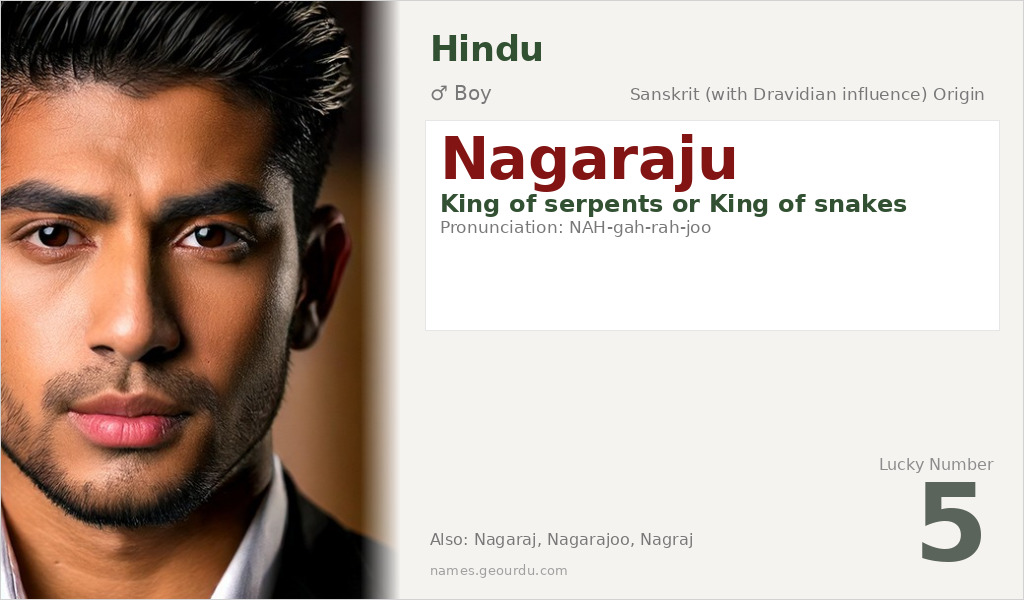
| 📛 Name | Nagaraju |
| 💎 Meaning | King of serpents or King of snakes |
| 👤 Gender | Boy |
| 🕌 Religion | Hindu |
| 🌍 Origin | Sanskrit (with Dravidian influence) |
| 🗣 Pronunciation | NAH-gah-rah-joo |
| ✍️ Urdu | ناگاراجو |
| ✍️ Arabic | ناغاراجو |
| 🔢 Numerology | 5 |
| ✨ Spellings | Nagaraj, Nagarajoo, Nagraj, Nagrajoo |
Origin & Cultural Significance
Nagaraju originates from the Indian subcontinent, specifically combining Sanskrit and Dravidian linguistic traditions. The name is most prevalent in South Indian states like Andhra Pradesh, Telangana, Karnataka, and Tamil Nadu, where both Sanskrit influence and Dravidian languages have coexisted for centuries. Culturally, the name reflects the importance of Naga worship in Hinduism, where serpents are revered as divine beings rather than feared as dangerous animals. Historically, names incorporating ‘Naga’ have been used for centuries in India, with Nagaraju representing a specific regional variation that gained popularity in Telugu-speaking communities. The name’s structure follows common South Indian naming patterns where Sanskrit roots combine with Dravidian elements to create meaningful compounds.
Personality Traits
Those named Nagaraju are often associated with leadership qualities, wisdom, and protective instincts. The serpent symbolism suggests individuals who are adaptable, resilient, and capable of transformation when faced with challenges. In cultural context, the name implies someone who commands respect while maintaining deep spiritual connections, potentially exhibiting intuitive understanding and strategic thinking. The regal component of the name further suggests natural authority and responsibility toward others.
Similar Names
If you like Nagaraju, consider: Nagendra, Nagabhushanam, Nagappa, Naganna, Nagalingam
Famous People Named Nagaraju
- Nagaraju Surkapalli — Indian film director known for Telugu cinema
- Nagaraju — Indian cricketer who played for Andhra Pradesh in domestic cricket
Frequently Asked Questions About Nagaraju
What does Nagaraju mean?
Nagaraju means 'King of Serpents' or 'King of Snakes,' specifically referring to divine serpent beings (Nagas) in Hindu mythology. The name combines Sanskrit 'Naga' (serpent) with Dravidian 'Raju' (king).
Is Nagaraju a boy or girl name?
Nagaraju is exclusively a boy's name in Hindu naming traditions. There is no feminine equivalent in common usage, though names like Nagalakshmi exist for girls with similar serpent-related roots.
What is the origin of Nagaraju?
Nagaraju originates from India, combining Sanskrit and Dravidian linguistic elements. It is particularly associated with South Indian Hindu communities, especially Telugu-speaking regions, and reflects cultural reverence for serpent deities in Hindu mythology.





