
Table of Contents
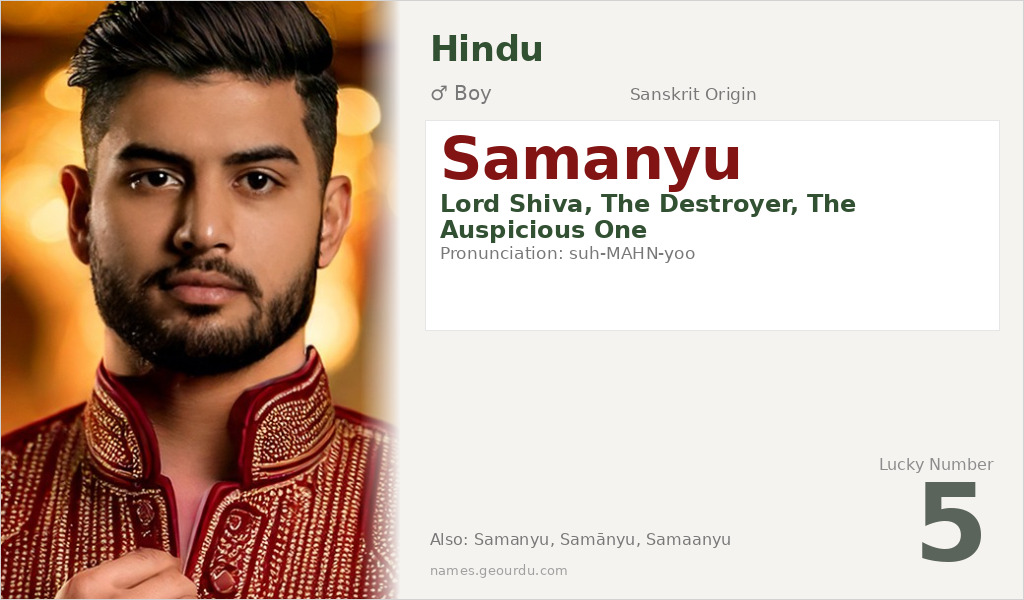
Samanyu is a powerful and spiritually significant Hindu boy name that carries deep religious meaning. Rooted in ancient Sanskrit, this name is directly associated with Lord Shiva, one of the principal deities in Hinduism. Parents choosing this name often seek to imbue their child with the divine qualities of transformation, strength, and auspiciousness. With its rich theological background, Samanyu represents more than just a name—it’s a connection to Hindu cosmic principles.
Meaning of Samanyu
Samanyu derives from Sanskrit, where it functions as an epithet for Lord Shiva, specifically meaning ‘The Destroyer’ or ‘The Auspicious One.’ The name combines ‘saman’ (meaning equal or same) with ‘yu’ (meaning to join or unite), reflecting Shiva’s role in maintaining cosmic balance through dissolution and regeneration. In Hindu scriptures, including the Vedas and Puranas, Samanyu appears as one of Shiva’s many names, emphasizing his function in the Trimurti alongside Brahma (creator) and Vishnu (preserver). The name carries profound theological weight, representing not just destruction but the necessary dissolution that makes way for new creation. This linguistic and religious context gives Samanyu its distinctive meaning within Hindu naming traditions.
| 📛 Name | Samanyu |
| 💎 Meaning | Lord Shiva, The Destroyer, The Auspicious One |
| 👤 Gender | Boy |
| 🕌 Religion | Hindu |
| 🌍 Origin | Sanskrit |
| 🗣 Pronunciation | suh-MAHN-yoo |
| ✍️ Urdu | سامنیو |
| ✍️ Arabic | سامانيو |
| 🔢 Numerology | 5 |
| ✨ Spellings | Samanyu, Samānyu, Samaanyu |
Origin & Cultural Significance
Samanyu originates from classical Sanskrit, the ancient liturgical language of Hinduism that dates back to at least 1500 BCE. The name appears in various Hindu religious texts, particularly those dedicated to Shiva worship and Shaivism traditions. Culturally, it belongs to the broader category of theophoric names in Hindu tradition—names that incorporate or reference divine beings. Unlike many modern Hindu names that have been adapted from other languages, Samanyu maintains its pure Sanskrit form and religious specificity. The name’s usage reflects the enduring practice of naming children after deities to invoke divine protection and qualities, a tradition that continues across Hindu communities in India and the diaspora.
Personality Traits
Those named Samanyu are often associated with transformative energy and spiritual depth, mirroring the attributes of Lord Shiva. They may demonstrate resilience in facing challenges and an ability to facilitate change in their environments. The name suggests a personality that balances intensity with compassion, capable of both decisive action and philosophical contemplation. Such individuals might naturally gravitate toward leadership roles where they can implement meaningful transformations.
Similar Names
If you like Samanyu, consider: Shiva, Shankar, Mahadev, Rudra, Bholenath
Famous People Named Samanyu
- No widely known contemporary figures with this name found in verified sources
- The name appears primarily in Hindu religious contexts and ancient texts rather than modern celebrity usage
Frequently Asked Questions About Samanyu
What does Samanyu mean?
Samanyu means 'Lord Shiva' or 'The Destroyer' in Sanskrit. It is specifically an epithet for Shiva in Hindu tradition, representing his role in the cosmic cycle of dissolution and regeneration.
Is Samanyu a boy or girl name?
Samanyu is exclusively a boy name in Hindu naming tradition. It is a masculine name associated with Lord Shiva, one of the principal male deities in Hinduism.
What is the origin of Samanyu?
Samanyu originates from Sanskrit, the ancient liturgical language of Hinduism. It appears in Hindu religious texts as a name for Lord Shiva and has been used traditionally in Hindu communities for centuries.





