
Table of Contents
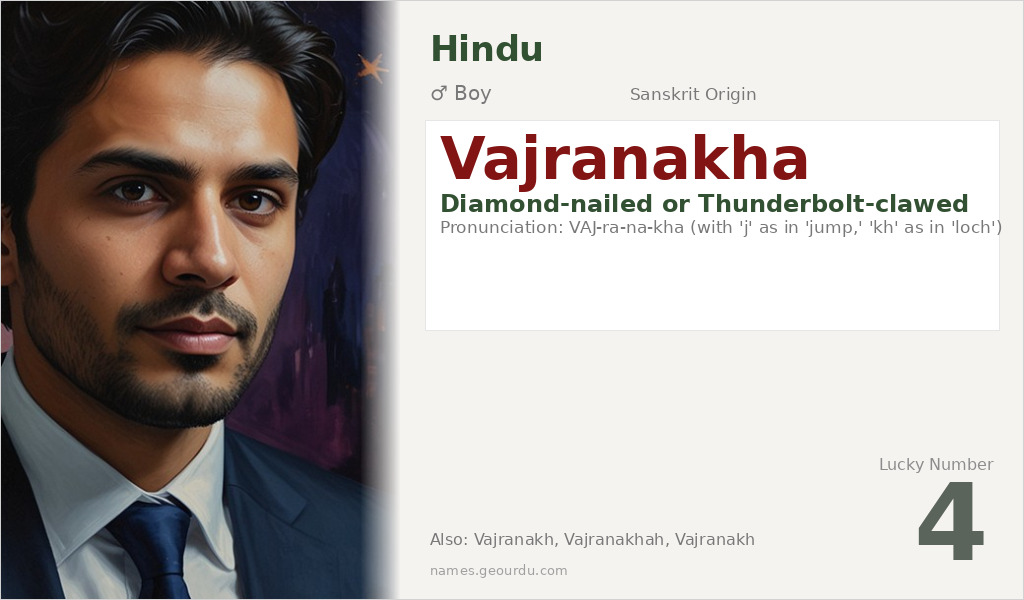
Vajranakha is a powerful Sanskrit name steeped in Hindu mythology and linguistic richness. Meaning ‘Diamond-nailed’ or ‘Thunderbolt-clawed,’ this name evokes imagery of indestructible strength and formidable power. Traditionally given to boys, it carries deep cultural and etymological significance within Hindu traditions. Explore the fascinating origins and meanings behind this unique name.
Meaning of Vajranakha
Vajranakha derives from Sanskrit, combining ‘vajra’ (वज्र) meaning diamond, thunderbolt, or the mythical indestructible weapon of Indra, and ‘nakha’ (नख) meaning nail, claw, or talon. The compound literally translates to ‘diamond-nailed’ or ‘thunderbolt-clawed,’ suggesting someone with claws as hard and powerful as a diamond or thunderbolt. In Sanskrit morphology, this is a tatpurusha compound where ‘vajra’ modifies ‘nakha’ to create a descriptive epithet. The name appears in Hindu texts describing powerful beings or warriors with exceptionally strong claws, reflecting the martial and divine connotations of the ‘vajra’ element.
| 📛 Name | Vajranakha |
| 💎 Meaning | Diamond-nailed or Thunderbolt-clawed |
| 👤 Gender | Boy |
| 🕌 Religion | Hindu |
| 🌍 Origin | Sanskrit |
| 🗣 Pronunciation | VAJ-ra-na-kha (with 'j' as in 'jump,' 'kh' as in 'loch') |
| ✍️ Urdu | وجرنکھ |
| ✍️ Arabic | فجراناخا |
| 🔢 Numerology | 4 |
| ✨ Spellings | Vajranakh, Vajranakhah, Vajranakh |
Origin & Cultural Significance
Vajranakha originates from classical Sanskrit, the ancient liturgical language of Hinduism. It emerges from Hindu mythological and epic traditions, where such compound names were used to describe attributes of deities, demons, or heroic figures. The ‘vajra’ component connects to Vedic mythology, particularly associated with Indra’s weapon symbolizing supreme power and invincibility. Culturally, it reflects the Sanskrit naming convention of combining elements to create meaningful, descriptive names for boys, often emphasizing strength, protection, or divine qualities. While not extremely common today, it preserves a link to India’s rich linguistic and mythological heritage.
Personality Traits
Those named Vajranakha are often associated with traits of resilience, protection, and formidable strength, mirroring the name’s meaning of diamond-hard claws. They may be seen as determined individuals with an unyielding spirit, capable of overcoming obstacles with thunderbolt-like force. The name suggests a personality that combines hardness with precision, much like a diamond’s edge, making them natural protectors and leaders in challenging situations.
Similar Names
If you like Vajranakha, consider: Vajra, Vajradhara, Vajrapani, Nakulesh, Nakul, Vajrang, Vajrabahu, Vajrasena, Nakhraj, Naksh
Famous People Named Vajranakha
- Vajranakha — Mythological figure in Hindu texts, often described as a powerful being with diamond-hard claws
- No widely known contemporary figures with this exact name found in records
Frequently Asked Questions About Vajranakha
What does Vajranakha mean?
Vajranakha means 'Diamond-nailed' or 'Thunderbolt-clawed' in Sanskrit, combining 'vajra' (diamond/thunderbolt) and 'nakha' (nail/claw).
Is Vajranakha a boy or girl name?
Vajranakha is traditionally a boy's name in Hindu naming conventions, derived from Sanskrit masculine grammatical forms and mythological usage.
What is the origin of Vajranakha?
Vajranakha originates from Sanskrit, the ancient language of Hindu scriptures, with roots in Hindu mythology and epic traditions.





