
Table of Contents
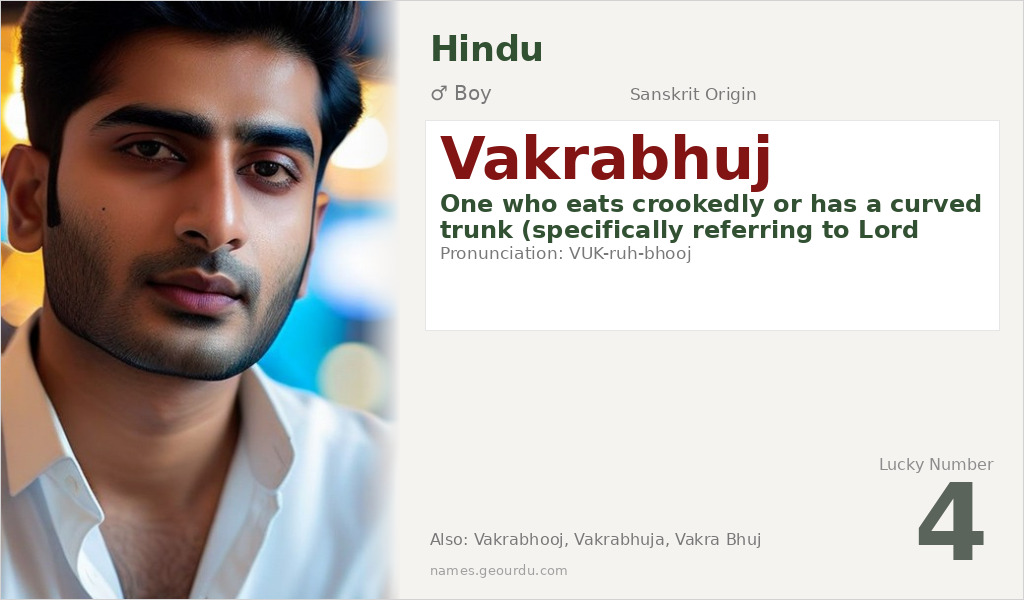
Vakrabhuj is a distinctive Sanskrit name with deep roots in Hindu tradition, specifically associated with Lord Ganesha. This meaningful name carries both religious significance and linguistic richness that reflects ancient Indian culture. Parents choosing this name often seek to invoke the blessings and qualities of the beloved elephant-headed deity. Understanding its precise meaning and origin reveals why it remains a spiritually significant choice.
Meaning of Vakrabhuj
Vakrabhuj is a compound Sanskrit name with precise linguistic components. ‘Vakra’ (वक्र) means crooked, curved, or bent, while ‘bhuj’ (भुज्) means to eat, consume, or enjoy. Together, they form ‘one who eats crookedly’ or ‘one with a curved eating instrument.’ This directly references Lord Ganesha’s distinctive curved trunk (vakratunda) and his famous love for sweets, particularly modak. The name appears in various Hindu scriptures and stotras dedicated to Ganesha, including the Ganesha Sahasranama where it’s listed among his thousand names. Unlike generic references to Ganesha, Vakrabhuj specifically highlights this unique physical and behavioral characteristic of the deity.
| 📛 Name | Vakrabhuj |
| 💎 Meaning | One who eats crookedly or has a curved trunk (specifically referring to Lord Ganesha) |
| 👤 Gender | Boy |
| 🕌 Religion | Hindu |
| 🌍 Origin | Sanskrit |
| 🗣 Pronunciation | VUK-ruh-bhooj |
| ✍️ Urdu | واکر بھوج |
| ✍️ Arabic | فاكرابهوج |
| 🔢 Numerology | 4 |
| ✨ Spellings | Vakrabhooj, Vakrabhuja, Vakra Bhuj |
Origin & Cultural Significance
Vakrabhuj originates from classical Sanskrit, the ancient liturgical language of Hinduism. It emerges from the rich tradition of naming deities with descriptive epithets that highlight their distinctive attributes. Within Hindu mythology, such names serve both devotional and mnemonic purposes, helping devotees remember and contemplate specific aspects of the divine. The name is particularly associated with the Ganapatya tradition that focuses on Ganesha worship. While not as common as names like Ganesha or Ganapati in contemporary usage, Vakrabhuj maintains its place in religious texts, rituals, and among families seeking traditional, meaningful names with strong spiritual connections.
Personality Traits
Those named Vakrabhuj are often believed to inherit qualities associated with Lord Ganesha – intelligence, wisdom, and the ability to overcome obstacles. They may demonstrate a thoughtful, analytical approach to problems and a love for learning. The name suggests someone who approaches life’s challenges with creativity and persistence, much like Ganesha’s clever solutions to mythological dilemmas. These individuals might also show appreciation for arts, knowledge, and spiritual pursuits.
Similar Names
If you like Vakrabhuj, consider: Ganesha, Ganapati, Vighnesh, Vinayak, Vakratunda
Famous People Named Vakrabhuj
- No widely known contemporary figures with this name found in research. The name is primarily used as a religious/theological reference to Lord Ganesha in Hindu tradition.
Frequently Asked Questions About Vakrabhuj
What does Vakrabhuj mean?
Vakrabhuj means 'one who eats crookedly' or 'one with a curved eating instrument' in Sanskrit, specifically referring to Lord Ganesha's characteristic of eating with his curved trunk.
Is Vakrabhuj a boy or girl name?
Vakrabhuj is exclusively a boy's name in Hindu tradition, as it refers to the male deity Lord Ganesha and follows masculine Sanskrit grammatical forms.
What is the origin of Vakrabhuj?
Vakrabhuj originates from Sanskrit, the classical language of ancient India, and is specifically from Hindu religious texts where it appears as an epithet for Lord Ganesha.





