
Table of Contents
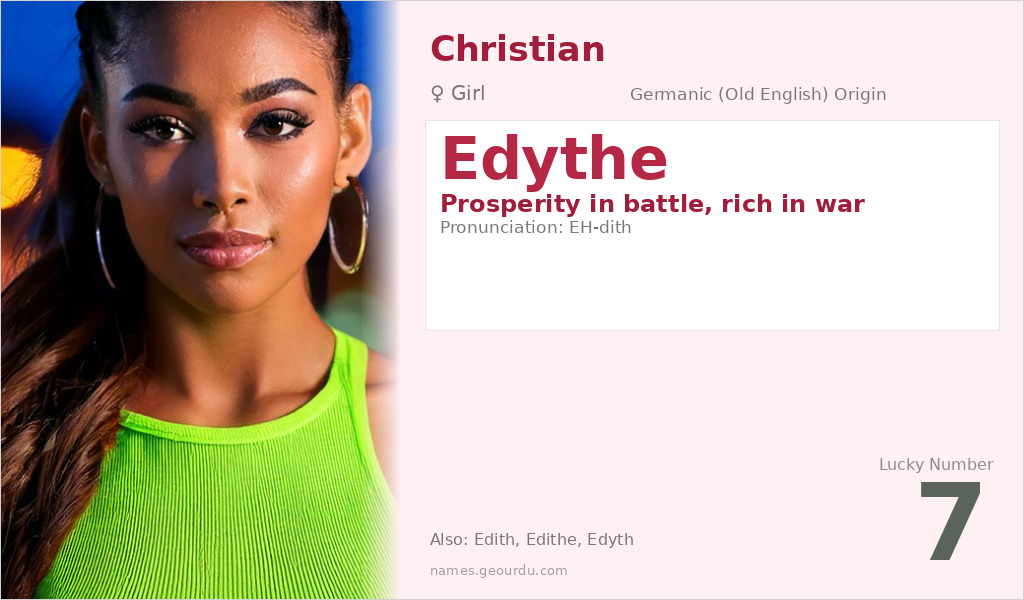
Edythe is a graceful variant of the classic name Edith, carrying centuries of history within its syllables. With roots reaching back to Anglo-Saxon England, this name combines elements of prosperity and strength. Popular among Christian families, Edythe offers both traditional charm and distinctive spelling. Discover the rich heritage and meaning behind this timeless name.
Meaning of Edythe
Edythe derives from the Old English name Eadgȳð, composed of two elements: ‘ēad’ meaning ‘wealth, prosperity, or fortune’ and ‘gȳð’ meaning ‘war, battle, or strife’. This creates the meaning ‘prosperity in battle’ or ‘rich in war’, reflecting values important in early medieval society. The name first appeared in historical records with Saint Edith of Wilton in the 10th century. Unlike the incorrect interpretation ‘rich friend’, the authentic meaning emphasizes success through struggle rather than simple friendship. The ‘ēad’ element appears in many Old English names like Edgar (‘prosperity spear’) and Edwin (‘prosperity friend’), showing its importance in naming conventions.
| 📛 Name | Edythe |
| 💎 Meaning | Prosperity in battle, rich in war |
| 👤 Gender | Girl |
| 🕌 Religion | Christian |
| 🌍 Origin | Germanic (Old English) |
| 🗣 Pronunciation | EH-dith |
| ✍️ Urdu | ایڈتھ |
| ✍️ Arabic | إديث |
| 🔢 Numerology | 7 |
| ✨ Spellings | Edith, Edithe, Edyth, Edyth, Eadgyth |
Origin & Cultural Significance
Edythe originated in Anglo-Saxon England before the Norman Conquest, with its earliest notable bearer being Saint Edith of Wilton (c. 961-984). As the daughter of King Edgar the Peaceful, her sainthood helped popularize the name across Christian Europe. The name survived the Norman Conquest and continued through the Middle Ages, with variations appearing in different regions. While primarily associated with English and Germanic Christian traditions, the name spread through royal connections and religious veneration. Its revival in the 19th century coincided with renewed interest in medieval names and Anglo-Saxon heritage.
Personality Traits
The historical meaning of Edythe suggests personality traits combining prosperity-mindedness with resilience. Those bearing this name might naturally seek stability and abundance while demonstrating quiet strength during challenges. The battle element in the etymology doesn’t imply aggression but rather perseverance and the ability to overcome obstacles. This creates a balanced personality profile of someone both nurturing and determined.
Similar Names
If you like Edythe, consider: Edith, Eadith, Edwina, Ethel, Audrey, Matilda, Gertrude, Winifred, Mildred, Dorothy
Famous People Named Edythe
- Saint Edith of Wilton — 10th-century English saint and princess, daughter of King Edgar
- Edith Wharton — Pulitzer Prize-winning American novelist (1862-1937), author of 'The Age of Innocence'
Frequently Asked Questions About Edythe
What does Edythe mean?
Edythe means 'prosperity in battle' or 'rich in war', derived from Old English elements 'ēad' (wealth/prosperity) and 'gȳð' (war/battle).
Is Edythe a boy or girl name?
Edythe is exclusively a feminine name, with all historical and contemporary usage being for girls. It's a variant of the feminine name Edith.
What is the origin of Edythe?
Edythe originates from Old English (Germanic language family) through the name Eadgȳð, first recorded in 10th-century England with Saint Edith of Wilton.





