
Table of Contents
Horsa is a name steeped in early English history and Germanic legend. Best known as the brother of Hengist, who led the Jutish invasion of Britain in the 5th century, this name carries the powerful and straightforward meaning of ‘horse’. While rare today, Horsa remains a fascinating choice for those interested in ancient warrior names or animal-inspired monikers. Its legacy is preserved in historical texts like Bede’s chronicles, linking it to the foundational myths of England.
Meaning of Horsa
Horsa derives directly from the Old English word for ‘horse’, which itself comes from the Proto-Germanic *hrussą. This root is shared across Germanic languages, such as Old Norse ‘hross’ and modern German ‘Ross’. The name’s meaning is literal, reflecting the importance of horses in Germanic culture as symbols of status, mobility, and strength. Unlike many names that evolve metaphorical meanings, Horsa retains its concrete animal reference. Its usage in the 5th century by the Jutish leader Horsa underscores its association with warrior nobility and historical legacy.
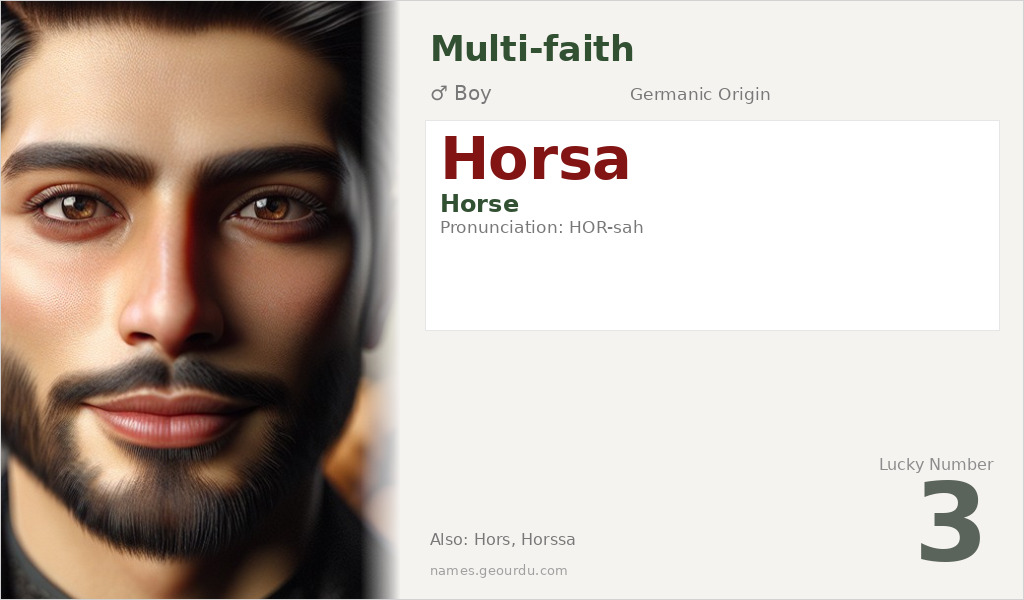
| 📛 Name | Horsa |
| 💎 Meaning | Horse |
| 👤 Gender | Boy |
| 🕌 Religion | Multi-faith |
| 🌍 Origin | Germanic |
| 🗣 Pronunciation | HOR-sah |
| ✍️ Urdu | ہورسا |
| ✍️ Arabic | هورسا |
| 🔢 Numerology | 3 |
| ✨ Spellings | Hors, Horssa |
Origin & Cultural Significance
Horsa originates from the Germanic tribes, specifically the Jutes, who migrated to Britain in the post-Roman era. According to the Venerable Bede’s ‘Ecclesiastical History’, Horsa and his brother Hengist were invited by the British king Vortigern to serve as mercenaries but later established the Kingdom of Kent. The name is thus deeply tied to early English history and Germanic migration legends. While not common in modern naming, it appears occasionally in historical or literary contexts, often evoking ancient warrior ethos. Its cultural significance lies more in historical record than religious tradition, making it a multi-faith name without specific denominational ties.
Personality Traits
Named after the steadfast horse, individuals called Horsa are often seen as resilient and dependable, with a natural inclination toward leadership and adventure. They may embody the horse’s qualities of grace under pressure and a free-spirited nature, making them both reliable and independent. In social settings, they tend to be loyal companions, much like the historical Horsa who fought alongside his brother. Their personality is frequently associated with courage and a pioneering attitude, inspired by the name’s legendary bearer.
Similar Names
If you like Horsa, consider: Hengist, Hrothgar, Hors, Ross, Epona
Famous People Named Horsa
- Horsa — 5th-century Jutish warrior and legendary founder of Kent with his brother Hengist
- Horsa — occasional historical or literary usage in English contexts referencing the original figure
Frequently Asked Questions About Horsa
What does Horsa mean?
Horsa means 'horse' in Old English, derived from the Proto-Germanic word *hrussą. It is a literal animal name with historical usage among Germanic tribes.
Is Horsa a boy or girl name?
Horsa is exclusively a boy's name, historically borne by male figures like the 5th-century Jutish warrior Horsa. There are no recorded feminine variants in its cultural context.
What is the origin of Horsa?
Horsa originates from Germanic languages, specifically Old English, and is tied to the Jutish invasion of Britain in the 5th century. It is not inherently religious but appears in early English historical records.





