
Table of Contents
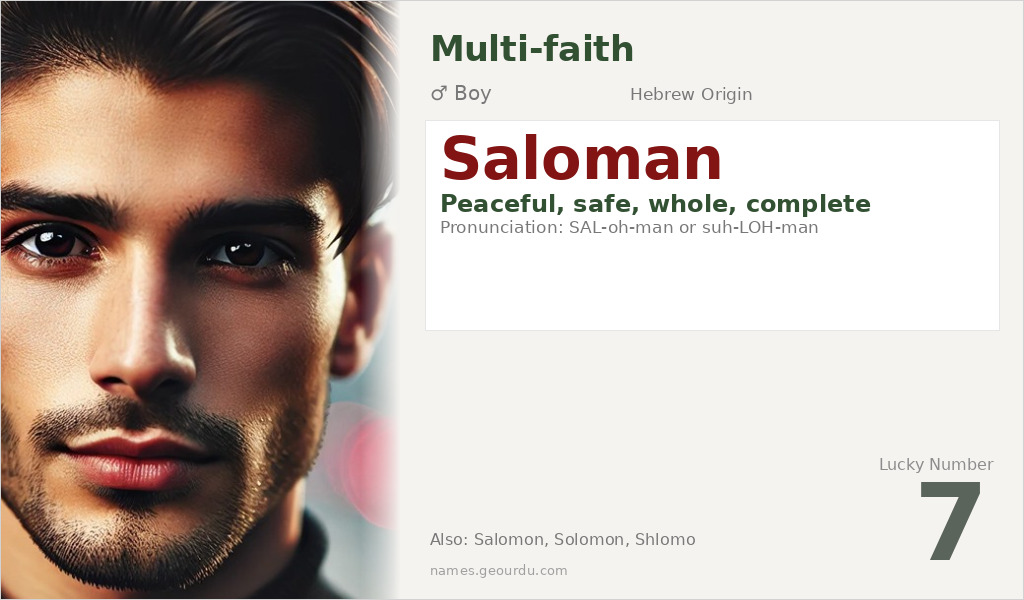
Saloman is a distinguished name with ancient roots that carries profound meaning across multiple cultures. Derived from the Hebrew name for the wise biblical king, this name has traveled through centuries and continents while maintaining its core significance. Whether spelled as Saloman, Solomon, or Shlomo, this name represents peace, wisdom, and completeness. Its enduring appeal speaks to timeless values that resonate across religious and cultural boundaries.
Meaning of Saloman
Saloman originates from the Hebrew name Shlomo (שְׁלֹמֹה), which is directly derived from the Hebrew word ‘shalom’ meaning peace. The name literally translates to ‘peaceful,’ ‘safe,’ ‘whole,’ or ‘complete.’ In biblical context, King Solomon (Shlomo in Hebrew) was renowned for his wisdom, justice, and the peace that characterized his reign. The name evolved through various languages: Greek (Σολομών), Latin (Salomon), and into European vernaculars. The ‘-man’ ending represents a common adaptation in Germanic and English languages from the original Hebrew form. This etymological journey demonstrates how the name maintained its core meaning while adapting to different linguistic contexts.
| 📛 Name | Saloman |
| 💎 Meaning | Peaceful, safe, whole, complete |
| 👤 Gender | Boy |
| 🕌 Religion | Multi-faith |
| 🌍 Origin | Hebrew |
| 🗣 Pronunciation | SAL-oh-man or suh-LOH-man |
| ✍️ Urdu | سلیمان |
| ✍️ Arabic | سليمان |
| 🔢 Numerology | 7 |
| ✨ Spellings | Salomon, Solomon, Shlomo, Salomone, Suleiman |
Origin & Cultural Significance
Saloman has its primary origins in ancient Hebrew culture, specifically from the biblical King Solomon who ruled Israel in the 10th century BCE. The name spread through Jewish communities and entered Christian tradition through the Old Testament. In Islamic tradition, the name appears as Suleiman (سليمان), considered a prophet and king in the Quran. The name has been used across Europe since medieval times, particularly among Jewish communities and later adopted by Christians. Variants exist in numerous languages including Arabic (Sulayman), Turkish (Süleyman), and various European forms. This cross-cultural adoption makes Saloman a truly multi-faith name with shared Abrahamic heritage.
Personality Traits
Those named Saloman often embody the peaceful wisdom associated with their namesake. They tend to be thoughtful, analytical individuals who approach life with consideration and balance. The name’s meaning suggests someone who values harmony in relationships and seeks peaceful resolutions to conflicts. Historically associated with King Solomon’s legendary wisdom, the name carries expectations of intelligence, fairness, and good judgment.
Similar Names
If you like Saloman, consider: Solomon, Shlomo, Suleiman, Salim, Salam, Salman, Salvador, Salvatore, Shalom, Sol
Famous People Named Saloman
- King Solomon — Biblical king of Israel known for wisdom and building the First Temple
- Solomon Northup — American abolitionist and author of 'Twelve Years a Slave'
Frequently Asked Questions About Saloman
What does Saloman mean?
Saloman means 'peaceful,' 'safe,' or 'complete,' derived from the Hebrew word 'shalom' meaning peace. It originates from the Hebrew name Shlomo, famously borne by King Solomon in the Bible.
Is Saloman a boy or girl name?
Saloman is traditionally a masculine name used for boys. It has historical usage as a male name across Hebrew, Christian, and Islamic traditions, with no significant feminine variants in its original cultural contexts.
What is the origin of Saloman?
Saloman originates from Hebrew, specifically from the name Shlomo (שְׁלֹמֹה), which was the name of the biblical King Solomon. The name has been adopted into Christian, Jewish, and Islamic traditions with various spellings and adaptations across languages.





