
Table of Contents
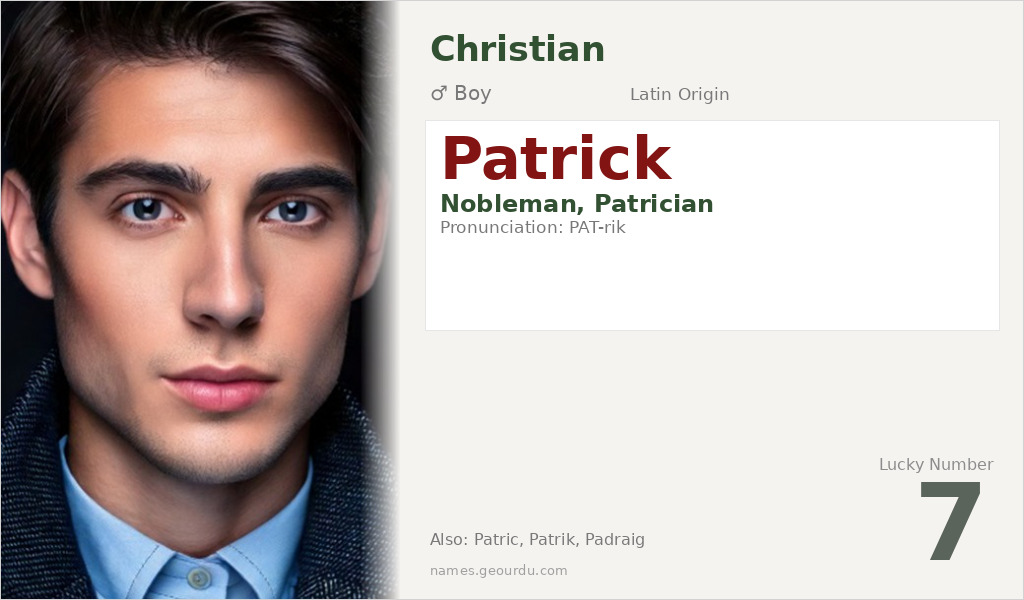
Patrick is a timeless classic name with deep historical roots and Christian significance. Meaning ‘nobleman’ or ‘patrician’ in Latin, this name gained worldwide fame through Saint Patrick, Ireland’s beloved patron saint. Today, Patrick remains a popular choice for boys across English-speaking countries and beyond, carrying centuries of tradition and noble connotations.
Meaning of Patrick
The name Patrick has a clear and well-documented etymology tracing back to the Latin ‘Patricius’, meaning ‘nobleman’ or ‘patrician’. In ancient Rome, patricians were the aristocratic class, giving the name connotations of nobility and high social standing. Through Christianization, the name was adopted by early Christians and most famously borne by Saint Patrick (Patricius in Latin), the 5th-century missionary to Ireland. The Irish form Pádraig developed from this Latin root, and the English Patrick evolved through Old French influence. There is no linguistic connection to ‘Paul’ or ‘small’ – these are erroneous associations.
| 📛 Name | Patrick |
| 💎 Meaning | Nobleman, Patrician |
| 👤 Gender | Boy |
| 🕌 Religion | Christian |
| 🌍 Origin | Latin |
| 🗣 Pronunciation | PAT-rik |
| ✍️ Urdu | پیٹرک |
| ✍️ Arabic | باتريك |
| 🔢 Numerology | 7 |
| ✨ Spellings | Patric, Patrik, Padraig, Pádraig, Patrice |
Origin & Cultural Significance
Patrick originated as a Roman cognomen (family name) Patricius before becoming a given name in early Christian communities. The name’s popularity exploded in medieval Europe due to veneration of Saint Patrick, who was actually born in Roman Britain but became Ireland’s primary patron saint after his missionary work there. From Ireland, the name spread throughout the Christian world, particularly in English, French, and German-speaking regions. Today, Patrick remains strongly associated with Irish heritage and Catholic tradition, though it’s used by Christians of various denominations worldwide.
Personality Traits
Historically, the name Patrick carries associations with leadership, spiritual devotion, and noble character. These traits stem both from the literal meaning ‘nobleman’ and the legacy of Saint Patrick, who displayed remarkable missionary zeal and organizational skills. In modern contexts, Patricks are often perceived as reliable, charismatic individuals with natural authority. The name suggests someone who is both grounded and aspirational, capable of leadership while maintaining approachability.
Similar Names
If you like Patrick, consider: Peter, Paul, Michael, Matthew, Christopher
Famous People Named Patrick
- Saint Patrick — 5th-century Christian missionary and patron saint of Ireland
- Patrick Stewart — English actor known for Star Trek and X-Men roles
Frequently Asked Questions About Patrick
What does Patrick mean?
Patrick means 'nobleman' or 'patrician', derived from the Latin name Patricius. It has no connection to 'Paul' or 'small' as sometimes incorrectly stated.
Is Patrick a boy or girl name?
Patrick is exclusively a boy's name in all cultural contexts where it's used, though the French feminine form Patrice exists for girls.
What is the origin of Patrick?
Patrick originates from Latin, specifically from the Roman name Patricius meaning 'nobleman'. It gained Christian significance through Saint Patrick and became associated with Irish heritage.





