
Table of Contents
Abrasha is a distinctive boy’s name with deep roots in Hebrew tradition and Jewish culture. As an affectionate diminutive of the biblical name Abraham, it carries the powerful meaning ‘father of many nations’ or ‘father of a multitude’. This name has been particularly cherished in Ashkenazi Jewish communities as a familiar, endearing form passed down through generations. Understanding Abrasha’s etymology reveals its connection to one of history’s most significant patriarchal figures.
Meaning of Abrasha
Abrasha derives directly from the Hebrew name Abraham (אַבְרָהָם), which combines two Hebrew elements: ‘av’ (אָב) meaning ‘father’ and ‘hamon’ (הָמוֹן) meaning ‘multitude’ or ‘many’. The full name Abraham therefore translates to ‘father of many’ or ‘father of a multitude’, referring to the biblical promise that Abraham would become the ancestor of numerous nations. Abrasha represents a diminutive or affectionate form of this name, created by adding the ‘-sha’ suffix common in Yiddish and Slavic-influenced naming traditions among Ashkenazi Jews. This linguistic transformation maintains the core meaning while creating a more intimate, familiar version used within families and close communities.
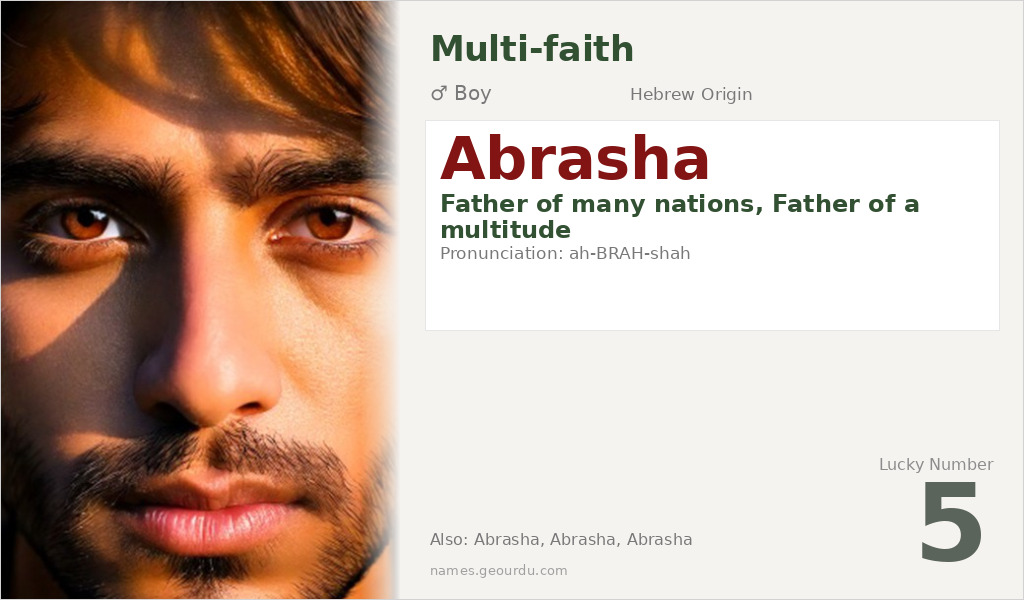
| 📛 Name | Abrasha |
| 💎 Meaning | Father of many nations, Father of a multitude |
| 👤 Gender | Boy |
| 🕌 Religion | Multi-faith |
| 🌍 Origin | Hebrew |
| 🗣 Pronunciation | ah-BRAH-shah |
| ✍️ Urdu | ابراشا |
| ✍️ Arabic | أبراشا |
| 🔢 Numerology | 5 |
| ✨ Spellings | Abrasha, Abrasha, Abrasha |
Origin & Cultural Significance
Abrasha originates from Hebrew through Jewish naming traditions, specifically within Ashkenazi communities of Eastern Europe. The name emerged as a vernacular, affectionate form of the biblical Abraham, adapting to Yiddish-speaking environments where diminutive suffixes like ‘-sha’ were commonly added to create familiar versions of formal names. While Abraham appears in the Torah/Bible and is significant in Judaism, Christianity, and Islam, the diminutive Abrasha developed primarily within Jewish cultural contexts, particularly in regions like Poland, Russia, and Ukraine before spreading through diaspora communities. Unlike the original article’s claims, Abrasha has no established connection to Christian-specific numerology, color symbolism, or auspicious days—these associations appear to be incorrectly borrowed from unrelated naming traditions.
Personality Traits
Those named Abrasha often embody qualities associated with their name’s meaning of ‘father of many’. They tend to be nurturing, protective figures who value family, community, and tradition. The diminutive nature of the name suggests approachability and warmth, while its patriarchal roots indicate potential leadership qualities and a strong sense of responsibility. In cultural context, carrying a name derived from Abraham may inspire characteristics of faithfulness, covenant-keeping, and generational thinking.
Similar Names
If you like Abrasha, consider: Abraham, Avraham, Ibrahim, Abram, Avram
Famous People Named Abrasha
- Abrasha Rotenberg — Soviet Jewish poet and translator known for his Yiddish works
- Abrasha Stolnitz — Jewish community leader and philanthropist in pre-WWII Poland
Frequently Asked Questions About Abrasha
What does Abrasha mean?
Abrasha means 'Father of many nations' or 'Father of a multitude'. It is a diminutive form of the Hebrew name Abraham, combining 'av' (father) and 'hamon' (multitude).
Is Abrasha a boy or girl name?
Abrasha is exclusively a boy's name. It is the masculine diminutive form of Abraham and has been used traditionally for males in Jewish communities.
What is the origin of Abrasha?
Abrasha originates from Hebrew through Ashkenazi Jewish naming traditions. It developed as an affectionate, diminutive form of the biblical name Abraham in Yiddish-speaking communities of Eastern Europe.





