Table of Contents
Adanna is a beautiful and meaningful name with deep cultural roots in Nigeria’s Igbo community. Meaning ‘father’s daughter’ or ‘father’s pride,’ this name carries significant weight in traditional Igbo society where first daughters hold special status. As globalization spreads African names worldwide, Adanna has gained international recognition while maintaining its cultural authenticity. This comprehensive guide explores everything about the name Adanna—from its linguistic origins to its modern usage.
Meaning of Adanna
The name Adanna comes from the Igbo language of southeastern Nigeria, specifically combining two elements: ‘Ada’ meaning ‘first daughter’ or simply ‘daughter,’ and ‘Nna’ meaning ‘father.’ In Igbo naming traditions, children’s names often reflect their relationship to parents or circumstances of birth. Adanna literally translates to ‘father’s daughter,’ but carries deeper connotations of honor, pride, and familial responsibility. The ‘Ada’ prefix indicates the special status of first daughters in Igbo culture, who traditionally play important roles in family ceremonies and inheritance matters. This name exemplifies how Igbo names encode social structure and family relationships within their linguistic construction.
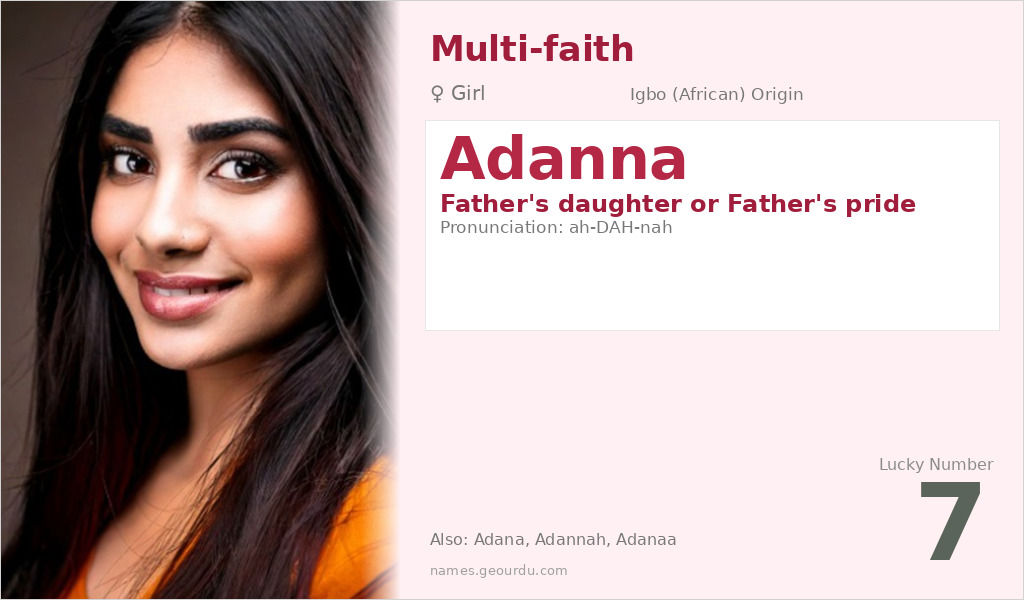
| 📛 Name | Adanna |
| 💎 Meaning | Father's daughter or Father's pride |
| 👤 Gender | Girl |
| 🕌 Religion | Multi-faith |
| 🌍 Origin | Igbo (African) |
| 🗣 Pronunciation | ah-DAH-nah |
| ✍️ Urdu | ادانا |
| ✍️ Arabic | أدانا |
| 🔢 Numerology | 7 |
| ✨ Spellings | Adana, Adannah, Adanaa |
Origin & Cultural Significance
Adanna originates from the Igbo people, one of Nigeria’s largest ethnic groups with a population of over 30 million. The Igbo have a rich naming tradition where names convey meaning, history, and social position. Adanna specifically comes from the cultural practice of naming children after their relationship to parents—similar names include Adaeze (‘father’s daughter who is king/royal’) and Adaku (‘father’s wealth’). While primarily used in Nigeria, the name has spread through the African diaspora to countries like the United States, United Kingdom, and Canada. In contemporary usage, Adanna maintains its cultural significance while being adopted by people of various backgrounds who appreciate its melodic sound and meaningful etymology.
Personality Traits
Those named Adanna often embody the qualities associated with their name’s meaning—they tend to be responsible, family-oriented, and proud individuals. The cultural weight of being an ‘Ada’ (first daughter) in Igbo tradition suggests leadership qualities and a protective nature toward family. Many Adannas display a balance between traditional values and modern adaptability, reflecting the name’s journey from specific cultural context to global usage. Their personality often includes confidence, reliability, and strong connections to their roots or family heritage.
Similar Names
If you like Adanna, consider: Ada, Adaeze, Adaku, Adamma, Adanne
Famous People Named Adanna
- Adanna Steinacker — Nigerian-German entrepreneur and founder of Patricia Bright's fashion brand
- Adanna David — Nigerian actress known for her roles in Nollywood films
Frequently Asked Questions About Adanna
What does Adanna mean?
Adanna means 'father's daughter' or 'father's pride' in the Igbo language of Nigeria. It combines 'Ada' (first daughter) and 'Nna' (father) to create a name that reflects familial relationships and honor.
Is Adanna a boy or girl name?
Adanna is exclusively a girl's name in its original Igbo cultural context. The 'Ada' component specifically refers to daughters, particularly first daughters, making it feminine by linguistic and cultural definition.
What is the origin of Adanna?
Adanna originates from the Igbo language and culture of southeastern Nigeria. It is an African name with specific roots in Igbo naming traditions where children's names often reference their relationship to parents and social position within the family.