
Table of Contents
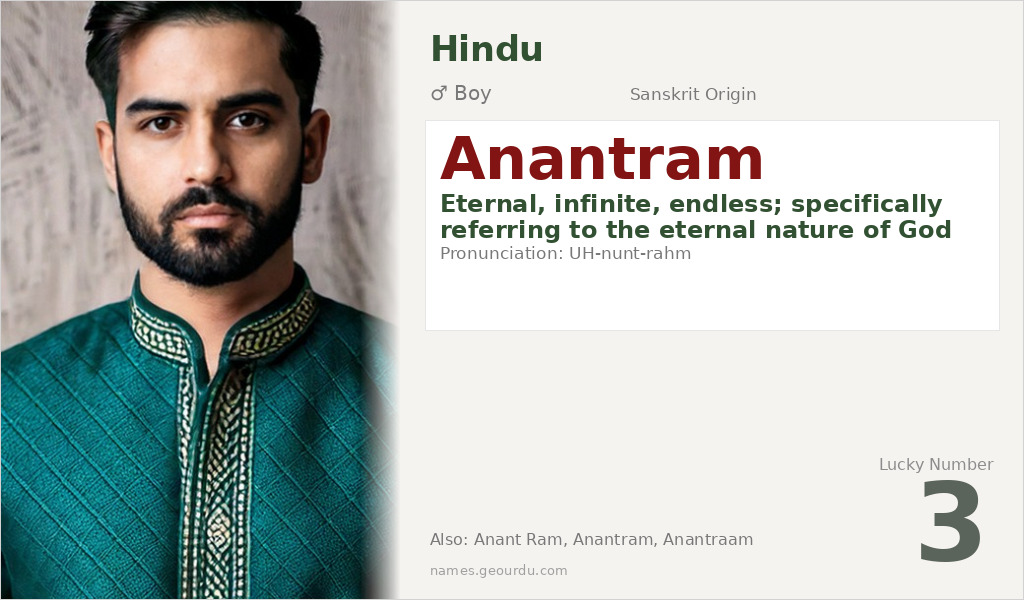
Anantram is a profound Sanskrit name with rich spiritual significance in Hindu culture. Meaning ‘Eternal God’ or ‘Infinite Rama,’ this name carries deep philosophical weight and represents the timeless nature of the divine. Traditionally given to boys, Anantram reflects parents’ aspirations for their child to embody enduring spiritual qualities. The name’s elegant simplicity belies its powerful meaning rooted in ancient Indian traditions.
Meaning of Anantram
Anantram derives from classical Sanskrit, combining ‘Anant’ (अनन्त) meaning ‘endless, infinite, eternal’ with ‘Ram’ (राम), a name for God that specifically refers to Lord Rama, the seventh avatar of Vishnu in Hindu tradition. The compound literally translates to ‘Eternal Rama’ or ‘Infinite God.’ Linguistically, ‘Anant’ comes from the Sanskrit root ‘naś’ (to perish) with the negative prefix ‘an-‘ creating the meaning ‘imperishable.’ This name appears in various Hindu philosophical texts and scriptures, often used to describe the eternal nature of the divine or as a name for devotees who seek to embody these qualities. The name’s construction follows traditional Sanskrit compound naming patterns where divine attributes are combined with names of deities.
| 📛 Name | Anantram |
| 💎 Meaning | Eternal, infinite, endless; specifically referring to the eternal nature of God or the divine |
| 👤 Gender | Boy |
| 🕌 Religion | Hindu |
| 🌍 Origin | Sanskrit |
| 🗣 Pronunciation | UH-nunt-rahm |
| ✍️ Urdu | اننت رام |
| ✍️ Arabic | أنانترام |
| 🔢 Numerology | 3 |
| ✨ Spellings | Anant Ram, Anantram, Anantraam |
Origin & Cultural Significance
Anantram originates from ancient Sanskrit, the classical language of Hindu scriptures including the Vedas, Upanishads, and epics like the Ramayana and Mahabharata. As a compound name, it reflects the Hindu philosophical concept of the eternal, unchanging divine reality (Brahman) contrasted with the temporary material world. The name is particularly significant in Vaishnavism traditions that venerate Lord Rama, where devotees might take names incorporating ‘Ram’ to express devotion. While not among the most common Hindu names, Anantram appears in religious texts and has been used traditionally, especially in regions with strong Sanskrit naming traditions like parts of North India. The name represents a synthesis of philosophical abstraction (anant) with specific devotional focus (ram).
Personality Traits
Those named Anantram are often associated with qualities of endurance, spiritual depth, and philosophical contemplation. The name’s meaning suggests someone who approaches life with patience and wisdom, seeing beyond temporary circumstances to eternal truths. In social contexts, they may be perceived as steady, reliable, and thoughtful individuals who value tradition while seeking deeper understanding. The eternal connotation of their name can manifest as persistence in pursuits and loyalty in relationships.
Similar Names
If you like Anantram, consider: Anant, Ananta, Anand, Ram, Raman, Anandram, Anantkumar, Anantnath
Famous People Named Anantram
- Anantram — Indian classical vocalist known for his contributions to Hindustani music
- Anantram — Character in Hindu scriptures and philosophical texts representing eternal divine qualities
Frequently Asked Questions About Anantram
What does Anantram mean?
Anantram means 'Eternal God' or 'Infinite Rama' in Sanskrit, combining 'Anant' (endless) with 'Ram' (God/Rama).
Is Anantram a boy or girl name?
Anantram is traditionally a masculine name in Hindu culture, given exclusively to boys.
What is the origin of Anantram?
Anantram originates from Sanskrit, the classical language of Hindu scriptures, and is specifically a compound name from Hindu philosophical and devotional traditions.





