
Table of Contents
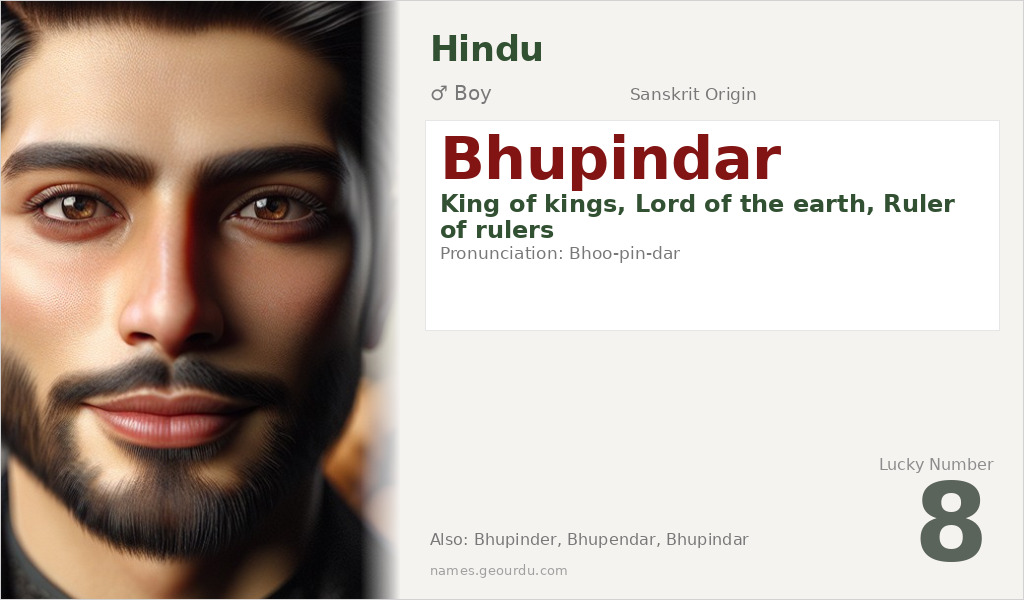
Bhupindar is a majestic Sanskrit name that carries centuries of royal heritage and cultural significance. Meaning ‘King of Kings’ or ‘Lord of the Earth’, this name embodies power, leadership, and sovereignty. Traditionally given to boys in Hindu families, Bhupindar represents the ideal of righteous rulership and earthly authority. Its rich linguistic roots and historical usage make it a name of profound meaning and tradition.
Meaning of Bhupindar
Bhupindar derives from classical Sanskrit, combining ‘Bhu’ (भू), meaning ‘earth, world, or land’, with ‘Pindar’, which originates from ‘Pati’ (पति), meaning ‘lord, master, or ruler’. The complete name therefore translates to ‘Lord of the Earth’ or ‘Ruler of the World’. This compound structure follows traditional Sanskrit naming patterns where royal titles often incorporate elements denoting sovereignty over territory. Linguistically, it belongs to the Indo-European language family and shares roots with other Sanskrit terms like ‘Bhupati’ and ‘Bhupala’, all expressing similar concepts of earthly dominion. The name’s regal connotations have made it particularly popular among communities with historical connections to royalty and leadership.
| 📛 Name | Bhupindar |
| 💎 Meaning | King of kings, Lord of the earth, Ruler of rulers |
| 👤 Gender | Boy |
| 🕌 Religion | Hindu |
| 🌍 Origin | Sanskrit |
| 🗣 Pronunciation | Bhoo-pin-dar |
| ✍️ Urdu | بھوپندر |
| ✍️ Arabic | بهوبيندار |
| 🔢 Numerology | 8 |
| ✨ Spellings | Bhupinder, Bhupendar, Bhupindar, Bhoopindar |
Origin & Cultural Significance
Originating from ancient Sanskrit, Bhupindar has deep roots in Hindu culture and Indian history. The name appears in various historical records and literary works, often associated with rulers and nobility across the Indian subcontinent. Its usage spans multiple regions including Northern India, particularly in Punjab, Haryana, and Rajasthan where Sanskrit-derived names remain culturally significant. While primarily a Hindu name, its linguistic appeal has occasionally crossed religious boundaries in South Asia. The name reflects the traditional Hindu value placed on righteous leadership (Rajadharma) and the concept of the king as protector of the earth and its people.
Personality Traits
Those named Bhupindar are often expected to embody leadership qualities and a strong sense of responsibility. The name’s royal meaning tends to influence perceptions, with bearers frequently seen as authoritative, dependable, and naturally inclined toward positions of influence. They typically demonstrate organizational skills, strategic thinking, and protective instincts toward family and community. While individual personalities vary, the name’s cultural associations often create expectations of dignity, strength, and traditional values.
Similar Names
If you like Bhupindar, consider: Bhupati, Bhupendra, Bhupal, Indra, Rajendra, Mahendra, Chakravarti, Samrat
Famous People Named Bhupindar
- Bhupinder Singh — Maharaja of Patiala (1891-1938), known for his patronage of sports and arts
- Bhupinder Singh Hooda — Former Chief Minister of Haryana, India
Frequently Asked Questions About Bhupindar
What does Bhupindar mean?
Bhupindar means 'King of Kings', 'Lord of the Earth', or 'Ruler of the World'. It is a compound Sanskrit name combining 'Bhu' (earth) and 'Pindar' (from 'Pati' meaning lord).
Is Bhupindar a boy or girl name?
Bhupindar is exclusively a boy's name in Hindu naming tradition. The masculine ending '-dar' and its royal meaning make it unsuitable for girls in its cultural context.
What is the origin of Bhupindar?
Bhupindar originates from Sanskrit, the classical language of ancient India. It has been used historically in Hindu communities across the Indian subcontinent, particularly in regions with strong Sanskrit naming traditions.





