
Table of Contents
Daitya is a fascinating term from Hindu mythology that refers to a class of powerful beings often described as demons or giants. Unlike typical personal names, Daitya carries rich mythological significance rooted in ancient Sanskrit texts. This exploration delves into the true meaning and origins of Daitya, correcting common misconceptions about its usage and associations.
Meaning of Daitya
Daitya (दैत्य) is a Sanskrit term with a well-documented meaning in Hindu religious texts. It specifically refers to a class of demonic beings or giants who are the offspring of Diti and the sage Kashyapa. The word derives from the Sanskrit root ‘diti,’ which relates to concepts of limitation or binding. In Hindu mythology, Daityas are often portrayed as antagonists to the devas (gods), though some texts present them with more complex characteristics. They appear prominently in Puranic literature, including stories about famous Daityas like Hiranyakashipu and Hiranyaksha.
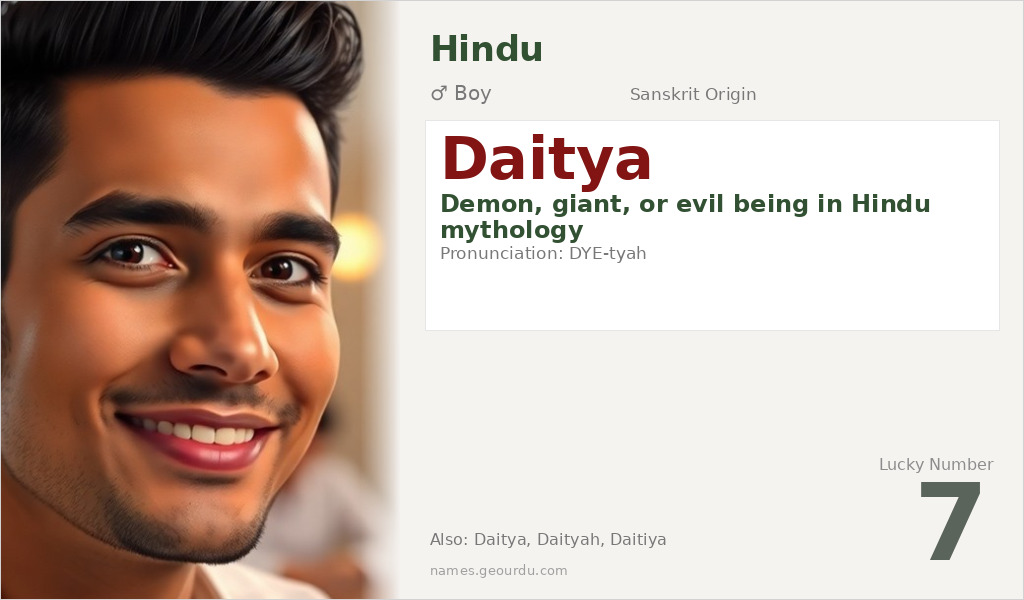
| 📛 Name | Daitya |
| 💎 Meaning | Demon, giant, or evil being in Hindu mythology |
| 👤 Gender | Boy |
| 🕌 Religion | Hindu |
| 🌍 Origin | Sanskrit |
| 🗣 Pronunciation | DYE-tyah |
| ✍️ Urdu | دیوتا (though this typically refers to gods/devas, not daityas specifically) |
| ✍️ Arabic | دايتيا (transliteration, not native Arabic) |
| 🔢 Numerology | 7 |
| ✨ Spellings | Daitya, Daityah, Daitiya |
Origin & Cultural Significance
Daitya originates from Sanskrit, the classical language of ancient India, and is deeply embedded in Hindu religious tradition. The term appears in foundational Hindu texts including the Puranas, Mahabharata, and various mythological narratives. Culturally, Daityas represent one of several categories of supernatural beings in Hindu cosmology, distinct from devas (gods), asuras (another demon class), and rakshasas. While the term has mythological significance, it is not traditionally used as a personal name in Hindu naming practices, unlike names derived from positive attributes or deities.
Personality Traits
In mythological context, beings called Daityas are typically characterized by immense power, ambition, and a tendency to challenge divine authority. They often possess supernatural abilities and demonstrate great determination in pursuing their goals. While frequently depicted as antagonists, some Hindu texts present Daityas with redeeming qualities or complex motivations, making them more than simple villains in the cosmic drama between opposing forces.
Similar Names
If you like Daitya, consider: Danava, Asura, Rakshasa, Mahabali, Hiranyakashipu
Famous People Named Daitya
- Daityas in Hindu mythology — collective term for demonic beings like Hiranyaksha and Hiranyakashipu who appear in Puranic texts
- No notable modern individuals bear this name as it is primarily a mythological term rather than a personal name
Frequently Asked Questions About Daitya
What does Daitya mean?
Daitya means 'demon' or 'giant' in Sanskrit. It refers to a class of mythological beings in Hindu tradition who are often portrayed as powerful entities opposing the gods.
Is Daitya a boy or girl name?
Daitya is grammatically masculine in Sanskrit and refers to male mythological beings. However, it is not commonly used as a personal name in any culture—it's primarily a mythological term.
What is the origin of Daitya?
Daitya originates from Sanskrit, the ancient Indian language, and comes from Hindu mythology. It is not a Muslim name as sometimes mistakenly claimed, but rather a term from Hindu religious texts dating back thousands of years.





