
Table of Contents
Rakshasa is a powerful name with deep roots in Hindu mythology and Sanskrit literature. Unlike conventional baby names, it carries the weight of ancient epics and represents formidable supernatural beings. This name connects directly to India’s rich mythological heritage, particularly the Ramayana and Mahabharata. While unconventional for modern naming, it holds significant cultural and literary importance.
Meaning of Rakshasa
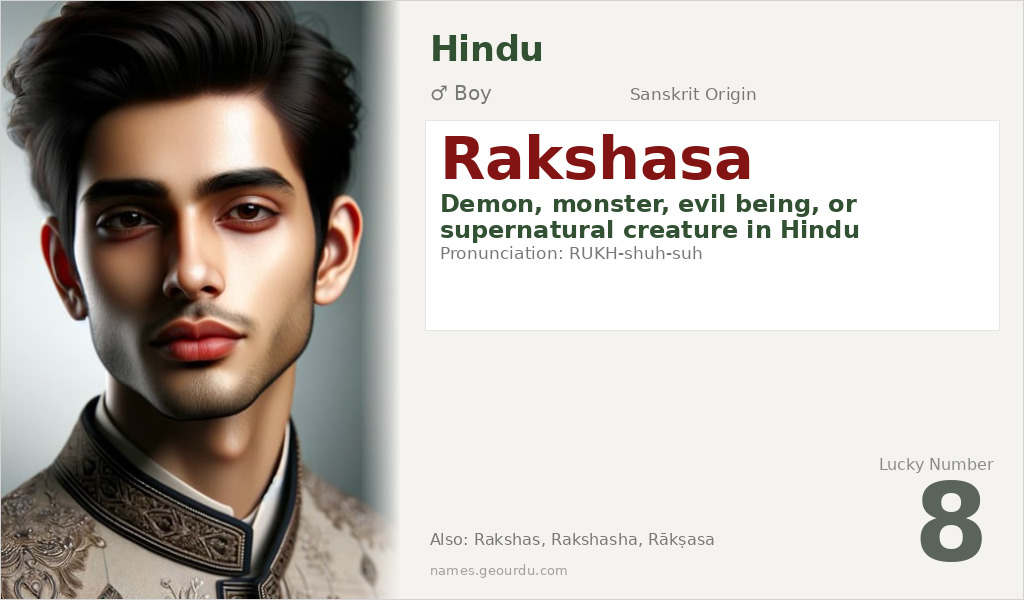
Rakshasa originates from Sanskrit (राक्षस) and literally means ‘demon,’ ‘monster,’ or ‘evil being.’ The word is derived from the root ‘raksh,’ which means ‘to protect’ or ‘to guard,’ creating an interesting linguistic paradox where the term for protective beings evolved to mean their opposite. In Hindu mythology, Rakshasas are malevolent supernatural creatures often depicted as antagonists to gods (devas) and humans, possessing shapeshifting abilities and dark powers. The term appears throughout ancient Indian texts, most notably in the Ramayana where Ravana, the primary antagonist, is a Rakshasa king. These beings are typically described as cannibalistic, nocturnal, and masters of illusion, though some texts show more nuanced portrayals.
| 📛 Name | Rakshasa |
| 💎 Meaning | Demon, monster, evil being, or supernatural creature in Hindu mythology |
| 👤 Gender | Boy |
| 🕌 Religion | Hindu |
| 🌍 Origin | Sanskrit |
| 🗣 Pronunciation | RUKH-shuh-suh |
| ✍️ Urdu | راکشس |
| ✍️ Arabic | راكشاسا |
| 🔢 Numerology | 8 |
| ✨ Spellings | Rakshas, Rakshasha, Rākṣasa |
Origin & Cultural Significance
Rakshasa has its origins in ancient Sanskrit literature and Hindu mythology dating back thousands of years. The concept appears in Vedic texts and becomes fully developed in the great Indian epics—the Ramayana and Mahabharata—composed between 400 BCE and 400 CE. Culturally, Rakshasas represent the forces of chaos, darkness, and adharma (unrighteousness) that must be overcome by the forces of dharma (righteousness). While the name is authentically Hindu in origin, it’s important to note that it is extremely rare as a given name for children due to its negative connotations. In modern context, the term appears in Indian literature, films, and popular culture as a reference to demonic or villainous characters.
Personality Traits
In mythological context, beings named Rakshasa are characterized by immense power, intelligence, and formidable presence. They often exhibit qualities of strong leadership, strategic thinking, and magical abilities. However, these traits are traditionally paired with negative attributes like arrogance, aggression, and opposition to divine order. In a modern naming context, choosing this name would suggest parents valuing strength, uniqueness, and connection to epic mythology over conventional positive associations.
Similar Names
If you like Rakshasa, consider: Asura, Danava, Daitya, Pishacha, Bhuta
Famous People Named Rakshasa
- Ravana — The most famous Rakshasa king in Hindu epic Ramayana, ruler of Lanka
- Kumbhakarna — Rakshasa warrior brother of Ravana in Ramayana known for his immense size and strength
Frequently Asked Questions About Rakshasa
What does Rakshasa mean?
Rakshasa means 'demon,' 'monster,' or 'evil supernatural being' in Sanskrit. It refers to malevolent creatures in Hindu mythology who oppose gods and humans.
Is Rakshasa a boy or girl name?
Rakshasa is exclusively a boy's name in Hindu tradition, as all Rakshasas in mythology are male beings. There's no feminine equivalent used as a name.
What is the origin of Rakshasa?
Rakshasa originates from Sanskrit language and Hindu mythology, specifically from ancient Indian epics like the Ramayana and Mahabharata dating back over 2,000 years.





