
Table of Contents
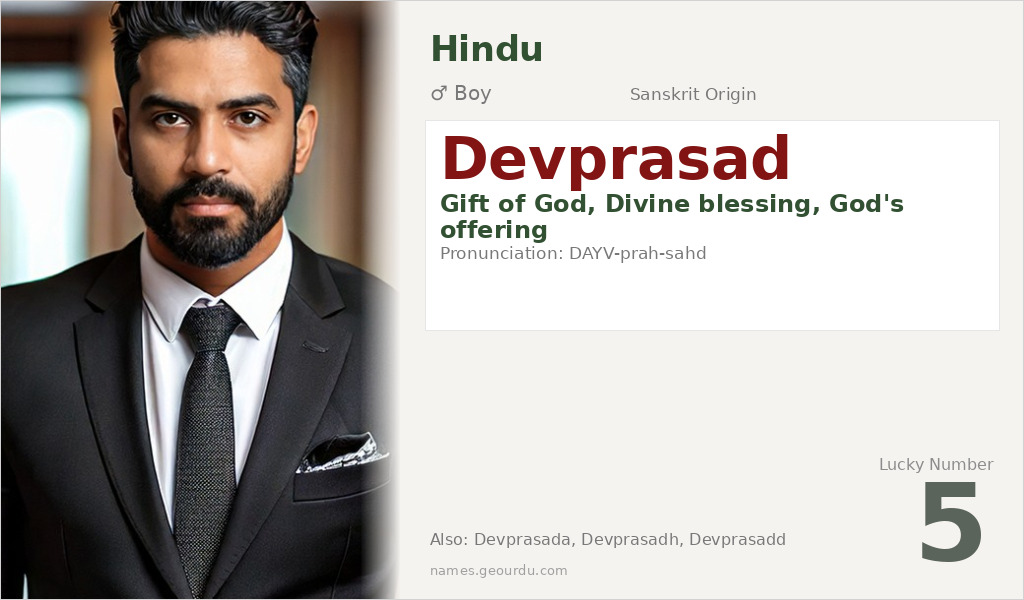
Devprasad is a beautiful and meaningful Sanskrit name that carries profound spiritual significance in Hindu culture. Literally translating to ‘Gift of God’ or ‘Divine blessing’, this name reflects the cherished belief that children are precious offerings from the divine. Popular among Hindu families, Devprasad combines two powerful Sanskrit elements to create a name that embodies grace and sacred favor. Whether you’re considering this name for your child or exploring its cultural roots, Devprasad offers rich linguistic heritage and spiritual depth.
Meaning of Devprasad
Devprasad derives from classical Sanskrit, combining ‘Dev’ (देव) meaning ‘God, deity, or divine being’ with ‘Prasad’ (प्रसाद) meaning ‘gift, grace, favor, or offering’. The word ‘Prasad’ itself comes from the Sanskrit root ‘prasāda’, which conveys concepts of graciousness, kindness, clarity, and tranquility. In Hindu religious context, ‘prasad’ specifically refers to sanctified food offered to deities and then distributed to devotees as blessed nourishment. Thus, Devprasad carries the layered meaning of both a divine gift to humanity and something offered back to God with devotion. This name exemplifies the sophisticated compound word formations (samāsa) characteristic of Sanskrit, where two meaningful elements combine to create new semantic richness.
| 📛 Name | Devprasad |
| 💎 Meaning | Gift of God, Divine blessing, God's offering |
| 👤 Gender | Boy |
| 🕌 Religion | Hindu |
| 🌍 Origin | Sanskrit |
| 🗣 Pronunciation | DAYV-prah-sahd |
| ✍️ Urdu | دیو پراساد |
| ✍️ Arabic | ديف براساد |
| 🔢 Numerology | 5 |
| ✨ Spellings | Devprasada, Devprasadh, Devprasadd, Deoprasad |
Origin & Cultural Significance
Devprasad originates from Sanskrit, the ancient liturgical language of Hinduism that has influenced numerous South Asian languages. As a compound name, it follows traditional Hindu naming conventions where names are often constructed from Sanskrit roots to convey spiritual values and blessings. The name is particularly prevalent in India among Hindu communities, though its usage extends to Hindu diaspora worldwide. Historically, such theophoric names (containing divine elements) have been popular across Hindu traditions, reflecting the cultural importance of acknowledging divine grace in one’s life. While primarily a Hindu name, its Sanskrit origins mean it may be appreciated by those interested in Indian linguistic heritage regardless of specific religious affiliation.
Personality Traits
Those named Devprasad are often perceived as individuals who bring light and positivity into their communities, much like the ‘divine gift’ their name signifies. They tend to exhibit natural charisma and an ability to inspire others, with the numerology number 5 suggesting adaptability, curiosity, and freedom-loving tendencies. Their personality often balances spiritual depth with practical engagement in the world, making them effective in both personal relationships and professional endeavors. The name’s meaning may influence them to develop generous, compassionate qualities as they embody the blessed nature their name represents.
Similar Names
If you like Devprasad, consider: Devdan, Devansh, Prasad, Devendra, Devang
Famous People Named Devprasad
- Devprasad Shetty — Indian film producer known for Kannada cinema
- Devprasad Ganapathy — Indian classical musician and veena player
Frequently Asked Questions About Devprasad
What does Devprasad mean?
Devprasad means 'Gift of God' or 'Divine blessing' in Sanskrit. It combines 'Dev' (God) and 'Prasad' (gift/grace) to create this meaningful compound name.
Is Devprasad a boy or girl name?
Devprasad is exclusively a boy's name in Hindu naming tradition. Sanskrit compound names ending with 'prasad' are typically masculine, though some similar names might be used differently in modern contexts.
What is the origin of Devprasad?
Devprasad originates from Sanskrit, the classical language of ancient India. It is a Hindu name with roots in Vedic tradition, reflecting the cultural practice of creating meaningful compound names from Sanskrit elements.





