Table of Contents
Debabrata is a profound Sanskrit name with deep roots in Hindu mythology and tradition. Most famously borne by the legendary figure Bhishma from the Mahabharata, this name carries connotations of solemn commitment and divine discipline. As a compound name with clear etymological components, Debabrata represents more than just an identifier—it embodies a philosophy of dedication and principled living. This exploration delves into the linguistic origins, cultural significance, and contemporary relevance of this meaningful name.
Meaning of Debabrata
The name Debabrata derives from classical Sanskrit, combining ‘deva’ (देव) and ‘vrata’ (व्रत). While ‘deva’ commonly means ‘god’ or ‘divine,’ in this compound context it specifically relates to ‘vow’ or ‘pledge,’ particularly of a sacred nature. ‘Vrata’ unequivocally means ‘vow, religious observance, promise, or discipline.’ Thus, Debabrata literally translates to ‘one who has taken a vow’ or ‘bound by a solemn promise.’ This meaning is most famously exemplified by Bhishma (born Devavrata), who took a lifelong vow of celibacy to ensure his father’s happiness. The name appears in various Hindu texts and Sanskrit literature with this consistent interpretation, making it one of the more transparent and well-documented names in the Sanskrit onomastic tradition.
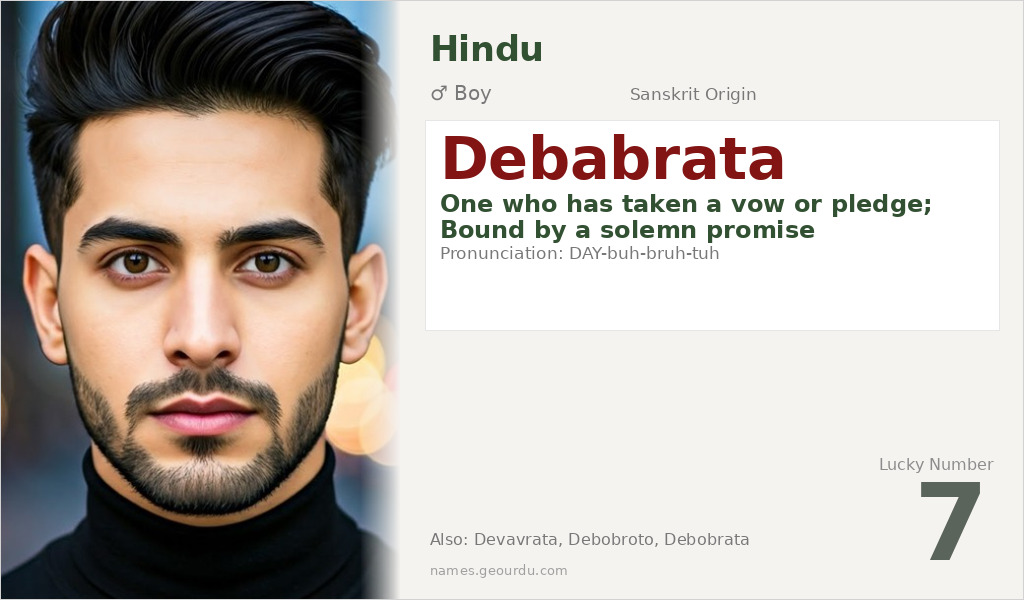
| 📛 Name | Debabrata |
| 💎 Meaning | One who has taken a vow or pledge; Bound by a solemn promise |
| 👤 Gender | Boy |
| 🕌 Religion | Hindu |
| 🌍 Origin | Sanskrit |
| 🗣 Pronunciation | DAY-buh-bruh-tuh |
| ✍️ Urdu | دیب برت |
| ✍️ Arabic | ديبابراتا |
| 🔢 Numerology | 7 |
| ✨ Spellings | Devavrata, Debobroto, Debobrata |
Origin & Cultural Significance
Debabrata originates from Sanskrit, the classical language of ancient India and the primary liturgical language of Hinduism. The name has been in use for millennia, with its most famous bearer being Bhishma from the Mahabharata epic (circa 400 BCE-400 CE). In Hindu tradition, names containing ‘vrata’ (vow) elements often indicate spiritual discipline or commitment. While primarily used in Hindu communities, the name appears across South Asia, particularly in Bengal and other regions with strong Sanskrit naming traditions. The name reflects the importance of vows and commitments in Hindu philosophy, where personal discipline (vrata) is considered essential for spiritual growth and dharma (righteous duty).
Personality Traits
Those named Debabrata are often associated with qualities of steadfastness, integrity, and commitment. Drawing from the name’s meaning of being ‘bound by a vow,’ individuals with this name may exhibit strong principles and reliability in their personal and professional lives. They tend to approach responsibilities with seriousness and dedication, often earning respect for their consistency and moral fortitude. While these associations are cultural rather than deterministic, the name’s historical and linguistic background suggests ideals of discipline and honor that may influence how bearers perceive themselves and are perceived by others.
Similar Names
If you like Debabrata, consider: Devavrat, Bratindra, Vratapati, Satyavrata, Yogendra
Famous People Named Debabrata
- Bhishma (Devavrata) — Legendary warrior and statesman in the Mahabharata, known for his vow of lifelong celibacy and service to the Kuru dynasty
- Debabrata Biswas — Indian playback singer and composer in Bengali cinema
Frequently Asked Questions About Debabrata
What does Debabrata mean?
Debabrata means 'one who has taken a vow' or 'bound by a solemn promise' in Sanskrit. It combines 'deva' (vow/pledge) and 'vrata' (vow/observance).
Is Debabrata a boy or girl name?
Debabrata is exclusively a masculine name in Hindu tradition, derived from Sanskrit grammatical forms used for male names and historically borne by male figures like Bhishma from the Mahabharata.
What is the origin of Debabrata?
Debabrata originates from Sanskrit, the classical language of ancient India. It has been used for millennia in Hindu tradition, most famously as the birth name of Bhishma in the Mahabharata epic.