
Table of Contents
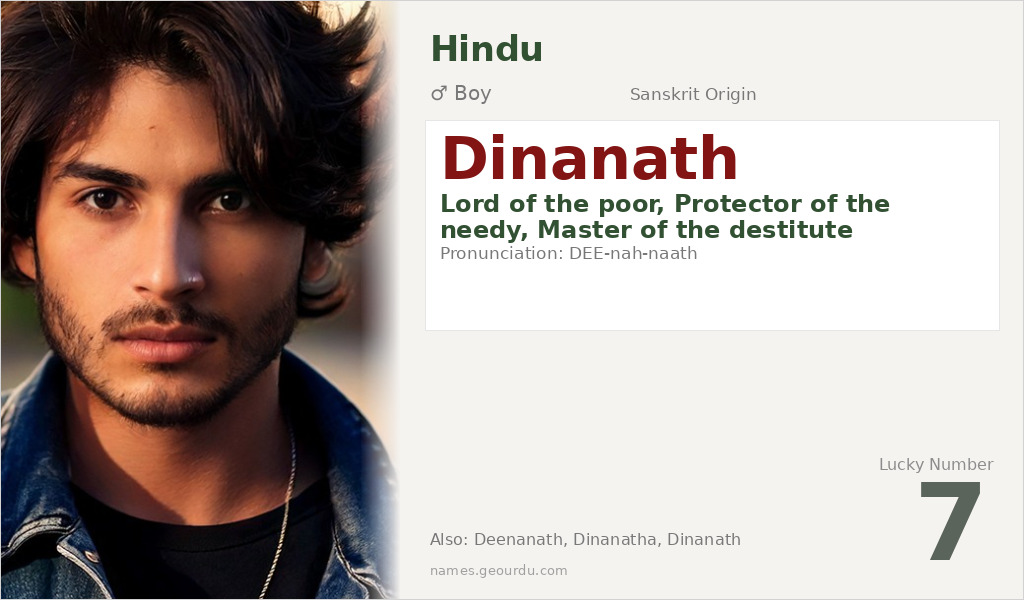
Dinanath is a profound Sanskrit name rich with devotional meaning and cultural heritage. Primarily used in Hindu communities, this name embodies divine compassion and protection for the humble. With roots in ancient Indian scriptures, Dinanath carries both spiritual weight and timeless appeal. Discover the complete story behind this meaningful name.
Meaning of Dinanath
Dinanath derives from classical Sanskrit, combining ‘Dina’ (दीन) meaning ‘poor’, ‘needy’, or ‘humble’ with ‘Nath’ (नाथ) meaning ‘lord’, ‘master’, or ‘protector’. The complete translation is ‘Lord of the poor’ or ‘Protector of the needy’. This isn’t merely a descriptive name but a devotional epithet—particularly for Lord Krishna and Vishnu in Hindu theology. The term appears in Bhakti literature where devotees appeal to the divine as protector of the downtrodden. Linguistically, both components are well-documented in Sanskrit lexicons like Amarakosha, making this etymology definitive.
| 📛 Name | Dinanath |
| 💎 Meaning | Lord of the poor, Protector of the needy, Master of the destitute |
| 👤 Gender | Boy |
| 🕌 Religion | Hindu |
| 🌍 Origin | Sanskrit |
| 🗣 Pronunciation | DEE-nah-naath |
| ✍️ Urdu | دینا ناتھ |
| ✍️ Arabic | دينانات |
| 🔢 Numerology | 7 |
| ✨ Spellings | Deenanath, Dinanatha, Dinanath, Dina Nath |
Origin & Cultural Significance
Dinanath originates from Sanskrit, the ancient liturgical language of Hinduism. As a theophoric name, it directly references divine attributes in Hindu tradition, specifically Vaishnavism. The name gained cultural prominence through religious texts, poetry, and devotional practices where Krishna/Vishnu is invoked as Dinanath. It’s particularly common among Hindu communities in India, Nepal, and the diaspora. While primarily a given name, it also appears as a surname in some regions, indicating family devotion to this aspect of the divine.
Personality Traits
Those named Dinanath are often associated with protective, compassionate, and spiritually grounded qualities. The name suggests a personality that combines leadership with humility—someone who naturally assumes responsibility for others’ welfare. They may exhibit strong ethical values and a tendency toward service-oriented roles. These traits align with the name’s literal meaning of being a ‘lord’ or ‘protector’ specifically for those in need.
Similar Names
If you like Dinanath, consider: Dinabandhu, Dinadayal, Dinesh, Nath, Krishna, Vishnu, Gopinath, Shrinath
Famous People Named Dinanath
- Dinanath Mangeshkar — Father of legendary Indian playback singers Lata Mangeshkar and Asha Bhosle, himself a classical singer and theater actor
- Dinanath Batra — Indian educationist and activist known for his work with Hindu nationalist organizations
Frequently Asked Questions About Dinanath
What does Dinanath mean?
Dinanath means 'Lord of the poor' or 'Protector of the needy' in Sanskrit. It's a compound name: Dina (poor/needy) + Nath (lord/protector).
Is Dinanath a boy or girl name?
Dinanath is exclusively a masculine name in Hindu naming tradition. There are no recorded feminine variants in Sanskrit or regional languages.
What is the origin of Dinanath?
Dinanath originates from Sanskrit, the classical language of Hinduism. It's a theophoric name referencing Lord Krishna/Vishnu as protector of the humble in Hindu devotion.





