
Table of Contents
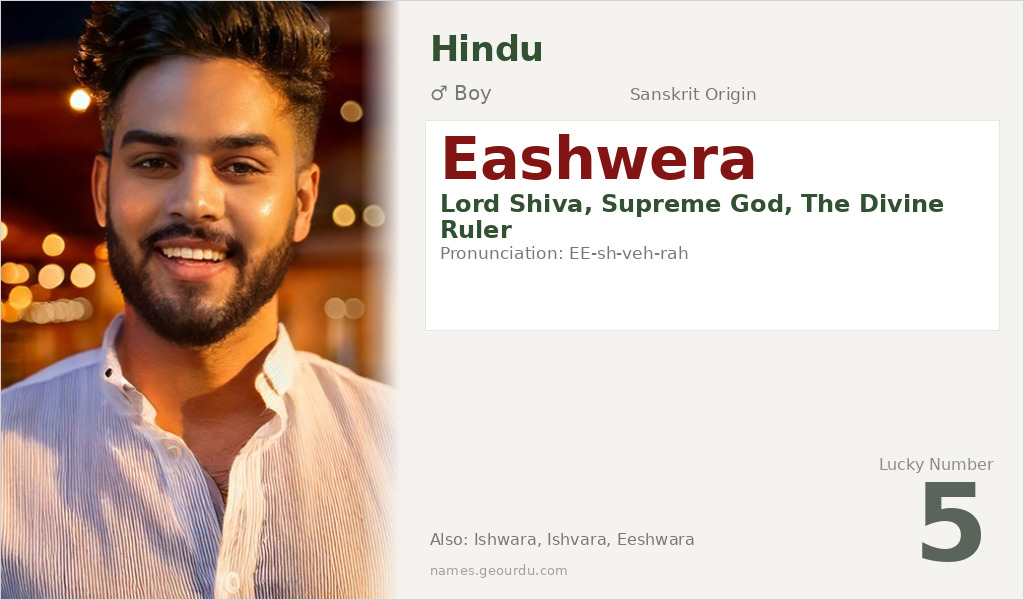
Eashwera is a profound Sanskrit name with deep roots in Hindu spirituality and philosophy. Derived from the ancient term ‘īśvara’, this name carries the weight of divine authority and supreme rulership. Traditionally given to boys, Eashwera connects the bearer to the highest concepts of divinity in Hinduism, particularly associated with Lord Shiva. Its rich linguistic heritage and spiritual significance make it a powerful choice for parents seeking a name with both historical depth and religious meaning.
Meaning of Eashwera
Eashwera originates from the Sanskrit word ‘īśvara’ (ईश्वर), which holds multiple layers of meaning in Hindu philosophy. The term breaks down into ‘īś’ meaning ‘power’, ‘mastery’, or ‘ability to control’, combined with ‘vara’ meaning ‘best’, ‘excellent’, or ‘choicest’. Thus, īśvara literally translates to ‘the most excellent lord’ or ‘supreme controller’. In Hindu theology, this specifically refers to the personal aspect of the supreme being, distinct from the impersonal Brahman. The name appears extensively in Hindu scriptures, including the Yoga Sutras of Patanjali where Īśvara is defined as ‘a special Purusha (consciousness) untouched by afflictions, karma, or their results’. This makes Eashwera not just a name but a philosophical concept representing the ultimate divine authority.
| 📛 Name | Eashwera |
| 💎 Meaning | Lord Shiva, Supreme God, The Divine Ruler |
| 👤 Gender | Boy |
| 🕌 Religion | Hindu |
| 🌍 Origin | Sanskrit |
| 🗣 Pronunciation | EE-sh-veh-rah |
| ✍️ Urdu | ایشور |
| ✍️ Arabic | إيشوارا |
| 🔢 Numerology | 5 |
| ✨ Spellings | Ishwara, Ishvara, Eeshwara, Ishwar, Eashwar |
Origin & Cultural Significance
The name Eashwera has its origins in ancient Sanskrit literature and Hindu religious texts dating back over two millennia. As a derivative of ‘īśvara’, it appears in foundational Hindu scriptures including the Upanishads (particularly the Shvetashvatara Upanishad), the Bhagavad Gita, and various Puranas. In these texts, Īśvara is used both as a general term for God and specifically as an epithet for Shiva, one of the principal deities of Hinduism. The name spread through South Asia with the dissemination of Hindu philosophy and Sanskrit literature. While most common in India among Hindu communities, variations of the name appear in Buddhist and Jain contexts as well, reflecting the term’s philosophical importance across Dharmic traditions. The spelling ‘Eashwera’ represents a modern transliteration that preserves the Sanskrit pronunciation while adapting to contemporary naming conventions.
Personality Traits
Those named Eashwera often embody qualities associated with leadership, wisdom, and spiritual depth. The name’s meaning as ‘supreme lord’ or ‘divine ruler’ tends to influence perceptions of strength, authority, and moral integrity. Individuals with this name may naturally gravitate toward positions of responsibility and often demonstrate a philosophical approach to life’s challenges. Their connection to this ancient Sanskrit name frequently manifests as respect for tradition combined with personal discipline, creating a balanced personality that commands respect while maintaining humility.
Similar Names
If you like Eashwera, consider: Ishaan, Shiva, Mahesh, Rudra, Harish
Famous People Named Eashwera
- Ishwara Chandra Vidyasagar — 19th century Indian educator and social reformer from Bengal
- Ishwara Bhat — Contemporary Indian linguist and Sanskrit scholar
Frequently Asked Questions About Eashwera
What does Eashwera mean?
Eashwera means 'Lord Shiva', 'Supreme God', or 'Divine Ruler' in Sanskrit. It comes from the Sanskrit word 'īśvara' which denotes the supreme personal deity in Hindu philosophy.
Is Eashwera a boy or girl name?
Eashwera is exclusively a boy's name in Hindu naming tradition. The name's meaning as 'lord' or 'ruler' and its association with the masculine deity Shiva make it traditionally masculine.
What is the origin of Eashwera?
Eashwera originates from Sanskrit, the ancient liturgical language of Hinduism. It derives from 'īśvara', a term found in Hindu scriptures like the Upanishads and Puranas, specifically associated with Lord Shiva.





