
Table of Contents
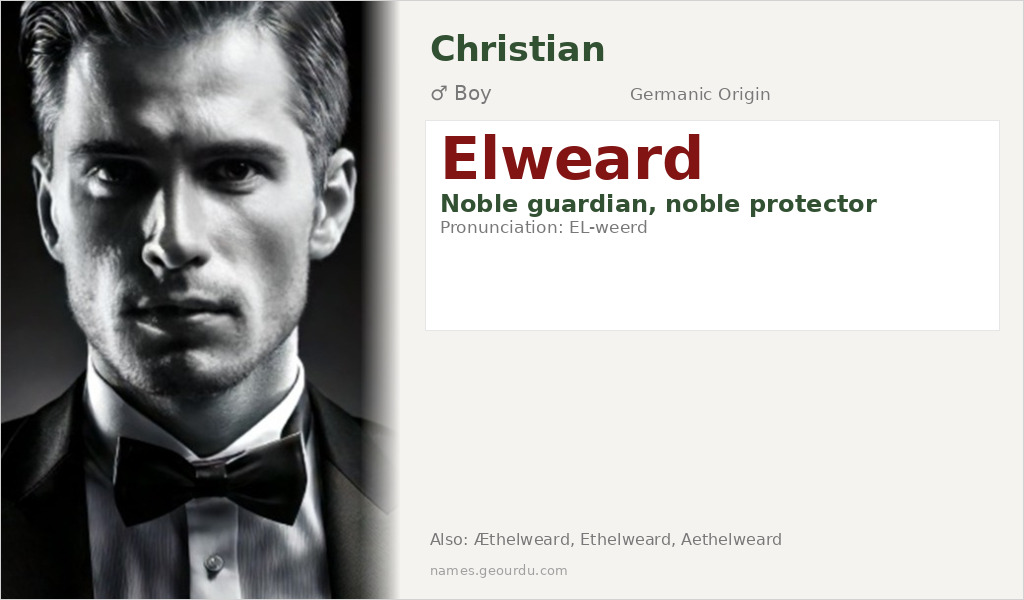
Elweard is a distinguished Old English name with deep historical roots in Anglo-Saxon England. Meaning ‘noble guardian’ or ‘noble protector’, this name represents the original form of what would later become the popular name Edward. With its compound structure of ‘æðel’ (noble) and ‘weard’ (guardian), Elweard carries centuries of linguistic heritage and cultural significance from pre-Norman England.
Meaning of Elweard
Elweard derives from Old English, specifically from the elements ‘æðel’ meaning ‘noble’ and ‘weard’ meaning ‘guardian’ or ‘protector’. This compound name structure was common in Germanic naming traditions, where meaningful elements combined to create descriptive names. The ‘æðel’ element appears in many Anglo-Saxon royal names, indicating high status or noble birth. The complete meaning ‘noble guardian’ reflects both social standing and protective qualities expected of leaders in Anglo-Saxon society. Linguistically, this name demonstrates the preservation of Germanic naming patterns in England before the Norman Conquest introduced French influences.
| 📛 Name | Elweard |
| 💎 Meaning | Noble guardian, noble protector |
| 👤 Gender | Boy |
| 🕌 Religion | Christian |
| 🌍 Origin | Germanic |
| 🗣 Pronunciation | EL-weerd |
| ✍️ Urdu | ایلویئرڈ |
| ✍️ Arabic | إلويرد |
| 🔢 Numerology | |
| ✨ Spellings | Æthelweard, Ethelweard, Aethelweard, Ethelward |
Origin & Cultural Significance
Elweard originates from Anglo-Saxon England, specifically from the Old English language spoken between the 5th and 12th centuries. The name appears in historical records from the 9th to 11th centuries, most notably borne by Æthelweard the Chronicler, a 10th-century ealdorman and historian. After the Norman Conquest of 1066, the name evolved into the Norman French form ‘Édouard’, which eventually became the modern English ‘Edward’. While the original Elweard form fell out of common use, it represents an important linguistic link to England’s pre-Norman heritage and the continuity of Germanic naming traditions in English history.
Personality Traits
As a name meaning ‘noble guardian’, Elweard suggests qualities of protection, responsibility, and honorable leadership. The ‘noble’ component implies dignity, high principles, and possibly aristocratic bearing, while ‘guardian’ indicates protective instincts and reliability. In modern contexts, these traditional meanings might translate to someone perceived as trustworthy, principled, and capable of leadership roles. The historical usage among Anglo-Saxon nobility further reinforces associations with authority and social responsibility.
Similar Names
If you like Elweard, consider: Edward, Edmund, Edgar, Edwin, Ethelred
Famous People Named Elweard
- Æthelweard (chronicler) — 10th-century Anglo-Saxon historian and ealdorman who wrote the Chronicon Æthelweardi
- Æthelweard of East Anglia — 9th-century king of East Anglia during the Viking Age
Frequently Asked Questions About Elweard
What does Elweard mean?
Elweard means 'noble guardian' or 'noble protector' in Old English, composed of the elements 'æðel' (noble) and 'weard' (guardian).
Is Elweard a boy or girl name?
Elweard is exclusively a masculine name with historical usage only for males in Anglo-Saxon England and no recorded feminine variants.
What is the origin of Elweard?
Elweard originates from Old English (Anglo-Saxon) and represents the original form of the name that later evolved into Edward through Norman French influence after 1066.





