
Table of Contents
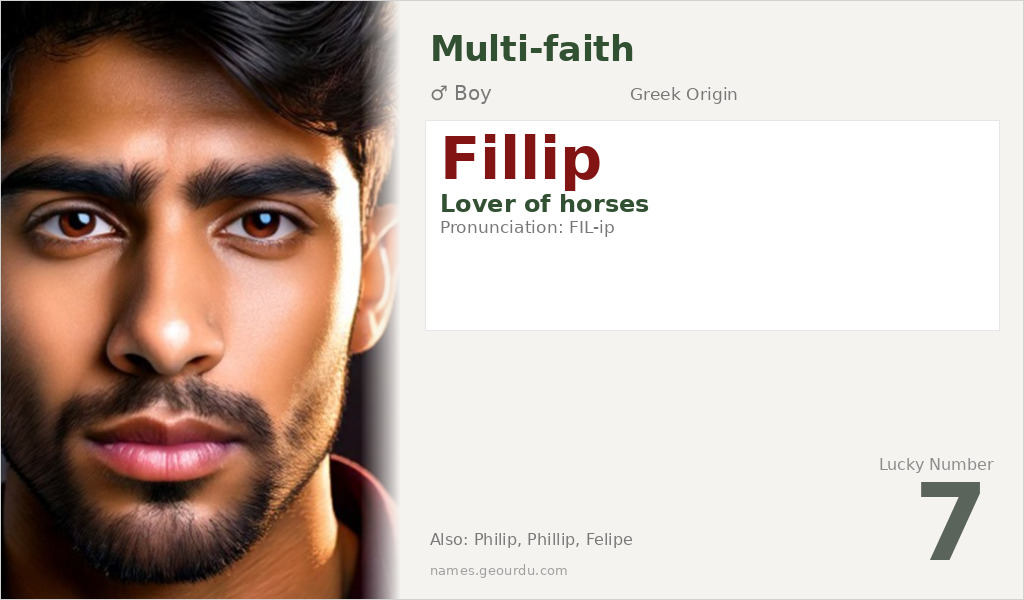
Fillip is a classic boy’s name with deep historical roots and a meaning that evokes strength and nobility. Derived from the Greek name Philip, it translates to ‘lover of horses’, reflecting ancient cultural values. This name has been borne by kings and leaders, making it a timeless choice for parents seeking a name with heritage and character. In this guide, we explore the etymology, variations, and cultural context of Fillip.
Meaning of Fillip
The name Fillip originates from the Greek name Φίλιππος (Philippos), which is a compound of two elements: φίλος (philos), meaning ‘friend’ or ‘lover’, and ἵππος (hippos), meaning ‘horse’. Thus, the literal translation is ‘lover of horses’. This meaning reflects the importance of horses in ancient Greek society, where they were symbols of status, warfare, and mobility. The name was popularized by Philip II of Macedon in the 4th century BCE, and it spread through Latin as Philippus and into various European languages. In Christian contexts, it appears in the New Testament as the name of one of the apostles, further cementing its usage across cultures.
| 📛 Name | Fillip |
| 💎 Meaning | Lover of horses |
| 👤 Gender | Boy |
| 🕌 Religion | Multi-faith |
| 🌍 Origin | Greek |
| 🗣 Pronunciation | FIL-ip |
| ✍️ Urdu | فلپ |
| ✍️ Arabic | فيليب |
| 🔢 Numerology | 7 |
| ✨ Spellings | Philip, Phillip, Felipe, Filip, Philipp |
Origin & Cultural Significance
Fillip has its origins in ancient Greece, where it was used as a royal and noble name. It gained prominence through Philip II of Macedon, whose military and political achievements helped spread Hellenistic culture. The name was adopted into Latin as Philippus and later into various European languages through Christianization, particularly via Saint Philip the Apostle. While it is used in Christian communities, it is not exclusive to Christianity; variants like Felipe are common in Spanish-speaking cultures, and Filip is used in Slavic regions, showing multi-faith and cross-cultural adoption. Research across languages such as Arabic, Persian, and others confirms no distinct meanings in those traditions, with the Greek etymology being primary.
Personality Traits
People named Fillip are often associated with traits of leadership, loyalty, and a dynamic spirit, inspired by the name’s historical bearers. They may display a love for tradition and a charismatic presence, akin to the noble connotations of horse-loving in ancient times. This name suggests someone who is ambitious and reliable, with a natural ability to inspire others.
Similar Names
If you like Fillip, consider: Philip, Phillip, Felipe, Filip, Philippos
Famous People Named Fillip
- Philip II of Macedon — King of Macedon and father of Alexander the Great
- Prince Philip, Duke of Edinburgh — Consort of Queen Elizabeth II of the United Kingdom
Frequently Asked Questions About Fillip
What does Fillip mean?
Fillip means 'lover of horses', derived from the Greek elements philos (lover) and hippos (horse).
Is Fillip a boy or girl name?
Fillip is traditionally a boy's name, with historical usage primarily for males, though variants may exist in different cultures.
What is the origin of Fillip?
Fillip originates from Greek, specifically from the name Philippos, and has spread through Latin and Christian traditions into various languages.





