
Table of Contents
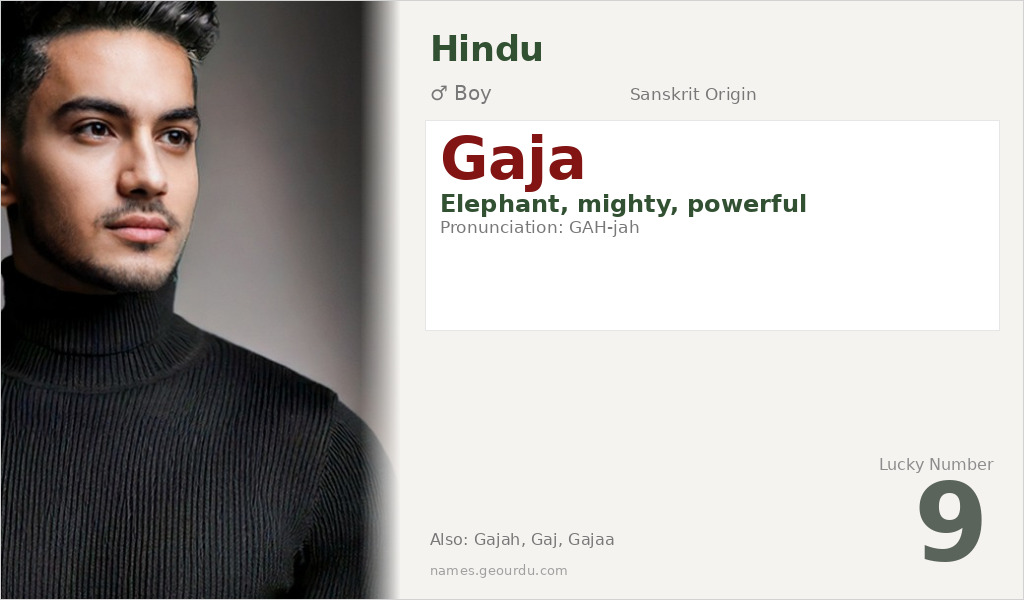
Gaja is a powerful Sanskrit name meaning ‘elephant’, carrying deep cultural and spiritual significance in Hindu tradition. More than just an animal name, it embodies strength, wisdom, and royal dignity. This name connects the bearer to ancient Indian mythology where elephants are revered as sacred beings. Choosing Gaja reflects a desire for these noble qualities in a child’s life.
Meaning of Gaja
Gaja originates from the Sanskrit word गज (gaja), which directly translates to ‘elephant’. In Sanskrit linguistics, the root is well-documented in classical texts and epics. Elephants in Hindu culture symbolize not just physical strength but also mental fortitude, memory, and prosperity. The name appears in compound forms like Gajendra (king of elephants) and Gajanan (elephant-faced, an epithet of Ganesha). Across South Asia, elephants are associated with royalty and divinity, making this name particularly auspicious. The meaning extends metaphorically to describe someone mighty, stable, and dignified.
| 📛 Name | Gaja |
| 💎 Meaning | Elephant, mighty, powerful |
| 👤 Gender | Boy |
| 🕌 Religion | Hindu |
| 🌍 Origin | Sanskrit |
| 🗣 Pronunciation | GAH-jah |
| ✍️ Urdu | گجا |
| ✍️ Arabic | جايا |
| 🔢 Numerology | 9 |
| ✨ Spellings | Gajah, Gaj, Gajaa |
Origin & Cultural Significance
Gaja has its roots in ancient Sanskrit, the classical language of India, and is primarily used in Hindu communities across India, Nepal, and the diaspora. The name draws from India’s rich tradition of elephant symbolism, where elephants are considered sacred animals in Hinduism and Buddhism. Historical references include the divine elephant Airavata in Hindu mythology and the veneration of elephants in temple rituals. While the name is most common in Sanskrit-derived languages like Hindi, Marathi, and Gujarati, similar elephant-related names exist in other cultures, though Gaja itself remains distinctly Sanskrit in origin.
Personality Traits
Those named Gaja are often seen as pillars of strength—calm yet powerful, intelligent, and protective. Like the elephant, they may possess excellent memory and deep emotional connections. They tend to be natural leaders who command respect through dignity rather than aggression, and they value family and community loyalty. Their steady presence often makes them reliable and trusted figures in their circles.
Similar Names
If you like Gaja, consider: Gajendra, Gajanan, Gajadhar, Hasti, Kunjar
Famous People Named Gaja
- Gaja Lakshmi — Hindu goddess of wealth and prosperity, often depicted with elephants
- Gaja Gamini — 2000 Indian film by M.F. Hussain, title means 'one with the gait of an elephant'
Frequently Asked Questions About Gaja
What does Gaja mean?
Gaja means 'elephant' in Sanskrit, symbolizing strength, wisdom, and prosperity in Hindu culture.
Is Gaja a boy or girl name?
Gaja is traditionally a masculine name in Hindu naming conventions, though elephant symbolism appears in feminine forms like Gajalakshmi.
What is the origin of Gaja?
Gaja originates from Sanskrit, an ancient Indian language, and is deeply rooted in Hindu mythology and cultural traditions.





