
Table of Contents
Gajaadhar is a powerful Sanskrit name that evokes images of strength, majesty, and leadership. Derived from ancient Indian roots, this name carries the literal meaning ‘bearer of elephants’ and has been used for centuries in Hindu communities. With its deep cultural resonance and distinctive sound, Gajaadhar represents both physical power and spiritual significance. This comprehensive guide explores every aspect of this unique name.
Meaning of Gajaadhar
Gajaadhar is a classical Sanskrit compound name with precise etymological roots. The first element ‘gaja’ (गज) means ‘elephant’ in Sanskrit, derived from the Proto-Indo-European root *gʷer- meaning ‘heavy animal’. The second element ‘adhar’ (आधार) comes from the Sanskrit root √dhṛ (धृ) meaning ‘to hold, bear, or support’, with the prefix ‘ā-‘ intensifying the meaning to ‘complete holder’. Thus, Gajaadhar literally translates to ‘elephant-bearer’ or ‘one who holds elephants’. In Hindu cultural context, elephants symbolize wisdom, strength, royalty, and good fortune, making this name particularly auspicious. The name appears in various Sanskrit texts and is sometimes used as an epithet for powerful figures or deities associated with elephants.
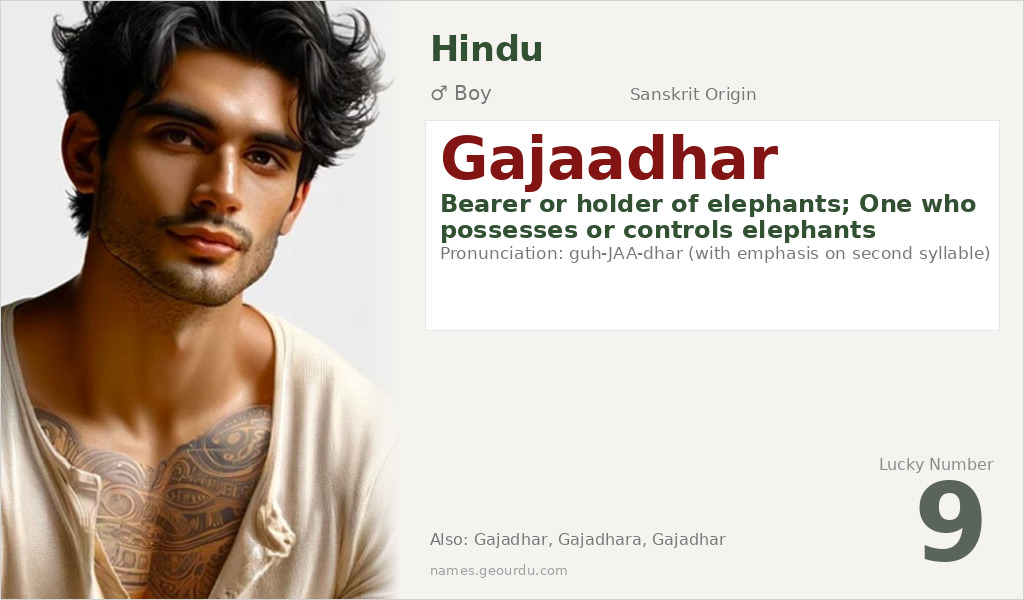
| 📛 Name | Gajaadhar |
| 💎 Meaning | Bearer or holder of elephants; One who possesses or controls elephants |
| 👤 Gender | Boy |
| 🕌 Religion | Hindu |
| 🌍 Origin | Sanskrit |
| 🗣 Pronunciation | guh-JAA-dhar (with emphasis on second syllable) |
| ✍️ Urdu | گجادھر |
| ✍️ Arabic | غاجادهار |
| 🔢 Numerology | 9 |
| ✨ Spellings | Gajadhar, Gajadhara, Gajadhar, Gajaadhar |
Origin & Cultural Significance
Gajaadhar originates from classical Sanskrit, the ancient liturgical language of Hinduism that has influenced numerous South Asian languages. As a compound name, it follows traditional Sanskrit naming patterns where meaningful elements are combined to create descriptive names. The name reflects the cultural importance of elephants in Indian society, where they have been symbols of royalty, strength, and divine power for millennia. In Hindu mythology, elephants are associated with deities like Ganesha and Indra’s mount Airavata, adding spiritual dimensions to the name. While primarily used in Hindu communities, the name’s Sanskrit roots give it pan-Indian appeal across various regions and linguistic groups.
Personality Traits
Those named Gajaadhar are often seen as natural leaders with immense inner strength and stability. Like elephants, they tend to be loyal, protective of their loved ones, and possess excellent memory. Their grounded nature makes them reliable in times of crisis, while their inherent dignity commands respect. These individuals often excel in roles requiring patience, perseverance, and physical or mental fortitude.
Similar Names
If you like Gajaadhar, consider: Gajendra, Gajanan, Gajapati, Gajavaktra, Gajakarna
Famous People Named Gajaadhar
- Gajadhar Singh — 19th century Indian freedom fighter from Bihar
- Gajadhar Prasad — Indian classical vocalist of the Benaras gharana
Frequently Asked Questions About Gajaadhar
What does Gajaadhar mean?
Gajaadhar means 'bearer of elephants' or 'one who holds elephants' in Sanskrit, combining 'gaja' (elephant) and 'adhar' (holder/bearer).
Is Gajaadhar a boy or girl name?
Gajaadhar is exclusively a masculine name in Hindu naming traditions, derived from Sanskrit grammatical gender conventions.
What is the origin of Gajaadhar?
Gajaadhar originates from classical Sanskrit, the ancient language of Hindu scriptures, and reflects the cultural significance of elephants in Indian tradition.





