
Table of Contents
Gajaanand is a distinctive Sanskrit name that beautifully combines strength and joy in its meaning. Primarily used in Hindu communities, this name carries deep cultural and spiritual significance. With roots in ancient Indian tradition, Gajaanand evokes images of wisdom, power, and divine connection. Its unique composition makes it both meaningful and memorable for parents seeking a name with traditional roots.
Meaning of Gajaanand
Gajaanand derives from the Sanskrit language, specifically from the words ‘Gaja’ (elephant) and ‘Anand’ (joy, bliss). In Sanskrit linguistics, ‘Gaja’ represents not just the animal but symbolizes strength, wisdom, royalty, and memory in Hindu philosophy. ‘Anand’ is a fundamental concept in Indian spirituality, representing supreme bliss and happiness in both worldly and spiritual contexts. The combination creates a name meaning ‘Joy of elephants’ or ‘Delight of elephants’, likely referencing Lord Ganesha, the elephant-headed deity who removes obstacles and brings prosperity. This name follows the classical Sanskrit compound naming tradition where two meaningful elements combine to create a new, layered meaning.
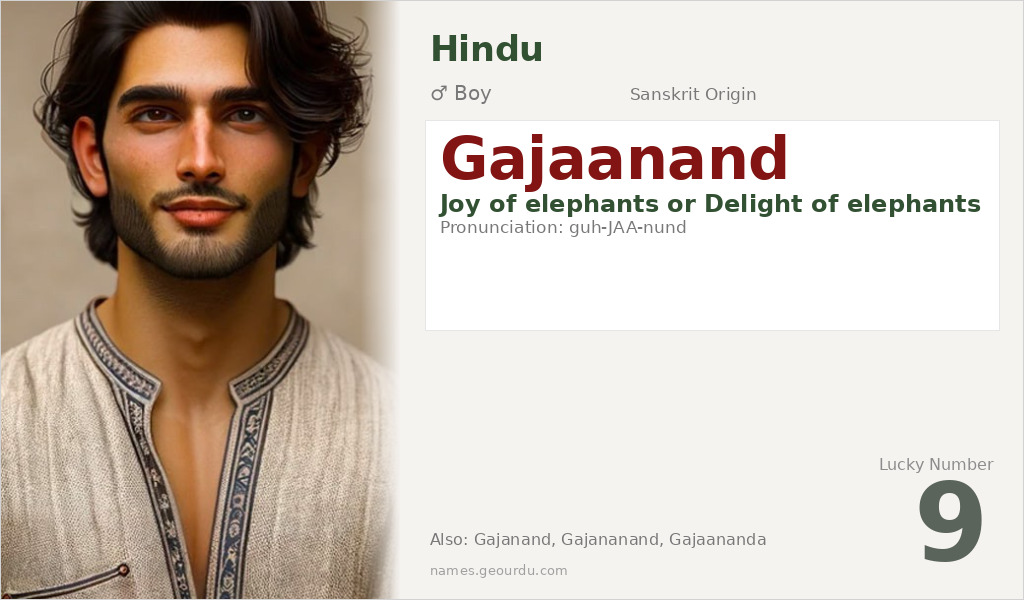
| 📛 Name | Gajaanand |
| 💎 Meaning | Joy of elephants or Delight of elephants |
| 👤 Gender | Boy |
| 🕌 Religion | Hindu |
| 🌍 Origin | Sanskrit |
| 🗣 Pronunciation | guh-JAA-nund |
| ✍️ Urdu | گج آنند |
| ✍️ Arabic | غاجاناند |
| 🔢 Numerology | 9 |
| ✨ Spellings | Gajanand, Gajananand, Gajaananda |
Origin & Cultural Significance
Gajaanand originates from Sanskrit, the ancient liturgical language of Hinduism that has influenced countless Indian languages and names. As a compound Sanskrit name, it belongs to a tradition dating back thousands of years in the Indian subcontinent. The name is particularly significant in Hindu culture due to its association with elephants, which hold sacred status in Hinduism as symbols of Ganesha, strength, and royal power. While primarily used in India and among Hindu communities worldwide, the name’s Sanskrit roots give it pan-Indian recognition across various regions and linguistic groups. Historical records show similar compound names with ‘Gaja’ and ‘Anand’ elements appearing in classical Indian literature and inscriptions.
Personality Traits
Those named Gajaanand are often associated with qualities of wisdom, strength, and joyful disposition. The elephant symbolism suggests both physical and mental fortitude, along with memory and intelligence. They may exhibit leadership qualities and a calm, steady approach to challenges, much like the majestic elephant. The ‘Anand’ component adds a dimension of happiness, spirituality, and positive energy to their character.
Similar Names
If you like Gajaanand, consider: Ganesh, Gajanan, Anand, Gajendra, Gajadhar, Gajapati, Ananda, Gajamohan, Gajavadan, Gajakumar
Famous People Named Gajaanand
- Gajaanand Sharma — Indian classical vocalist and musicologist from the Gwalior gharana
- Gajaanand Singh — Historical figure in Indian literature and regional history
Frequently Asked Questions About Gajaanand
What does Gajaanand mean?
Gajaanand means 'Joy of elephants' or 'Delight of elephants' in Sanskrit, combining 'Gaja' (elephant) and 'Anand' (joy, bliss).
Is Gajaanand a boy or girl name?
Gajaanand is exclusively a boy's name in Hindu naming tradition, following masculine Sanskrit grammatical forms.
What is the origin of Gajaanand?
Gajaanand originates from Sanskrit, the ancient language of Hinduism, and is particularly associated with Indian Hindu culture and tradition.





