
Table of Contents
Gajamukh is a profound Sanskrit name with rich mythological heritage in Hinduism. Literally meaning ‘elephant-faced,’ this name directly references Lord Ganesha, the beloved elephant-headed deity worshipped as the remover of obstacles. As a traditional Hindu boy’s name, Gajamukh carries centuries of religious and cultural significance. Parents choosing this name often seek to invoke Ganesha’s blessings of wisdom, success, and protection for their child.
Meaning of Gajamukh
Gajamukh is a compound Sanskrit name formed from two distinct elements: ‘gaja’ (गज) meaning ‘elephant’ and ‘mukha’ (मुख) meaning ‘face’ or ‘mouth.’ The complete term therefore translates precisely to ‘elephant-faced’ or ‘elephant-mouthed.’ This is not merely a descriptive term but a specific epithet for Lord Ganesha, whose iconic elephant head symbolizes wisdom, strength, and the ability to overcome obstacles. In Hindu mythology, Ganesha’s elephant head represents supreme intelligence and the removal of barriers. The name appears in various Sanskrit texts and devotional literature dedicated to Ganesha worship.
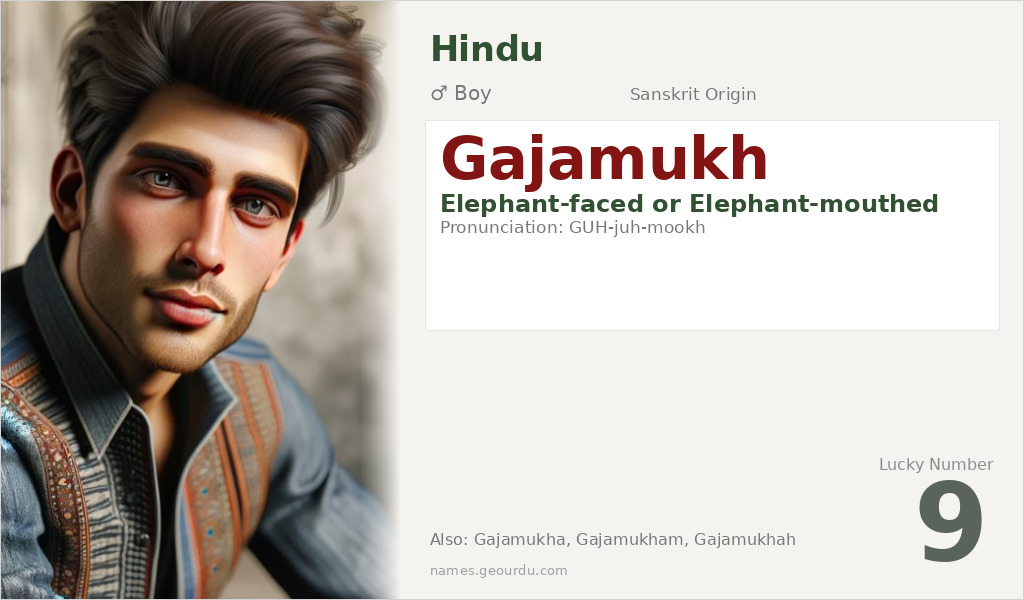
| 📛 Name | Gajamukh |
| 💎 Meaning | Elephant-faced or Elephant-mouthed |
| 👤 Gender | Boy |
| 🕌 Religion | Hindu |
| 🌍 Origin | Sanskrit |
| 🗣 Pronunciation | GUH-juh-mookh |
| ✍️ Urdu | گج مکھ |
| ✍️ Arabic | غاجاموخ |
| 🔢 Numerology | 9 |
| ✨ Spellings | Gajamukha, Gajamukham, Gajamukhah |
Origin & Cultural Significance
Gajamukh originates from classical Sanskrit, the ancient liturgical language of Hinduism. Its usage is deeply rooted in Hindu religious tradition, specifically within the worship of Lord Ganesha, one of the most widely venerated deities in Hinduism. The name reflects the iconographic representation of Ganesha with an elephant head, which according to mythology was bestowed upon him after his original head was severed. As a given name, Gajamukh is used primarily in Hindu communities across India and the diaspora, particularly among those with strong devotion to Ganesha. It represents both religious reverence and cultural continuity within Hindu naming traditions.
Personality Traits
Those named Gajamukh are often associated with qualities attributed to Lord Ganesha: intelligence, wisdom, and problem-solving abilities. They may be perceived as thoughtful individuals who approach challenges with patience and strategic thinking. The name suggests someone who values tradition while possessing the adaptability to navigate obstacles successfully, much like the deity it references.
Similar Names
If you like Gajamukh, consider: Ganesh, Ganapati, Vinayak, Gajanan, Gajendra
Famous People Named Gajamukh
- No widely known contemporary figures with this exact name found in records
- Primarily appears in religious contexts as an epithet of Lord Ganesha in Hindu scriptures
Frequently Asked Questions About Gajamukh
What does Gajamukh mean?
Gajamukh means 'elephant-faced' in Sanskrit, specifically referring to Lord Ganesha's iconic elephant head.
Is Gajamukh a boy or girl name?
Gajamukh is exclusively a boy's name in Hindu tradition, as it refers to the male deity Lord Ganesha.
What is the origin of Gajamukh?
Gajamukh originates from Sanskrit, the classical language of Hinduism, and is deeply rooted in Hindu religious tradition as an epithet of Lord Ganesha.





