
Table of Contents
Gajananvihari is a profound Sanskrit name that beautifully combines two divine concepts in Hindu tradition. As a compound name, it brings together the iconic imagery of Lord Ganesha with the concept of joyful divine presence. This name carries deep religious significance and has been cherished in Hindu families for generations, particularly in India’s Marathi and North Indian communities.
Meaning of Gajananvihari
Gajananvihari is a Sanskrit compound name with precise etymological roots. The first component ‘Gajanan’ comes from ‘gaja’ meaning elephant and ‘anan’ meaning face, directly referring to Lord Ganesha’s distinctive elephant-headed form. The second component ‘Vihari’ derives from the Sanskrit root ‘viharati’ meaning to roam, sport, or dwell joyfully. In Hindu theology, ‘Vihari’ often describes divine beings who delight in creation and sustain the universe. Thus, Gajananvihari translates to ‘Lord Ganesha who is the beloved sustainer’ or ‘the elephant-faced deity who joyfully roams the world.’ This name appears in various Hindu texts and devotional literature praising Ganesha’s role as remover of obstacles and patron of beginnings.
| 📛 Name | Gajananvihari |
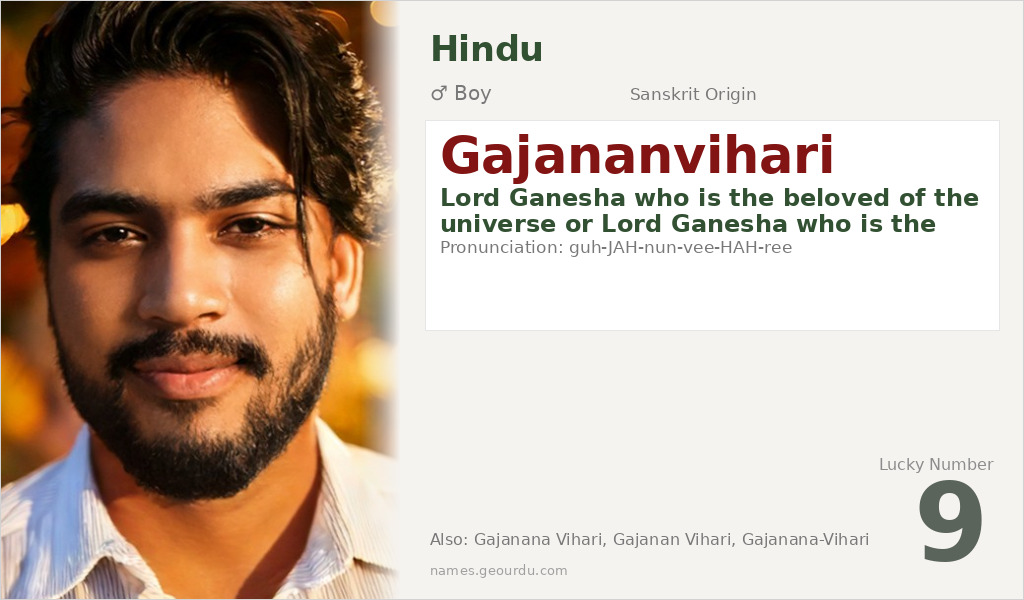
| 💎 Meaning | Lord Ganesha who is the beloved of the universe or Lord Ganesha who is the sustainer of the world |
| 👤 Gender | Boy |
| 🕌 Religion | Hindu |
| 🌍 Origin | Sanskrit |
| 🗣 Pronunciation | guh-JAH-nun-vee-HAH-ree |
| ✍️ Urdu | گجنن وہاری |
| ✍️ Arabic | غجانان فيهاري |
| 🔢 Numerology | 9 |
| ✨ Spellings | Gajanana Vihari, Gajanan Vihari, Gajanana-Vihari |
Origin & Cultural Significance
Gajananvihari originates from classical Sanskrit, the liturgical language of Hinduism, and has been used primarily in Hindu communities across India for centuries. The name gained particular prominence in Maharashtra and other regions where Ganesha worship is especially devout. It reflects the syncretic nature of Hindu naming traditions that combine divine attributes with philosophical concepts. Historically, the name appears in Marathi literature and religious discourses, often used by families seeking Ganesha’s blessings for their children. While less common than simpler Ganesha-related names, Gajananvihari maintains a special place in Hindu onomastics as a complete devotional phrase turned personal name.
Personality Traits
Those named Gajananvihari are often associated with the qualities of Lord Ganesha—wisdom, patience, and the ability to overcome obstacles. They tend to approach life with methodical care and intellectual depth, making them natural problem-solvers. Their calm demeanor and sense of responsibility frequently position them as reliable figures in both personal and professional spheres, embodying the protective and guiding aspects of their namesake deity.
Similar Names
If you like Gajananvihari, consider: Gajanana, Ganesha, Vighnesh, Vinayaka, Gajendra
Famous People Named Gajananvihari
- Gajananvihari L. Mehta — Indian freedom fighter and diplomat who served as India's ambassador to the United States in the 1950s
- Gajananvihari S. Karandikar — Marathi writer and scholar known for his contributions to literature and cultural studies
Frequently Asked Questions About Gajananvihari
What does Gajananvihari mean?
Gajananvihari means 'Lord Ganesha who is the beloved sustainer of the world.' It's a Sanskrit compound name combining 'Gajanan' (elephant-faced, referring to Ganesha) and 'Vihari' (one who roams joyfully or sustains).
Is Gajananvihari a boy or girl name?
Gajananvihari is exclusively a boy's name in Hindu tradition, as it refers specifically to Lord Ganesha, a male deity in the Hindu pantheon.
What is the origin of Gajananvihari?
Gajananvihari originates from Sanskrit, the classical language of Hinduism. It has been used for centuries in Hindu communities, particularly in Maharashtra and North India, as a devotional name honoring Lord Ganesha.





