
Table of Contents
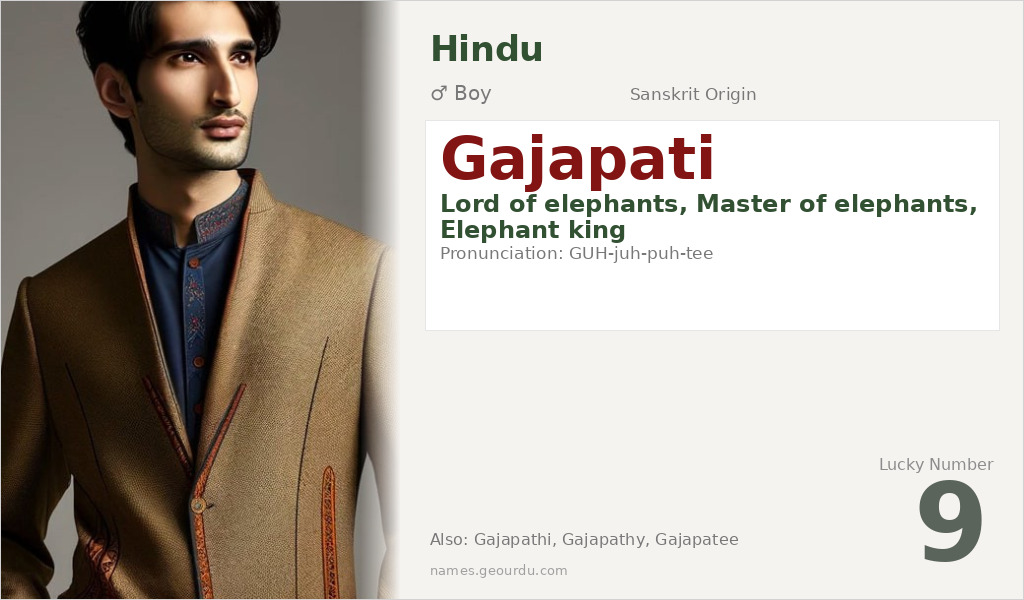
Gajapati is a powerful Sanskrit name with deep roots in Hindu tradition and Indian royal history. Meaning ‘lord of elephants’ or ‘elephant king’, this name carries connotations of strength, wisdom, and royal authority. Historically used as a title for kings who commanded elephant armies, it also serves as an epithet for Lord Ganesha. Today, it remains a distinctive choice for boys, evoking both spiritual significance and historical grandeur.
Meaning of Gajapati
Gajapati is a classical Sanskrit compound name formed from two elements: ‘gaja’ (गज) meaning ‘elephant’ and ‘pati’ (पति) meaning ‘lord, master, or ruler’. The combination literally translates to ‘lord of elephants’ or ‘master of elephants’. In Hindu mythology and tradition, elephants symbolize strength, wisdom, royalty, and prosperity. The name appears in ancient texts and inscriptions, particularly associated with rulers in Odisha and South India who maintained formidable elephant corps. As an epithet, it refers to Lord Ganesha, the elephant-headed deity who is worshipped as the remover of obstacles and patron of arts and sciences. The linguistic construction follows standard Sanskrit compounding rules where ‘pati’ serves as the governing element, making it a tatpurusha compound.
| 📛 Name | Gajapati |
| 💎 Meaning | Lord of elephants, Master of elephants, Elephant king |
| 👤 Gender | Boy |
| 🕌 Religion | Hindu |
| 🌍 Origin | Sanskrit |
| 🗣 Pronunciation | GUH-juh-puh-tee |
| ✍️ Urdu | گجپتی |
| ✍️ Arabic | غاجاباتي |
| 🔢 Numerology | 9 |
| ✨ Spellings | Gajapathi, Gajapathy, Gajapatee |
Origin & Cultural Significance
Gajapati originates from Sanskrit, the classical language of ancient India, and has been used for centuries in Hindu kingdoms across the Indian subcontinent. Historically, ‘Gajapati’ was a prestigious royal title adopted by several dynasties, most notably the Suryavamsa Gajapati Empire of Odisha (1434-1541 CE), whose rulers used it to signify their command over elephant armies, a crucial military asset in medieval warfare. The title appears in temple inscriptions, copper plates, and historical records throughout Eastern and Southern India. Beyond its royal usage, the name has religious significance in Hinduism as one of the many names of Lord Ganesha, connecting it to devotional practices. While primarily associated with Hindu tradition, the name’s historical usage transcends purely religious boundaries, representing a cultural marker of authority and prestige in South Asian history.
Personality Traits
Those named Gajapati are often associated with leadership qualities, stability, and protective instincts. Like the elephant—revered in Indian culture for its memory, intelligence, and strength—individuals with this name may exhibit patience, wisdom, and a calm, commanding presence. They tend to be traditional yet authoritative figures who value family and community. Their strength is typically tempered with gentleness, mirroring the elephant’s paradoxical nature of being both powerful and compassionate.
Similar Names
If you like Gajapati, consider: Gajanan, Gajendra, Gajadhar, Gajakarna, Gajavaktra
Famous People Named Gajapati
- Gajapati Kapilendra Deva — 15th century founder of the Suryavamsa Gajapati Empire in Odisha, India
- Gajapati Purushottama Deva — 15th-16th century ruler of the Gajapati Empire known for his military campaigns
Frequently Asked Questions About Gajapati
What does Gajapati mean?
Gajapati means 'lord of elephants' or 'elephant king' in Sanskrit. It is a compound of 'gaja' (elephant) and 'pati' (lord/master).
Is Gajapati a boy or girl name?
Gajapati is exclusively a boy's name in Hindu naming tradition. It has masculine grammatical gender in Sanskrit and historical usage as a male royal title.
What is the origin of Gajapati?
Gajapati originates from Sanskrit, the classical language of ancient India. It has both religious significance as an epithet of Lord Ganesha and historical importance as a royal title used by Hindu kings, particularly in Odisha and South India.





