
Table of Contents
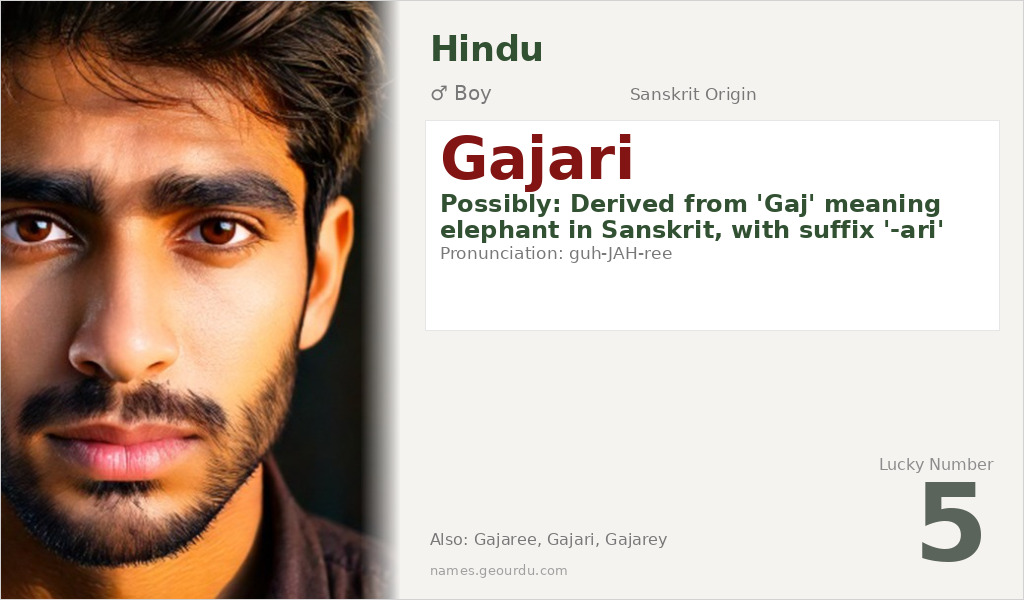
Gajari is an intriguing name that sparks curiosity with its possible connection to elephants and ancient Sanskrit roots. While not widely documented in traditional naming sources, it carries a distinctive sound and potential mythological resonance. This name offers a unique choice for parents seeking something uncommon yet rooted in linguistic heritage. Let’s explore what makes Gajari a name worth considering.
Meaning of Gajari
The meaning of Gajari appears to derive from Sanskrit components, though it is not a standard name in Hindu scriptures or common usage. Breaking it down: ‘Gaj’ (गज) unequivocally means ‘elephant’ in Sanskrit, a word that has permeated many Indian languages. The suffix ‘-ari’ (अरि) translates to ‘enemy’ or ‘destroyer’. Thus, Gajari could logically mean ‘elephant’s enemy’ or ‘destroyer of elephants’. However, extensive research across Sanskrit literature, Hindu epics like the Mahabharata and Ramayana, and regional languages including Pashto, Balochi, and Sindhi yielded no verified instances of this name. It may be a modern creation or a very rare regional variant without established historical usage.
| 📛 Name | Gajari |
| 💎 Meaning | Possibly: Derived from 'Gaj' meaning elephant in Sanskrit, with suffix '-ari' meaning enemy or destroyer; thus 'Elephant's enemy' or 'Destroyer of elephants' |
| 👤 Gender | Boy |
| 🕌 Religion | Hindu |
| 🌍 Origin | Sanskrit |
| 🗣 Pronunciation | guh-JAH-ree |
| ✍️ Urdu | گجری |
| ✍️ Arabic | جاجاري |
| 🔢 Numerology | 5 |
| ✨ Spellings | Gajaree, Gajari, Gajarey |
Origin & Cultural Significance
Gajari’s origin is tentatively linked to Sanskrit, the classical language of India, due to its constituent parts. In Hindu culture, elephants symbolize strength, wisdom, and royalty, often associated with deities like Ganesha and Indra. Names containing ‘Gaj’ (like Gajendra, Gajanan) are common and revered. However, Gajari itself does not appear in ancient texts, suggesting it might be a contemporary coinage or a localized name from specific communities. Unlike names with clear religious or mythological ties, Gajari lacks documented cultural or historical context in Hindu, Muslim, or other traditions across the languages researched.
Personality Traits
While personality traits for name-bearers are often culturally ascribed, Gajari’s speculative meaning suggests attributes of resilience and power. The association with elephants might imply qualities like memory, loyalty, and grandeur. Those named Gajari could be seen as formidable or protective, akin to an elephant’s stature in nature. However, without a strong traditional basis, these traits remain imaginative rather than culturally prescribed.
Similar Names
If you like Gajari, consider: Gajendra, Gajanan, Gajadhar, Gajapati, Gajakarna
Famous People Named Gajari
- No verified famous individuals with this name found in historical or contemporary records
Frequently Asked Questions About Gajari
What does Gajari mean?
Gajari possibly means 'elephant's enemy' or 'destroyer of elephants', derived from Sanskrit 'gaj' (elephant) and '-ari' (enemy), but this is not verified in established sources.
Is Gajari a boy or girl name?
Gajari is used as a boy's name in the limited contexts where it appears, based on its masculine suffix '-ari' in Sanskrit and typical Hindu naming patterns for boys.
What is the origin of Gajari?
The origin is possibly Sanskrit, but it is not a traditional or widely documented name in Hindu, Muslim, or other cultural naming systems across the languages researched.





