
Table of Contents
Gajendran is a powerful Sanskrit name with deep roots in Hindu mythology and tradition. Meaning ‘king of elephants’ or ‘lord of elephants’, this name carries connotations of strength, wisdom, and divine protection. Popular among Hindu families, particularly in South India, Gajendran connects the bearer to an important story from the Bhagavata Purana where Lord Vishnu rescues the elephant king Gajendra. This name embodies both regal authority and spiritual significance.
Meaning of Gajendran
Gajendran derives from classical Sanskrit, combining ‘Gaja’ (elephant) and ‘Indra’ (king or lord). In Sanskrit linguistics, ‘Gaja’ comes from the verbal root ‘gaj’ meaning ‘to roar’ or ‘to sound’, perfectly describing the elephant’s distinctive trumpet. ‘Indra’ originally referred to the chief deity in Vedic tradition, later becoming a title meaning ‘ruler’ or ‘sovereign’. The compound formation follows standard Sanskrit sandhi rules, creating a name that literally means ‘elephant-king’. This name is most famously associated with the elephant king Gajendra in Hindu scriptures, who was rescued by Lord Vishnu after a prolonged prayer, making the name symbolic of divine salvation and devotion.
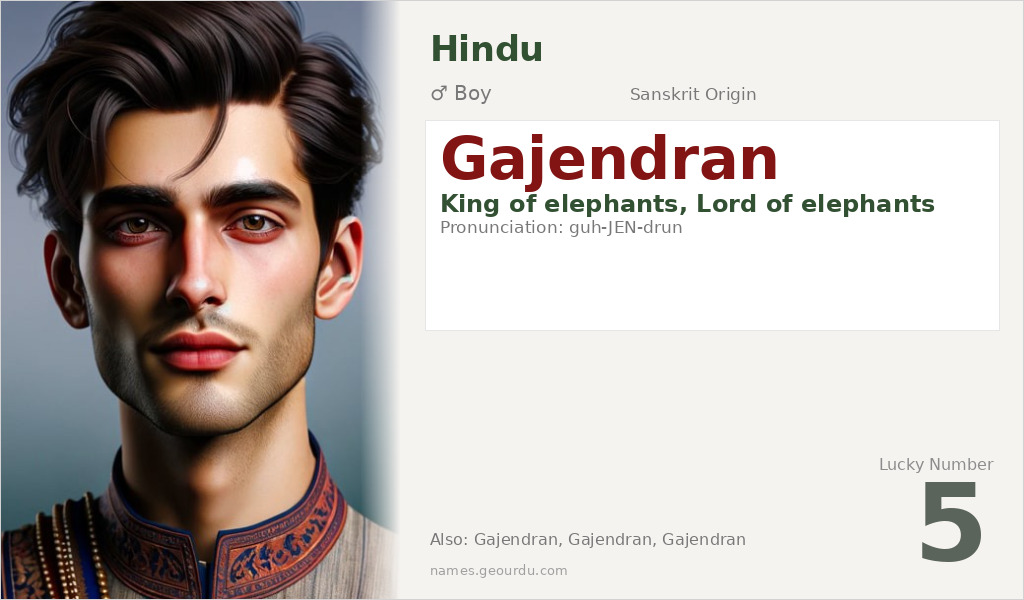
| 📛 Name | Gajendran |
| 💎 Meaning | King of elephants, Lord of elephants |
| 👤 Gender | Boy |
| 🕌 Religion | Hindu |
| 🌍 Origin | Sanskrit |
| 🗣 Pronunciation | guh-JEN-drun |
| ✍️ Urdu | گجندرن |
| ✍️ Arabic | غاجيندران |
| 🔢 Numerology | 5 |
| ✨ Spellings | Gajendran, Gajendran, Gajendran |
Origin & Cultural Significance
Gajendran originates from Sanskrit, the classical language of ancient India, and is deeply embedded in Hindu religious texts. The name gained prominence through the Gajendra Moksha story in the Bhagavata Purana (8th century CE), where the elephant king Gajendra’s devotion leads to his liberation by Vishnu. This mythological connection made the name popular in Hindu communities, particularly in Tamil Nadu and other South Indian regions where the story is frequently retold in temple art and literature. While primarily a Hindu name, its Sanskrit roots mean it’s understood across Indian linguistic communities. The name represents the fusion of royal symbolism (elephants were associated with kingship in ancient India) with spiritual themes of devotion and rescue.
Personality Traits
Those named Gajendran are often associated with elephant-like qualities: strength combined with gentleness, excellent memory, and protective instincts. They may exhibit natural leadership abilities and a calm, steady demeanor in challenging situations. The mythological connection suggests spiritual depth and devotion, while the ‘king’ element implies authority and responsibility. These individuals often command respect through their consistent, reliable nature rather than aggressive dominance.
Similar Names
If you like Gajendran, consider: Gajendra, Gajanan, Gajadhar, Indrajit, Gajapati
Famous People Named Gajendran
- Gajendran Palanisamy — Indian film director known for Tamil cinema
- Gajendran — Character in Hindu mythology, the elephant king rescued by Lord Vishnu
Frequently Asked Questions About Gajendran
What does Gajendran mean?
Gajendran means 'king of elephants' or 'lord of elephants' in Sanskrit, combining 'Gaja' (elephant) and 'Indra' (king/ruler).
Is Gajendran a boy or girl name?
Gajendran is exclusively a boy's name in Hindu naming tradition, reflecting masculine qualities of strength and leadership associated with elephants and kingship.
What is the origin of Gajendran?
Gajendran originates from Sanskrit, the classical language of ancient India, and is deeply connected to Hindu mythology through the story of Gajendra Moksha in the Bhagavata Purana.





