
Table of Contents
Gannaath is a profound and ancient name rooted in Hindu mythology, carrying the weight of divine authority and spiritual significance. As an epithet of Shiva, it evokes imagery of celestial attendants and cosmic order. This name offers a unique blend of tradition and strength, making it a meaningful choice for parents seeking a name with deep cultural roots. Explore the rich history and meaning behind Gannaath in this detailed guide.
Meaning of Gannaath
Gannaath is a Sanskrit name composed of two elements: ‘gana’ and ‘nātha’. ‘Gana’ refers to a group or troop, specifically the Ganas—mythological dwarf-like beings who serve as attendants to Shiva in Hindu tradition. ‘Nātha’ means lord, master, or protector. Combined, Gannaath translates to ‘Lord of the Ganas’, highlighting Shiva’s role as the commander of these divine followers. This epithet is used in scriptures and prayers to honor Shiva’s sovereignty over his celestial entourage. The name underscores themes of leadership, protection, and spiritual hierarchy within Hindu cosmology.
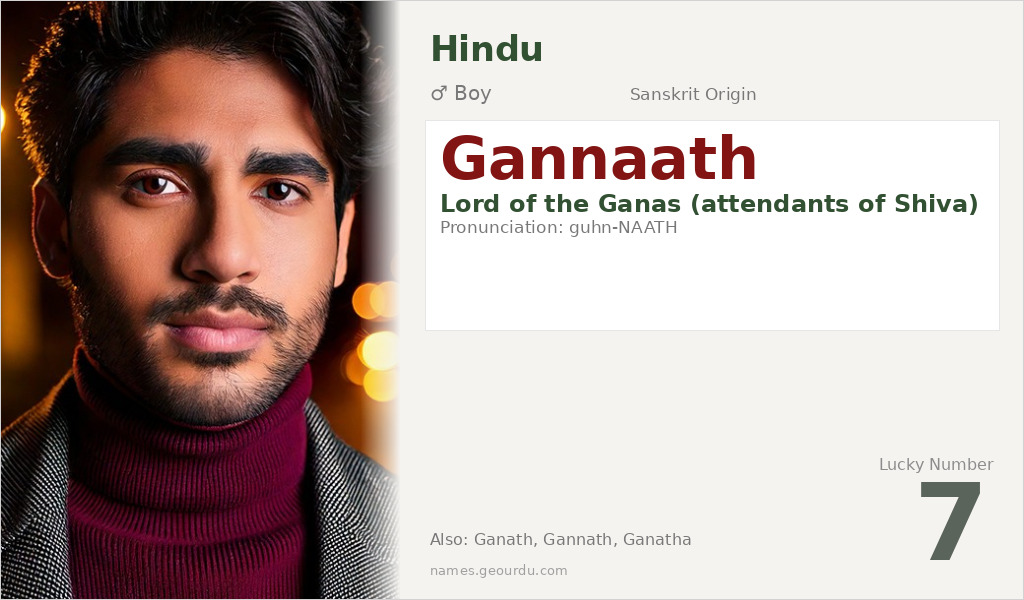
| 📛 Name | Gannaath |
| 💎 Meaning | Lord of the Ganas (attendants of Shiva) |
| 👤 Gender | Boy |
| 🕌 Religion | Hindu |
| 🌍 Origin | Sanskrit |
| 🗣 Pronunciation | guhn-NAATH |
| ✍️ Urdu | گناتھ |
| ✍️ Arabic | غاناث |
| 🔢 Numerology | 7 |
| ✨ Spellings | Ganath, Gannath, Ganatha |
Origin & Cultural Significance
Originating from Sanskrit, the classical language of ancient India, Gannaath has been used for centuries in Hindu religious and cultural contexts. It appears in texts like the Puranas and Tantras, where Shiva is invoked by this name to emphasize his dominion over the Ganas. The name is primarily associated with Shaivism, a major tradition within Hinduism that worships Shiva as the supreme deity. While not as common as other Shiva epithets like Mahesh or Shankar, Gannaath holds niche significance in regions with strong Shaivite traditions, such as parts of India and Nepal. Its usage reflects a deep appreciation for mythological narratives and divine attributes.
Personality Traits
Those named Gannaath are often thought to embody qualities reminiscent of Shiva—calm, protective, and spiritually inclined. They may naturally assume leadership roles, guiding others with wisdom and authority. With a name meaning ‘Lord of the Ganas’, individuals might display a strong sense of responsibility and connection to community or tradition. Their personality can blend introspection with decisive action, mirroring the balance of asceticism and power found in Shiva’s mythology.
Similar Names
If you like Gannaath, consider: Ganesha, Ganapati, Shiva, Mahesh, Rudra
Famous People Named Gannaath
- No widely known contemporary figures with this name found in records
- Historical or mythological references primarily to Shiva as Gannaath in Hindu texts
Frequently Asked Questions About Gannaath
What does Gannaath mean?
Gannaath means 'Lord of the Ganas' in Sanskrit, referring to Shiva as the master of his divine attendants, the Ganas.
Is Gannaath a boy or girl name?
Gannaath is exclusively a boy name in Hindu tradition, as it is an epithet of the male deity Shiva.
What is the origin of Gannaath?
Gannaath originates from Sanskrit, the ancient language of India, and is deeply rooted in Hindu mythology and Shaivite culture.





