
Table of Contents
Gloria is a beautiful, timeless name with deep roots in Christian tradition and Latin language. Meaning ‘glory’ or ‘fame,’ this name has been borne by influential women across centuries, from saints to modern celebrities. Its elegant sound and profound meaning make it a popular choice for parents seeking a name with both historical weight and contemporary appeal. Discover the rich history and cultural significance of this classic name.
Meaning of Gloria
Gloria originates from the Latin word ‘gloria,’ which directly translates to ‘glory, fame, renown, praise, or honor.’ The term comes from the verb ‘gloriari,’ meaning ‘to boast’ or ‘to take pride in.’ In Christian context, Gloria gained prominence through liturgical phrases like ‘Gloria in excelsis Deo’ (Glory to God in the highest) from the Christmas narrative and ‘Gloria Patri’ (Glory to the Father) used in prayers. As a given name, it symbolizes divine praise and human achievement, representing both spiritual devotion and worldly accomplishment. The name entered common usage in English-speaking countries during the 19th century and has maintained its popularity due to its positive connotations and melodic quality.
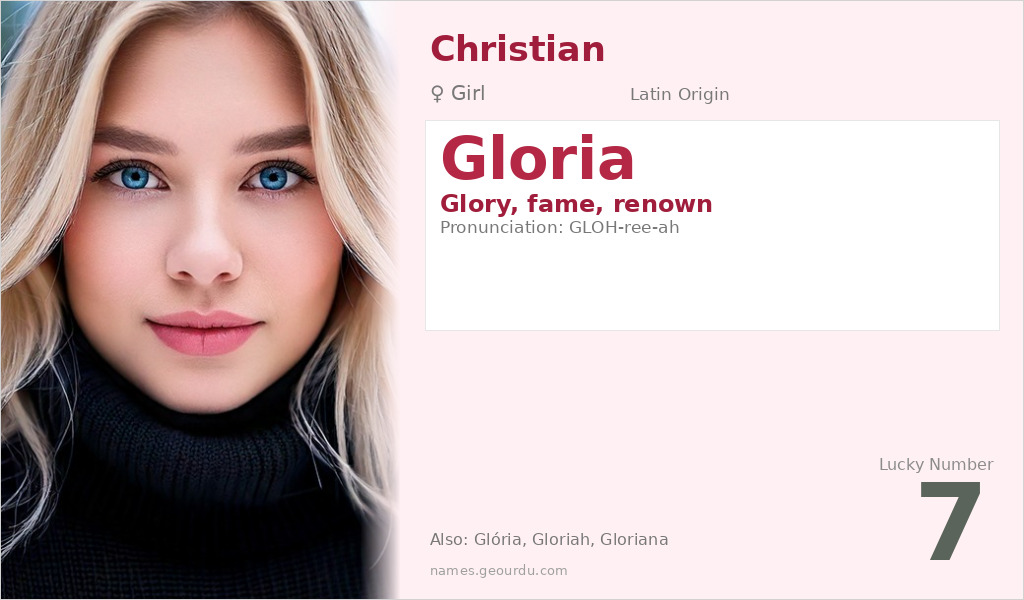
| 📛 Name | Gloria |
| 💎 Meaning | Glory, fame, renown |
| 👤 Gender | Girl |
| 🕌 Religion | Christian |
| 🌍 Origin | Latin |
| 🗣 Pronunciation | GLOH-ree-ah |
| ✍️ Urdu | گلوریا |
| ✍️ Arabic | غلوريا |
| 🔢 Numerology | 7 |
| ✨ Spellings | Glória, Gloriah, Gloriana, Gloriosa |
Origin & Cultural Significance
Gloria has its origins in ancient Rome, where ‘gloria’ was an important concept denoting public recognition and honor. The name was adopted into Christian tradition through Latin, the language of the Roman Catholic Church. It first appeared as a given name in the Middle Ages, often in religious contexts, but gained widespread popularity in the English-speaking world during the Victorian era. The name saw a significant surge in the early 20th century, particularly in the United States, where it ranked among the top 50 names for girls from the 1920s through the 1940s. While primarily associated with Western Christian cultures, Gloria has been adopted in various forms across different languages and regions due to its universal positive meaning.
Personality Traits
Those named Gloria are often perceived as confident, dignified individuals with a natural grace and presence. The name’s meaning of ‘glory’ suggests someone who seeks to achieve recognition through their talents and efforts. Glorias are frequently described as charismatic leaders, creative thinkers, and individuals with strong self-esteem who inspire others. They tend to excel in fields where they can express themselves and make a meaningful impact, whether in arts, activism, or professional pursuits.
Similar Names
If you like Gloria, consider: Gloriana, Gloriosa, Glori, Glorie, Glorianne, Glorinda
Famous People Named Gloria
- Gloria Steinem — American feminist journalist and social political activist
- Gloria Estefan — Cuban-American singer, songwriter, actress, and businesswoman
Frequently Asked Questions About Gloria
What does Gloria mean?
Gloria means 'glory, fame, renown, praise, or honor' in Latin. It's derived from the Latin verb 'gloriari' meaning 'to boast' or 'to take pride in.'
Is Gloria a boy or girl name?
Gloria is exclusively a female name in all cultural contexts. It has never been traditionally used as a male name, though there are masculine equivalents like 'Glorioso' in some languages.
What is the origin of Gloria?
Gloria originates from Latin, specifically from the word 'gloria' meaning glory. It entered common usage as a given name through Christian liturgical language and became popular in English-speaking countries during the 19th century.





