
Table of Contents
Hassel is a distinctive name with deep roots in nature and European heritage. Derived from the Germanic word for hazel tree, this name carries centuries of history as both a given name and surname. While relatively uncommon today, Hassel offers a connection to natural landscapes and traditional naming practices that span multiple cultures and faiths.
Meaning of Hassel
The name Hassel originates from the Germanic word ‘hasal’, which specifically means ‘hazel tree’ or ‘hazel wood’. This etymology is well-documented in Old English as ‘hæsel’ and Old Norse as ‘hasl’, both referring to the hazel tree (Corylus species). Historically, hazel trees were valued for their flexible wood used in weaving, their nutritious nuts, and their symbolic significance in various European folk traditions. The name evolved as a topographic identifier for people living near hazel groves or as a habitational name from places like Hassel in Germany or Hassela in Sweden, which themselves derived from the hazel tree reference.
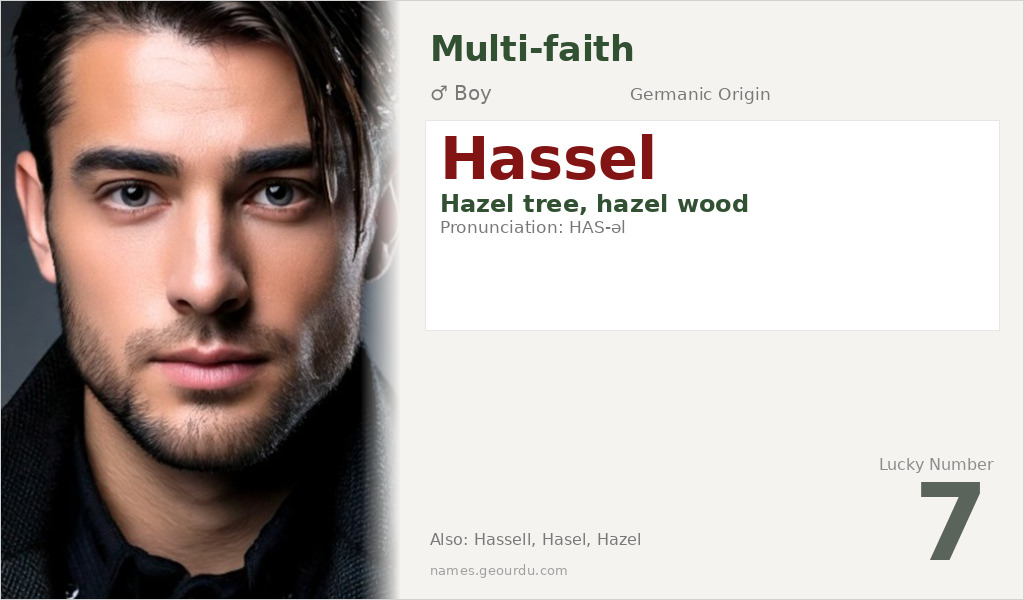
| 📛 Name | Hassel |
| 💎 Meaning | Hazel tree, hazel wood |
| 👤 Gender | Boy |
| 🕌 Religion | Multi-faith |
| 🌍 Origin | Germanic |
| 🗣 Pronunciation | HAS-əl |
| ✍️ Urdu | ہیسل |
| ✍️ Arabic | هاسل |
| 🔢 Numerology | 7 |
| ✨ Spellings | Hassell, Hasel, Hazel, Hassall |
Origin & Cultural Significance
Hassel has Germanic origins, emerging from the common practice of using nature-based terms for personal identification. It first appeared as a surname in medieval England and Scandinavia before occasionally being adopted as a given name. The hazel tree held practical and symbolic importance across Germanic cultures—its wood was used for tools and fencing, while in Norse mythology, it was associated with wisdom. While the name has been used by Christians, it predates Christianity and carries no specific religious meaning, making it suitable for multi-faith contexts. Its usage spread through European migration patterns, particularly to English-speaking countries.
Personality Traits
Those named Hassel often embody characteristics associated with their namesake tree—resilience, flexibility, and natural wisdom. They may display a grounded personality with strong intuitive abilities and a connection to traditional values. The hazel tree’s historical association with knowledge and protection in folklore might reflect in individuals who are both practical problem-solvers and thoughtful observers of their environment.
Similar Names
If you like Hassel, consider: Hazel, Haskell, Hastings, Harold, Harrison
Famous People Named Hassel
- Hassel Smith — American abstract expressionist painter known for his bold color field works
- Hassel Free — Jamaican reggae singer and producer active in the 1970s-80s
Frequently Asked Questions About Hassel
What does Hassel mean?
Hassel means 'hazel tree' or 'hazel wood', derived from the Germanic word 'hasal'. It refers specifically to the Corylus tree species valued for its flexible wood and edible nuts.
Is Hassel a boy or girl name?
Hassel is primarily a boy's name, though historically it originated as a gender-neutral surname. In modern usage, it's almost exclusively masculine, while the similar 'Hazel' is typically feminine.
What is the origin of Hassel?
Hassel has Germanic origins, specifically from Old English and Old Norse words for hazel tree. It evolved as a topographic or habitational surname before occasional use as a given name across European cultures.





