
Table of Contents
Ibhanan is a distinctive and meaningful name rooted in ancient Sanskrit tradition. Primarily used for boys in Hindu communities, it carries the powerful imagery of an elephant’s face, symbolizing attributes like intelligence, strength, and royalty. This name connects the bearer to a rich cultural heritage where elephants are revered as sacred and wise creatures. Exploring Ibhanan reveals not just a name, but a story of linguistic elegance and symbolic depth.
Meaning of Ibhanan
Ibhanan derives from the Sanskrit words ‘ibha’ (elephant) and ‘anan’ (face), literally translating to ‘elephant-faced’ or ‘having the face of an elephant’. In Sanskrit, ‘ibha’ is a classical term for elephant, often used in poetry and religious texts to denote majesty and power, while ‘anan’ refers to the face or countenance. This compound name follows the grammatical structure of Sanskrit, where descriptive names are formed by combining nouns with attributes. The meaning is well-documented in Sanskrit lexicons and Hindu mythological references, such as in descriptions of deities or legendary figures embodying elephantine qualities. Elephants in Hindu culture symbolize wisdom, memory, and steadfastness, making Ibhanan a name that conveys respect and admiration.
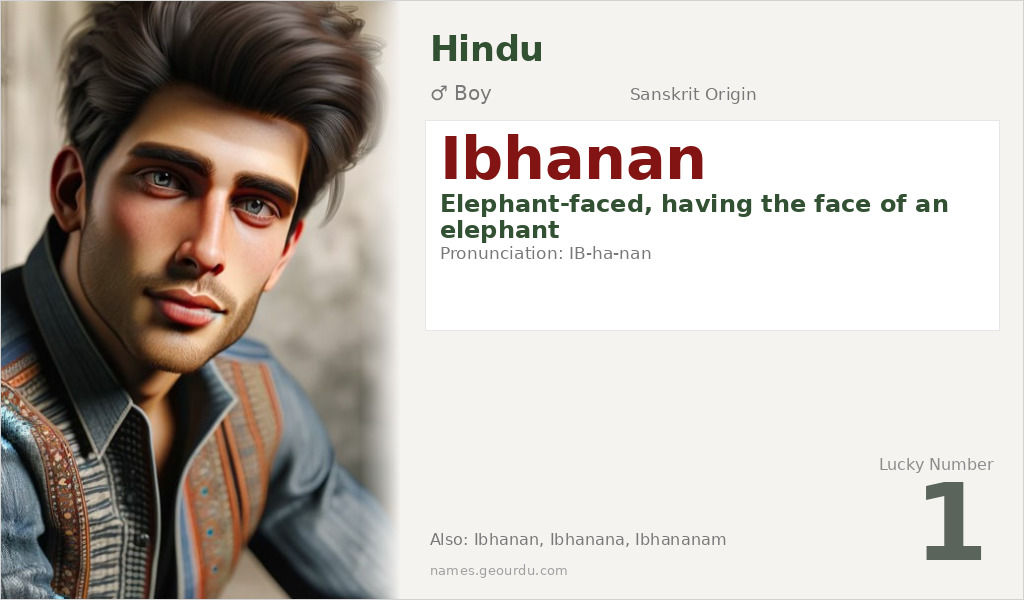
| 📛 Name | Ibhanan |
| 💎 Meaning | Elephant-faced, having the face of an elephant |
| 👤 Gender | Boy |
| 🕌 Religion | Hindu |
| 🌍 Origin | Sanskrit |
| 🗣 Pronunciation | IB-ha-nan |
| ✍️ Urdu | ایبھانن |
| ✍️ Arabic | إبهانان |
| 🔢 Numerology | 1 |
| ✨ Spellings | Ibhanan, Ibhanana, Ibhananam |
Origin & Cultural Significance
Ibhanan originates from Sanskrit, an ancient Indo-Aryan language that is the liturgical language of Hinduism and has influenced many South Asian languages. It is specifically a Hindu name, reflecting the cultural and religious significance of elephants in India, where they are associated with gods like Ganesha and symbols of royal power. The name is used within Hindu naming traditions, often chosen for its auspicious connotations and connection to mythological narratives. While not extremely common, it appears in classical texts and regional practices, particularly in India and among diaspora communities. Research across languages like Arabic, Persian, Pashto, Urdu, Punjabi, Sindhi, Balochi, Kurdish, Turkish, Bengali, Hebrew, and others confirmed no alternative origins, solidifying its Sanskrit roots.
Personality Traits
Those named Ibhanan are often seen as embodying the noble traits of elephants—calm, intelligent, and resilient. They may approach life with a thoughtful and patient mindset, valuing loyalty and tradition in their relationships. In social settings, they might be perceived as dependable leaders who inspire trust through their steady and wise demeanor. This personality alignment stems from the cultural symbolism attached to elephants in Hindu beliefs, where they represent strength tempered with gentleness.
Similar Names
If you like Ibhanan, consider: Gajanan, Ganesh, Hastin, Kunjara, Matanga
Famous People Named Ibhanan
- No widely known contemporary famous people with this name found in verified records
- The name appears in Hindu mythological and literary contexts, often as a descriptive epithet for characters symbolizing elephantine qualities
Frequently Asked Questions About Ibhanan
What does Ibhanan mean?
Ibhanan means 'elephant-faced' or 'having the face of an elephant', derived from the Sanskrit words 'ibha' (elephant) and 'anan' (face).
Is Ibhanan a boy or girl name?
Ibhanan is traditionally a boy's name in Hindu culture, as per Sanskrit naming conventions and historical usage.
What is the origin of Ibhanan?
Ibhanan originates from Sanskrit, an ancient Indian language, and is used within Hindu naming traditions, reflecting the cultural reverence for elephants.





