
Table of Contents
Ibhanan is a distinctive Sanskrit name that carries profound symbolic meaning in Hindu culture. Meaning ‘elephant-faced’ or ‘having the face of an elephant’, this name connects to ancient Indian traditions where elephants represent wisdom, strength, and royal authority. While not among the most common names today, Ibhanan holds special significance for families seeking names with deep mythological roots and powerful animal symbolism.
Meaning of Ibhanan
Ibhanan derives from the Sanskrit words ‘ibha’ (इभ), meaning elephant, particularly a male elephant, and ‘anan’ (आनन), meaning face or countenance. This compound formation follows classical Sanskrit naming conventions where animal attributes are metaphorically applied to human qualities. In Hindu symbolism, elephants represent Ganesha (the elephant-headed god of wisdom), royal power, rainfall, and cosmic stability. The name suggests someone with the noble qualities associated with elephants: intelligence, memory, strength, and protective instincts. Linguistically, it belongs to the category of Sanskrit bahuvrihi compounds where the name describes a characteristic of the bearer.
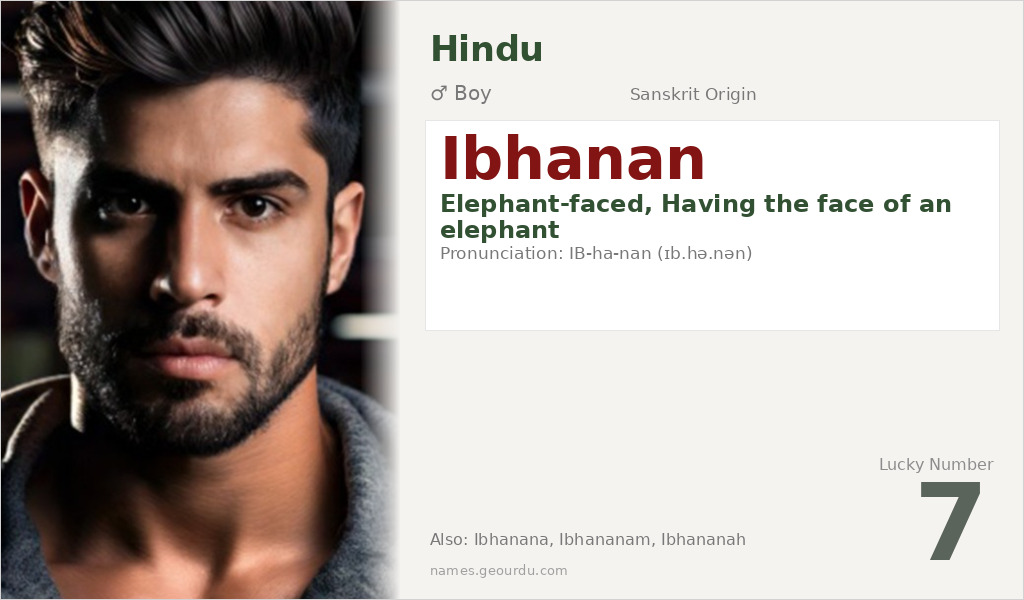
| 📛 Name | Ibhanan |
| 💎 Meaning | Elephant-faced, Having the face of an elephant |
| 👤 Gender | Boy |
| 🕌 Religion | Hindu |
| 🌍 Origin | Sanskrit |
| 🗣 Pronunciation | IB-ha-nan (ɪb.hə.nən) |
| ✍️ Urdu | ایبھانن |
| ✍️ Arabic | إبهانان |
| 🔢 Numerology | 7 |
| ✨ Spellings | Ibhanana, Ibhananam, Ibhananah |
Origin & Cultural Significance
Ibhanan originates from classical Sanskrit, the ancient liturgical language of Hinduism, Buddhism, and Jainism. The name appears in Sanskrit literature and mythological texts as an epithet or descriptive name, though it’s less common as a personal name in modern usage. In Hindu tradition, elephant symbolism is deeply embedded, with Ganesha being the most prominent elephant-faced deity. The name reflects the cultural reverence for elephants in South Asia, where they’re associated with royalty, wisdom, and divine protection. While primarily used within Hindu communities, the name’s Sanskrit roots give it pan-Indian linguistic heritage.
Personality Traits
Those named Ibhanan are often associated with elephant-like qualities: strength combined with gentleness, excellent memory, and wise judgment. In cultural context, they might be seen as natural protectors with a calm, steady presence in difficult situations. The elephant symbolism suggests someone who moves through life with deliberate purpose, remembers important details, and carries responsibilities with grace and power.
Similar Names
If you like Ibhanan, consider: Gajanan, Gajendra, Hastimukha, Matanga, Dantin
Famous People Named Ibhanan
- No widely known contemporary figures with this name found in records
- Mythological references to elephant-faced deities in Hindu tradition
Frequently Asked Questions About Ibhanan
What does Ibhanan mean?
Ibhanan means 'elephant-faced' or 'having the face of an elephant'. It's a Sanskrit compound name from 'ibha' (elephant) and 'anan' (face).
Is Ibhanan a boy or girl name?
Ibhanan is exclusively a boy's name in Hindu naming tradition, following the masculine grammatical gender of its Sanskrit components.
What is the origin of Ibhanan?
Ibhanan originates from Sanskrit, the classical language of ancient India, and is used primarily in Hindu cultural contexts with connections to elephant symbolism in Indian mythology.





