
Table of Contents
Isabel is a timeless name with regal heritage and profound meaning. From medieval queens to modern literary figures, this name carries centuries of history while remaining fresh and elegant. Its Hebrew roots speak to spiritual devotion, while its global variations show remarkable adaptability across cultures.
Meaning of Isabel
Isabel’s meaning traces directly to the Hebrew name Elisheva (אֱלִישֶׁבַע), composed of ‘El’ meaning ‘God’ and ‘sheva’ meaning ‘oath’ or ‘seven’. In biblical context, ‘seven’ represents completeness, making the name signify ‘God’s complete promise’ or ‘consecrated to God’. Through Greek Elisábet and Latin Elisabeth, it evolved into medieval Romance forms like Isabel in Spanish/Portuguese and Isabelle in French. The ‘bel’ ending reflects Occitan influence, distinguishing it from the Elizabeth forms common in Germanic languages. This etymological journey from ancient Semitic to modern global usage demonstrates remarkable linguistic continuity.
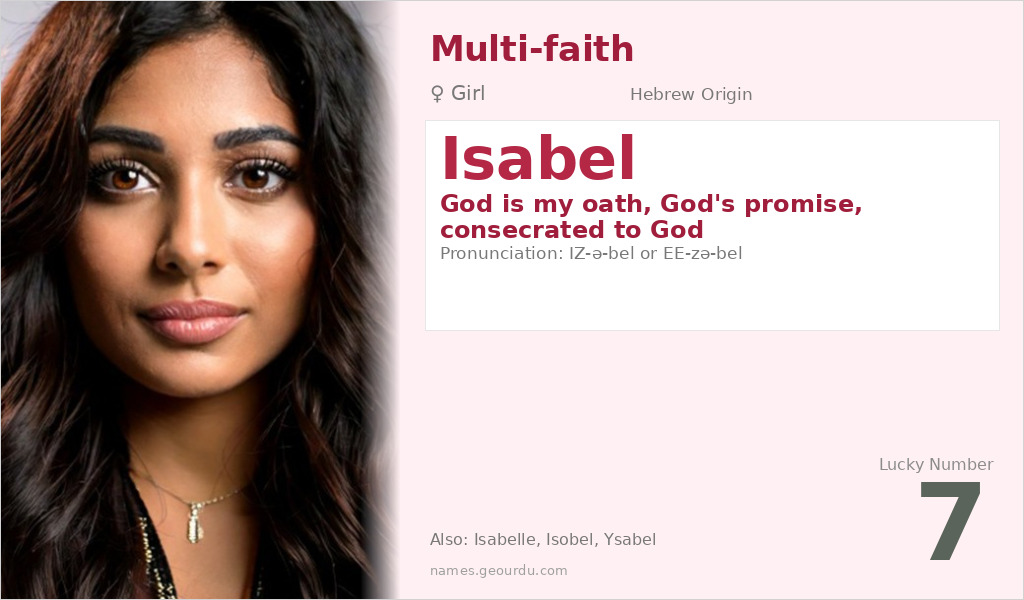
| 📛 Name | Isabel |
| 💎 Meaning | God is my oath, God's promise, consecrated to God |
| 👤 Gender | Girl |
| 🕌 Religion | Multi-faith |
| 🌍 Origin | Hebrew |
| 🗣 Pronunciation | IZ-ə-bel or EE-zə-bel |
| ✍️ Urdu | ایزابیل |
| ✍️ Arabic | إيزابيل |
| 🔢 Numerology | 7 |
| ✨ Spellings | Isabelle, Isobel, Ysabel, Isabella, Izabel |
Origin & Cultural Significance
Isabel originated as a medieval variant of Elizabeth in the Occitan and Iberian regions during the 12th-13th centuries. Its popularity soared through royal patronage, most notably with Isabella I of Castile (1451-1504), whose reign marked Spain’s unification and Columbus’ voyages. The name spread throughout Europe via dynastic marriages and literary works, reaching England where it became Isobel in Scotland. While rooted in Hebrew/Jewish tradition through the biblical Elisheva (wife of Aaron), Isabel transcended religious boundaries to become a multi-faith name adopted by Christians, Jews, and secular families worldwide. Its enduring appeal lies in this rich historical tapestry.
Personality Traits
Those named Isabel often exhibit a blend of grace and determination, reflecting the name’s royal heritage. They tend to be introspective yet decisive, with strong moral convictions stemming from the name’s ‘oath to God’ meaning. Many Isabels show artistic sensitivity and intellectual depth, balancing tradition with independent thinking—qualities embodied by figures like novelist Isabel Allende.
Similar Names
If you like Isabel, consider: Elizabeth, Elisheva, Eliza, Isabella, Elisabet
Famous People Named Isabel
- Queen Isabella I of Castile — 15th-century Spanish queen who sponsored Columbus' voyages
- Isabel Allende — Chilean-American novelist known for 'The House of the Spirits'
Frequently Asked Questions About Isabel
What does Isabel mean?
Isabel means 'God is my oath' or 'consecrated to God,' deriving from the Hebrew Elisheva through medieval Spanish/Portuguese.
Is Isabel a boy or girl name?
Isabel is exclusively feminine across all cultures, though related names like Elias (male) share the 'El' (God) root.
What is the origin of Isabel?
Isabel originated as a medieval Occitan/Iberian variant of Elizabeth, with ultimate roots in Hebrew Elisheva, popularized by Spanish royalty.





