Table of Contents
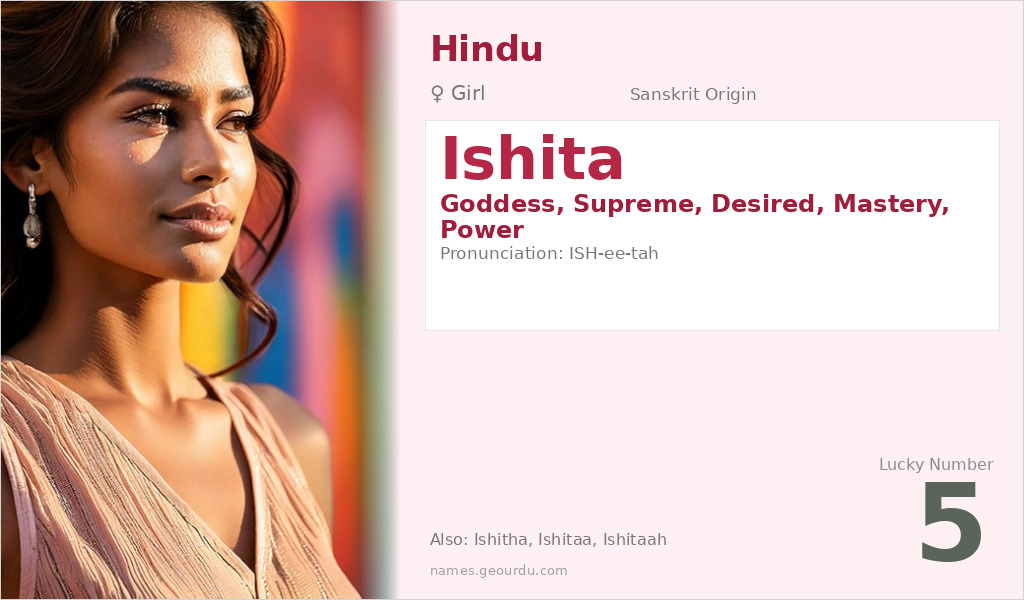
Ishita is a beautiful and powerful Sanskrit name that has been cherished in Hindu culture for centuries. Meaning ‘Goddess’ or ‘Supreme,’ this name carries deep spiritual significance and feminine strength. With its elegant sound and profound meaning, Ishita remains a popular choice for parents seeking a name that embodies divine grace and authority. This comprehensive guide explores every aspect of this meaningful name.
Meaning of Ishita
The name Ishita originates from the Sanskrit language, specifically from the root word ‘Ish’ (ईश्), which means ‘to rule, to own, to possess, or to be master of.’ When combined with the feminine suffix ‘-ita,’ it forms the meaning ‘one who rules’ or ‘goddess.’ In Hindu scriptures and classical literature, Ishita appears as an epithet for various goddesses, particularly those associated with power, sovereignty, and divine feminine energy. The name also carries secondary meanings of ‘desired’ or ‘sought after,’ reflecting how divine grace is earnestly sought by devotees. This dual meaning—both as a ruler and as something precious—makes Ishita particularly resonant in spiritual contexts.
| 📛 Name | Ishita |
| 💎 Meaning | Goddess, Supreme, Desired, Mastery, Power |
| 👤 Gender | Girl |
| 🕌 Religion | Hindu |
| 🌍 Origin | Sanskrit |
| 🗣 Pronunciation | ISH-ee-tah |
| ✍️ Urdu | ایشتا |
| ✍️ Arabic | إيشيتا |
| 🔢 Numerology | 5 |
| ✨ Spellings | Ishitha, Ishitaa, Ishitaah, Eeshita |
Origin & Cultural Significance
Ishita has its roots firmly in ancient Sanskrit, the classical language of India that dates back over 3,500 years. As a language of Hindu scriptures, philosophy, and literature, Sanskrit has given birth to countless names with deep spiritual meanings. Ishita appears in various Hindu texts as a name and epithet for goddesses, reflecting the tradition of naming children after divine qualities. The name is predominantly used in Hindu communities across India, Nepal, and the diaspora, though its appeal has spread to other cultures appreciating Sanskrit names. Unlike some Sanskrit names that have been adapted into other languages, Ishita remains closely tied to its original linguistic and cultural context.
Personality Traits
Those named Ishita are often perceived as natural leaders with a strong sense of purpose and determination. They tend to be creative, independent thinkers who approach life with confidence and spiritual depth. The name’s meaning of ‘goddess’ or ‘ruler’ often manifests in personality traits like authority, grace under pressure, and an ability to inspire others. While ambitious and goal-oriented, they also value harmony and meaningful connections in relationships.
Similar Names
If you like Ishita, consider: Ishani, Ishwari, Ishika, Ishara, Ishaa
Famous People Named Ishita
- Ishita Dutta — Indian actress known for TV series 'Ek Ghar Banaunga' and films
- Ishita Sharma — Indian journalist and news anchor with NDTV
Frequently Asked Questions About Ishita
What does Ishita mean?
Ishita means 'Goddess,' 'Supreme,' or 'one who rules' in Sanskrit. It comes from the root 'Ish' meaning 'to rule' with the feminine suffix '-ita.'
Is Ishita a boy or girl name?
Ishita is exclusively a feminine name in all Indian naming traditions. It is never used for boys in Hindu culture.
What is the origin of Ishita?
Ishita originates from Sanskrit, the ancient classical language of India, and is deeply rooted in Hindu culture and spirituality.