
Table of Contents
Jacoba is a distinctive feminine name with deep Biblical roots and European elegance. As the feminine counterpart to the classic name Jacob, it carries centuries of history while maintaining a unique charm. This name bridges ancient Hebrew tradition with Christian naming practices across Europe, particularly in Dutch and German-speaking regions. Discover the rich meaning and cultural significance behind this timeless name.
Meaning of Jacoba
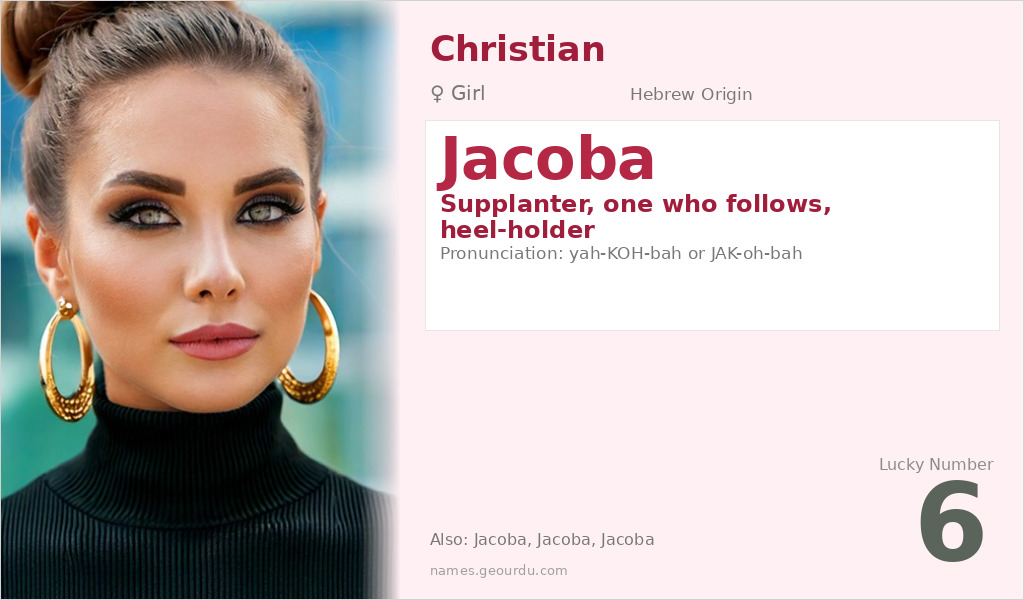
Jacoba originates from the Hebrew name Ya’aqov (יַעֲקֹב), meaning ‘supplanter’ or ‘one who follows’. The Hebrew root עקב (‘aqav) conveys the action of following closely or holding by the heel, referencing the Biblical story where Jacob was born grasping his twin brother Esau’s heel. This etymology reflects the name’s core meaning of persistence and strategic advancement. Through Latin (Iacobus) and Greek (Iakobos) adaptations, the name evolved into various European forms, with Jacoba emerging as a distinctly feminine version in Dutch, German, and Scandinavian traditions. The name maintains its original Hebrew meaning while acquiring cultural nuances in different Christian communities.
| 📛 Name | Jacoba |
| 💎 Meaning | Supplanter, one who follows, heel-holder |
| 👤 Gender | Girl |
| 🕌 Religion | Christian |
| 🌍 Origin | Hebrew |
| 🗣 Pronunciation | yah-KOH-bah or JAK-oh-bah |
| ✍️ Urdu | جیکوبا |
| ✍️ Arabic | جاكوبا |
| 🔢 Numerology | 6 |
| ✨ Spellings | Jacoba, Jacoba, Jacoba, Jacoba |
Origin & Cultural Significance
Jacoba has its primary origin in Hebrew through the Biblical patriarch Jacob, but as a feminine form it gained prominence in medieval Europe, particularly in the Low Countries and German-speaking regions. The name became associated with Christian nobility and saints, including several medieval European countesses and religious figures. In Dutch culture, Jacoba was notably borne by Jacoba of Bavaria, a 15th-century countess who played a significant political role. The name spread through Christian communities as a feminine counterpart to the popular male name Jacob, maintaining religious significance while developing regional variations. Its usage reflects the adaptation of Biblical names into feminine forms within European Christian naming traditions.
Personality Traits
The name Jacoba suggests a personality marked by determination and resilience, qualities inherent in its meaning of ‘supplanter’. Individuals with this name often demonstrate strategic thinking and the ability to navigate challenges with patience and persistence. There’s an inherent strength and leadership potential, balanced with traditional values and a connection to heritage. The name carries an air of dignified confidence, reflecting its historical association with noble and influential women.
Similar Names
If you like Jacoba, consider: Jacobina, Jacqueline, Jamesina, Jamie
Famous People Named Jacoba
- Jacoba van Heemskerck — Dutch painter and stained glass designer (1876-1923)
- Jacoba of Bavaria — Countess of Holland, Zeeland and Hainaut (1401-1436)
Frequently Asked Questions About Jacoba
What does Jacoba mean?
Jacoba means 'Supplanter' or 'one who follows', derived from the Hebrew name Ya'aqov (Jacob). The Hebrew root refers to holding by the heel or following closely.
Is Jacoba a boy or girl name?
Jacoba is exclusively a feminine name. It is the feminine form of the male name Jacob, used primarily for girls in Christian European traditions, especially Dutch and German cultures.
What is the origin of Jacoba?
Jacoba originates from Hebrew through the Biblical name Jacob, but as a distinct feminine form it developed in medieval European Christian traditions, particularly in Dutch and German-speaking regions.





