
Table of Contents
Julliet is an enchanting feminine name that evokes romance, youth, and timeless elegance. Best known through Shakespeare’s tragic heroine in ‘Romeo and Juliet’, this name carries centuries of literary and cultural significance. With roots stretching back to ancient Rome and Greece, Julliet represents a beautiful variant of the classic Juliet. Its soft, melodic sound and rich history make it a compelling choice for parents seeking a name with both beauty and depth.
Meaning of Julliet
The name Julliet derives from Juliet, which originates from the Latin Julia, the feminine form of Julius. This Roman family name traces back to Greek mythology through ‘Iulus’, the son of Aeneas in Virgil’s Aeneid. The ultimate etymology is the Greek word ‘ioulos’ (ἴουλος), meaning ‘downy-bearded’ or ‘soft-haired’, specifically referring to the first soft facial hair of youth. This evolved through Latin to signify youthfulness more broadly, giving Julliet its core meaning of ‘youthful’ or ‘young at heart’. The name’s linguistic journey reflects how ancient concepts of youth and vitality have been preserved across millennia through naming traditions.
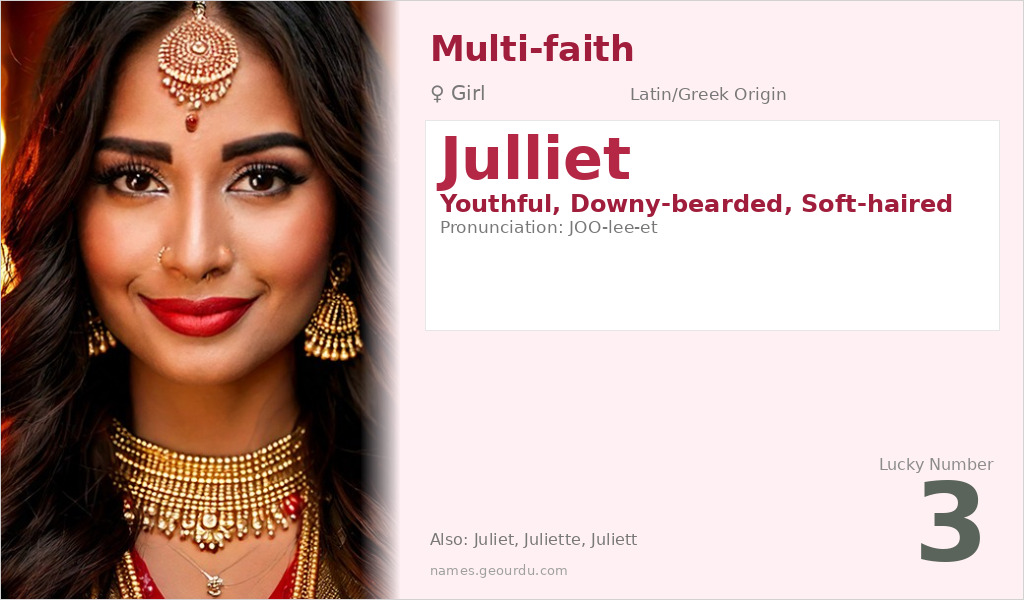
| 📛 Name | Julliet |
| 💎 Meaning | Youthful, Downy-bearded, Soft-haired |
| 👤 Gender | Girl |
| 🕌 Religion | Multi-faith |
| 🌍 Origin | Latin/Greek |
| 🗣 Pronunciation | JOO-lee-et |
| ✍️ Urdu | جولیٹ |
| ✍️ Arabic | جولييت |
| 🔢 Numerology | 3 |
| ✨ Spellings | Juliet, Juliette, Juliett, Julieta, Giulietta |
Origin & Cultural Significance
Julliet’s origin begins in ancient Greece with the word ‘ioulos’, which entered Latin as part of the mythological name Iulus. This became the Roman gens name Julius, famously borne by Gaius Julius Caesar. The feminine form Julia emerged during the Roman Republic and spread throughout Europe. The specific form Juliet/Julliet gained prominence in medieval Italy as Giulietta before being immortalized in English literature through Shakespeare’s 16th-century tragedy. While particularly associated with Western literary tradition, the name has been adopted across cultures and religions due to its universal appeal and Shakespeare’s global influence, making it truly multi-faith in contemporary usage.
Personality Traits
Those named Julliet often embody the romantic and passionate qualities associated with Shakespeare’s famous character. They tend to be expressive, emotionally intelligent individuals with strong creative impulses. Many display natural grace in social situations and possess an idealistic outlook that can inspire others. While sometimes perceived as dreamy or sensitive, they typically demonstrate resilience and depth of character that goes beyond superficial impressions.
Similar Names
If you like Julliet, consider: Julia, Juliana, Juliette, Julissa, Julianna
Famous People Named Julliet
- Juliet Capulet — Fictional character from Shakespeare's 'Romeo and Juliet', one of literature's most famous romantic heroines
- Juliet Stevenson — British actress known for her work in film, television and theatre
Frequently Asked Questions About Julliet
What does Julliet mean?
Julliet means 'youthful', 'downy-bearded', or 'soft-haired'. It originates from the Greek word 'ioulos' through Latin Julia/Julius, with the core concept relating to youth and vitality.
Is Julliet a boy or girl name?
Julliet is exclusively a feminine name. It's the variant spelling of Juliet, which has been used as a girl's name for centuries across Western cultures and beyond.
What is the origin of Julliet?
Julliet originates from Latin and Greek roots. It evolved from the Roman name Julia (feminine of Julius), which traces back to Greek 'ioulos'. The specific form gained popularity through Shakespeare's 'Romeo and Juliet'.





